Green Beans Per Plant Calculator
Estimate pods per plant, harvest weight, weekly picking pace, row length, and how many green bean plants you need for a fresh eating, freezing, or market harvest target.
Green bean yield shifts with bush or pole habit, pod size, picking frequency, heat, sunlight, fertility, spacing, and losses. This calculator starts with a realistic marketable yield per plant, then adjusts it for your crop conditions.
Green Bean Harvest Estimate
Enter your crop details and calculate to estimate yield.
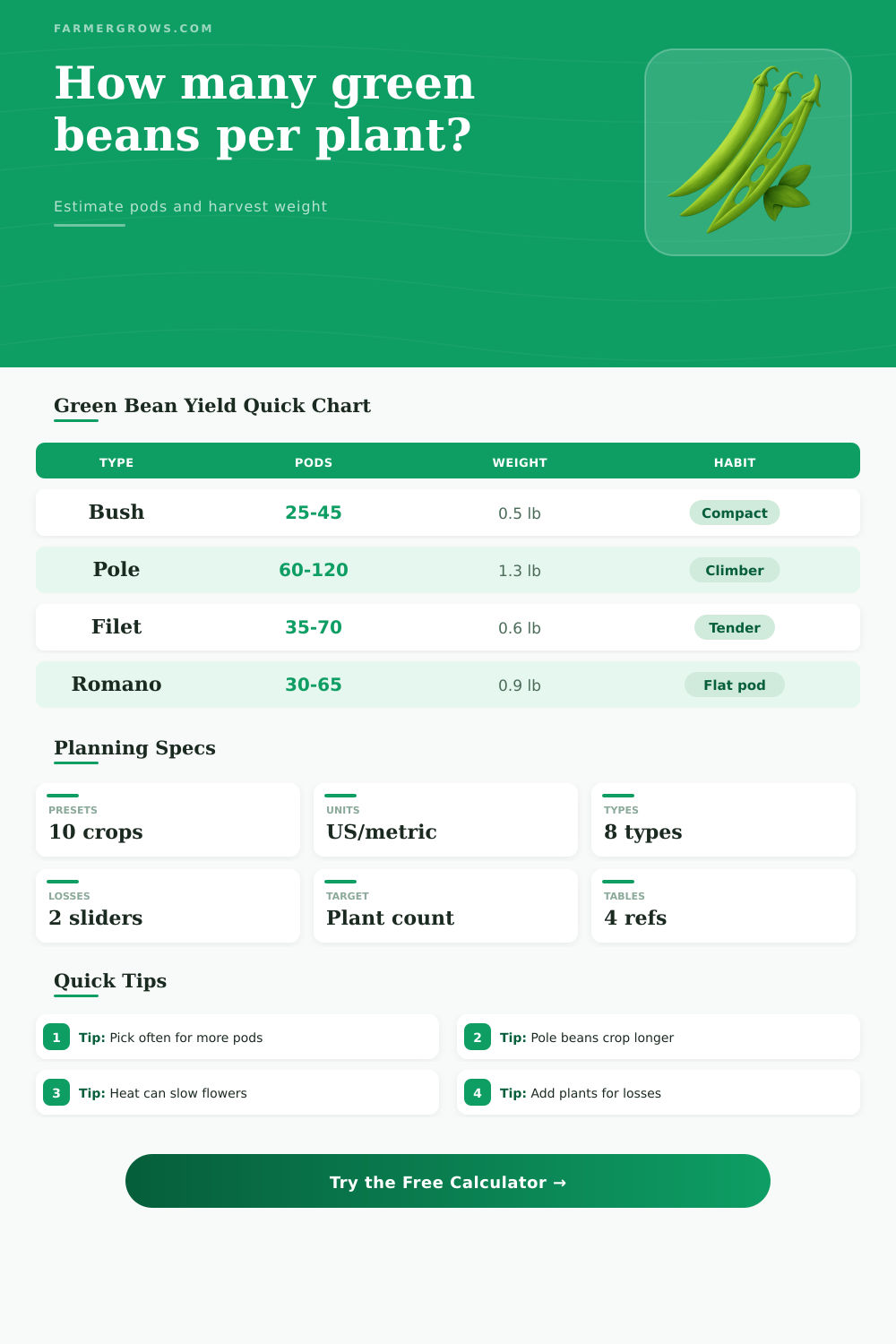
| Bean type | Typical pods per plant | Fresh weight per plant | Best planning use |
|---|---|---|---|
| Bush snap bean | 25 to 45 pods | 0.45 to 0.70 lb | Compact rows, freezing, short harvest windows. |
| Pole snap bean | 60 to 120 pods | 1.00 to 1.70 lb | Trellised gardens where harvest can continue for weeks. |
| French filet bean | 35 to 70 pods | 0.45 to 0.75 lb | Small tender pods picked every 2 or 3 days. |
| Romano flat pod | 30 to 65 pods | 0.75 to 1.20 lb | Heavier fresh pods for cooking and market bunches. |
| Yardlong bean | 30 to 70 cut portions | 0.90 to 1.50 lb | Hot summer harvests on tall supports. |
| Planting style | Plant spacing | Row spacing | Yield planning note |
|---|---|---|---|
| Bush single row | 3 to 6 in | 18 to 30 in | Good airflow reduces foliar disease and cull loss. |
| Bush wide bed | 4 to 6 in | 8 to 12 in grid | Dense beds yield well if water and picking access are good. |
| Pole trellis | 4 to 8 in | 30 to 48 in | Needs light on both sides of the support. |
| Teepee hills | 4 to 6 plants | 30 to 36 in hill | Useful for small gardens but can shade inner vines. |
| Fresh harvest goal | Bush plants | Pole plants | Notes |
|---|---|---|---|
| 5 lb tasting crop | 8 to 12 plants | 4 to 6 plants | Enough for several fresh meals. |
| 20 lb family crop | 32 to 45 plants | 12 to 20 plants | Good fresh eating plus some freezing. |
| 50 lb preserving crop | 75 to 110 plants | 30 to 50 plants | Use successions or long pole harvests. |
| 100 lb market crop | 150 to 225 plants | 60 to 95 plants | Pick labor and cull rate become major inputs. |
| Factor | Low setting | Good setting | Why it matters |
|---|---|---|---|
| Picking interval | 7 plus days | 2 to 3 days | Frequent picking keeps plants flowering and pods tender. |
| Sunlight | 4 to 5 hours | 7 plus hours | Light drives flower set and pod fill. |
| Moisture | Dry swings | Even moisture | Stress can make pods tough or reduce fill. |
| Heat | Severe bloom heat | Mild warm days | High heat can cause flower drop and fewer pods. |
| Airflow | Crowded foliage | Open rows | Airflow reduces disease and harvest culls. |
Use marketable yield. Beetle damage, rust, tough pods, heat stress, and missed pickings can remove a meaningful share of the harvest.
Pick before pods swell hard. Frequent harvesting usually increases total useful pods because the plant keeps setting new flowers.
Separate bush and pole plans. Bush beans need more plants for the same target, while pole beans need trellis space and more weeks of picking.
Plan the labor peak. A compact bush row can deliver much of its crop in a short window, so freezing days may arrive quickly.
THERE’S A certain kind of panic I feel upon discovering that I’ve grown three plant of something in my green bean patch when what I need is enough to feed a family of four who eats beans once a week. They flower; they wait; you wait, and then… Only two measly cups? Math error! Failure! But no, it is simply mathematics. Understanding how those numbers work, the balance between genetics and environment. Is how you get from a snack to a pantry, but most gardeners sees yield as a fixed number printed on the seed packet. How many plants will it take?
And that’s where the calculator comes in: It does the math for you, how many plants do you need to reach some given weight target based off your variety and conditions? No need to overorder seed or anything, you’ll know exactly just how many plant you need for your desired goal. But what do all these inputs realy mean in dirt?
How to Calculate Your Bean Garden Yield
The first major lever is plant habit. Beans comes in two habits. Bush beans are compact and produce their harvest all at once. Pole beans climbs and continue producing for several weeks longer. That lengthens the time frame, and therefore makes a big difference, since a single pole-bean plant may yield double what a bush type would. Because it occupies vertical space, you must plan ahead and create support structure.
Sun-loving green beans need light and space. They won’t tolerate much shade, and if you try to cram them to save square footage, be prepared that what you gain on one side you lose on the other. Airflow versus density. That moist environment against the leaves is an invitation to rust, and also powdery mildew. It can actualy make the estimated yield per plant go up slightly. On the plus side, wider gaps mean more light per vine and maybe higher yield per plant…unless you compensate by planting more vines in the bed, of course; otherwise your overall garden yield go down. It is a typical tradeoff between managing ease and raw volume.
One other silent yield-killer that folks forget is consistent moisture. Beans flower in waves. Miss a watering when one of those waves hits, and all those possible pods goes flying. Because heat stress and water quality directly affects pod fill, the tool has sliders for both. Dry soil plus a hot snap can reduce what should of been a good crop down to an armload of tough fibrous strings nobody wants to eat. That’s why the percentage lost at harvest is so important. Some will get chewed up by beetles; some are nibbled away by deer; some simply outgrow their time and get too big before you came back from vacation (three days). Plans fail under the assumption of zero losses.
The one thing about growing beans that you can control the most is how often to pick them. Every time you do, you’re telling the plant: I gotcha. Make me some more flowers. Leave the pods on the plant till they get fat with seeds. The bean then think it has successfully reproduced and does not need to flower anymore. It turns off the tap early. Pick regularly (every couple of days) and keep the machine going. The calculator factors in picking intervals when calculating your total yield. Less frequent picking = less number of total pods.
Last: Consider why it is that you’re growing. Do you want heavy Romano beans or the more delicat (and less heavy-per-count) slimmer filets? The choice of variety will make a big difference in how many you must plant, depending on your intended use. For example, if you’re planning to freeze some for winter and want X poundage, you may be looking at 20 bush beans versus just 10 pole beans, if the season cooperates, because the former’s heavy pods will give you more weight per count.
Begin with a realistic number, and then follow the numbers: Let them dictate how densely you plant; don’t guess. The goal is to cover your losses. Pick often (keep the plants working). You’ll probably end up facing abundance, not shortage, before midsummer.