Cucumbers Per Plant Calculator
Estimate cucumber yield per plant, total harvest count, pounds, jars, seed starts, spacing capacity, and weekly picking pace for trellised beds, bush containers, hills, and greenhouse vines.
Use this calculator before seeding, transplanting, or planning pickling batches. It combines plant count, cucumber type, training method, harvest window, pollination, spacing, and plant health into a practical yield estimate.
Cucumber Harvest Estimate
Your cucumber yield estimate will appear here.
| Cucumber type | Typical fruit per plant | Average fruit weight | Best harvest cue |
|---|---|---|---|
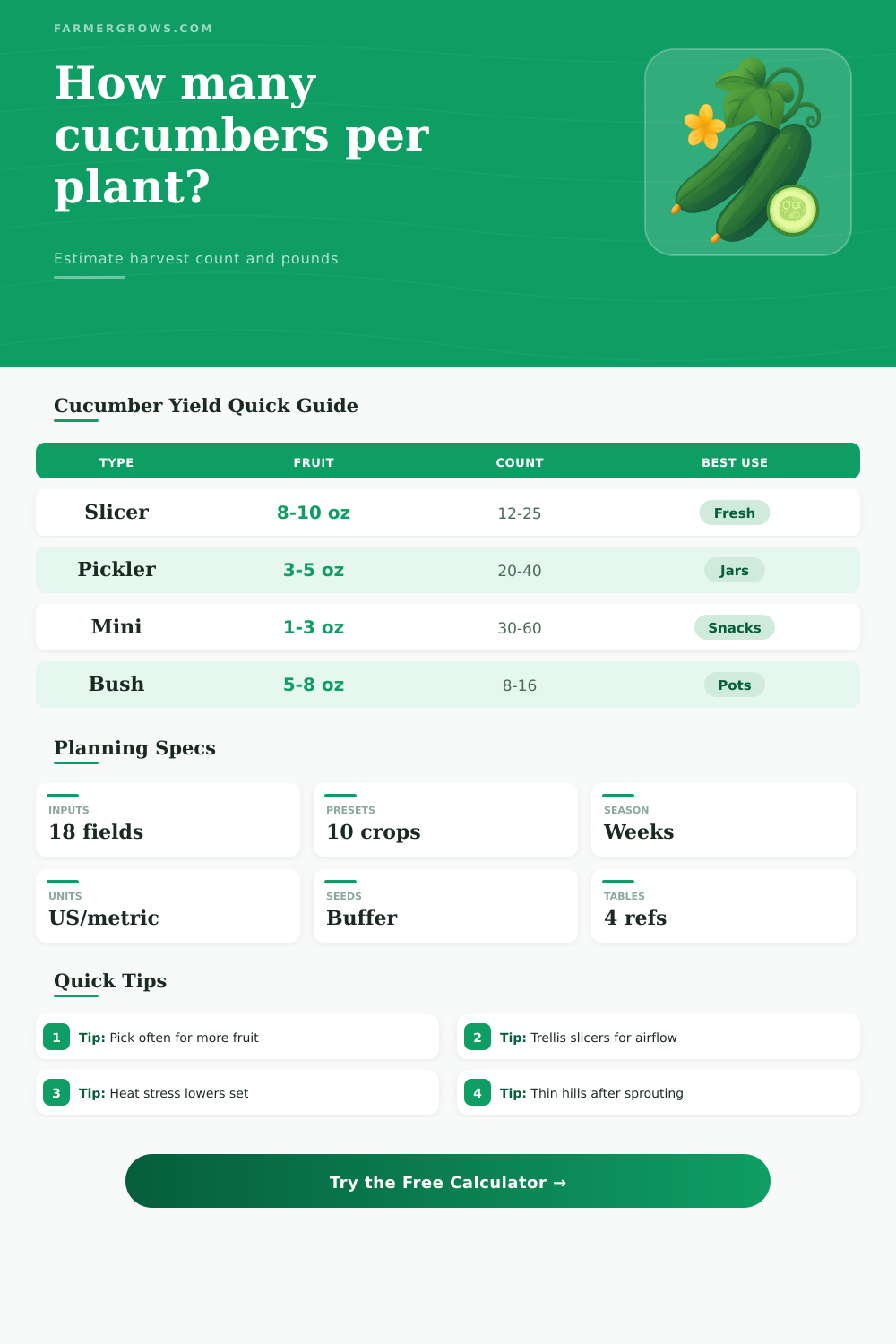
| Slicing cucumber | 12-25 cucumbers | 8-10 oz each | Firm, green, before seeds harden |
| Pickling cucumber | 20-40 cucumbers | 3-5 oz each | 2-5 inch fruit for crisp jars |
| English or greenhouse | 20-45 cucumbers | 10-14 oz each | Long straight fruit, picked often |
| Mini snack cucumber | 30-60 cucumbers | 1-3 oz each | Small glossy fruit, frequent picks |
| Bush or patio cucumber | 8-16 cucumbers | 5-8 oz each | Pick during compact flushes |
| Seedless parthenocarpic | 25-55 cucumbers | 5-12 oz each | Harvest before fruit gets puffy |
| Planting style | In-row spacing | Row spacing | Yield planning note |
|---|---|---|---|
| Trellised slicers | 12-18 in | 36-48 in | Higher count and cleaner fruit with airflow |
| Trellised picklers | 8-12 in | 36-48 in | Pick small fruit every 1-2 days at peak |
| Bush containers | 1 plant per 5 gal | Container spacing | Soil volume limits long-season yield |
| Ground rows | 18-24 in | 48-72 in | Lower count if vines stay damp or tangled |
| Hills or mounds | 2-3 plants per hill | 36-60 in | Thin to strong vines after seedlings establish |
| Greenhouse leaders | 12-18 in | 30-48 in | Long harvest window drives total fruit count |
| Use plan | Typical weekly need | Useful plants | Planning reminder |
|---|---|---|---|
| Fresh salads for two | 2-4 lb | 2-4 slicers | Plant successions if summers are short |
| Family fresh eating | 4-8 lb | 4-8 slicers | Trellis to keep fruit visible and clean |
| Small pickling batch | 8-12 lb peak | 6-10 picklers | Harvest small fruit before seeds enlarge |
| Heavy preserving | 15-25 lb peak | 12-20 picklers | Plan jar days around peak flushes |
| Market table | Varies by sales | Rows or tunnel | Track culls and sellable grade separately |
Pick before cucumbers overmature. A single large yellowing cucumber signals the vine to slow production, so frequent harvests can noticeably raise cucumbers per plant.
Use the estimate as a planning range. Variety, heat, mildew, water swings, and pollination can move actual yield by 25% or more even when plant spacing is correct.
The cucumbers is up on the vine in early summer, you see that first one, and then what? The plant works out the energy for picking; it’s got a schedule, which you have to work with. Pick fast so they don’t get to big and yellow, but keep in mind some flower might still drop without setting fruit. How do you figure this all out?
Cucumbers think: I did my job, right? Wrong. Let the plant keep growing and make sure to always remove your finished product so you don’t stop the cycle of growth.
How to Grow More Cucumbers
This means no guesstimating about how many plants it will take to feed your family; the calculator does all the math for you based off your particular set-up.
Vertical growing increase air flow around foliage. This reduces humidity closer to the leaf and keeps mildew away. The calculator factors this into its math, whether your setup is a sprawling ground bed or a trellised vertical run. Less disease mean more photosynthesis, which translates directly in more fruit set.
It also takes into account how often you plan to harvest (because if you leave a cucumber on the vine too long, it tell the plant: no new flowers for me).
What you plant is important; choose your variety wisely. You will get fewer heavy slicing cucumbers (about a dozen or two per plant during a growing season). If you pick pickles every other day, they’ll double up on slicers, sometimes reaching 25 fruits from one plant in a season. The smaller mini snack varieties can go even higher. They are so small that each little cucumber isn’t such an investment in plant energy so the overall yield goes up.
Expect more from strong vines then from bush kinds; bush varieties is selected for short season, compactness, not high yields. You cannot expect bush types to perform like greenhouse vines.
The biggest problem with average home garden is not spacing: It may look like planting close together is efficient (and it is!), but those innermost leaves will be shading each other, unable to photosynthesize and support the growing fruit. With the calculator, you can figure out exactly how many plants can fit in your bed, depending on edge clearance and desired row width.
It factors in a seed start buffer, which is smart. Not all seeds makes it past transplant shock so you plan for a certain percentage of loss before transplants take hold. Maybe ten to twenty percent of your starts don’t make it. That’s why you only plant six instead of eight, and if you aim for six plants and lose two, you’ve already reduced your potential harvest by a third before the season even started.
The tool also factors in weather, since very hot days can render pollen sterile (flowers won’t set). That’s a big factor: Hot weather is not good. You can compensate by adjusting down for poor pollination/heat-stress conditions, if they apply to where you garden. If August is typically hot-hot-hot where you live, set your expectations to match on this end of the plant. Then you’ll have a better idea about what your actual yield should be, rather than expecting everything to go perfectly with bees everywhere. Better to expect a nice but not huge crop and get lucky.
Cucurbits grow in rhythm, and cucumbers in particular want you to keep pace. Plant them with a plan and space them for air flow. Pick them when they are green but not yellow, so they aren’t bitter.
The cucumber calculator takes your vague desires, hope, really, and puts some concrete numbers on them: pounds per week or jars per batch? And it will help you match your garden’s scale to what you’ll need in your kitchen, a couple of eaters who live by their salad fixins’ or someone wanting to put up fifty quarts for winter eating.
You feed the vine and it feeds you back. Keep picking often to get the line going… And going and going, you’ll recieve more fruit if you do.