Cucumber Plants Per Square Foot Calculator
Estimate cucumber plant density, row count, seeds, trellis length, airflow risk, and harvest potential for raised beds, field rows, hills, containers, and greenhouse plantings.
Use this calculator before seeding or transplanting cucumbers. It combines bed dimensions, edge clearance, row spacing, in-row spacing, plants per station, variety vigor, and training method to estimate practical plants per square foot.
Cucumber Planting Plan
Your cucumber density plan will appear here.
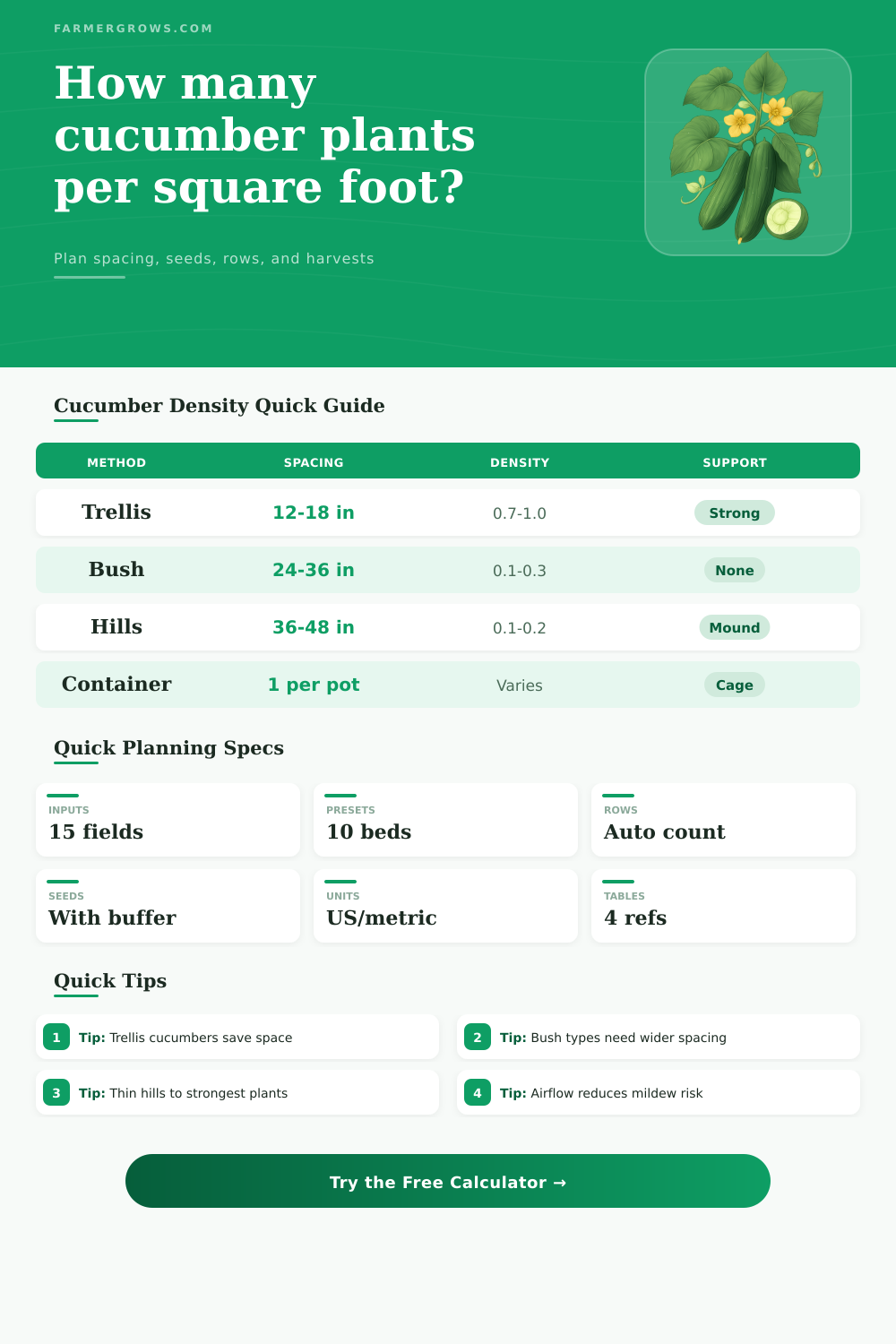
| Growing method | Typical row spacing | Typical plant spacing | Approx plants per sq ft | Best use |
|---|---|---|---|---|
| Vertical trellis in bed | 18 to 30 in | 10 to 18 in | 0.4 to 1.2 | High yield in raised beds with pruning and harvest access. |
| Single field row | 36 to 60 in | 12 to 24 in | 0.1 to 0.3 | Traditional garden rows with walking space between vines. |
| Bush cucumber bed | 24 to 36 in | 18 to 30 in | 0.15 to 0.4 | Patio beds, small raised beds, and compact varieties. |
| Hill planting | 36 to 60 in hills | 2 to 3 plants per hill | 0.06 to 0.25 | Warm mounds, heavy soil, and pickling cucumber patches. |
| Greenhouse single leader | 18 to 24 in | 12 to 18 in | 0.45 to 1.0 | Managed vines with twine, pruning, and controlled irrigation. |
| Planting method | Seeds per spot | Thin to | Planning note | Risk buffer |
|---|---|---|---|---|
| Direct seed rows | 1 to 2 seeds | 1 plant | Sow extra only where gaps are hard to replant. | 10 to 20% |
| Hill planting | 4 to 6 seeds | 2 to 3 plants | Thin after true leaves, keeping the strongest crowns. | 15 to 30% |
| Transplants | 1 plant cell | 1 plant | Harden off carefully; cucumbers dislike root disturbance. | 5 to 15% |
| Greenhouse plugs | 1 seed | 1 leader | Start replacements for weak plugs before setting beds. | 5 to 10% |
| Cucumber type | Common use | Yield per plant | Spacing tendency | Harvest rhythm |
|---|---|---|---|---|
| Slicing vines | Fresh eating | 6 to 12 lb | Medium to wide | Pick every 1 to 2 days in peak season. |
| Pickling vines | Small fruit harvest | 4 to 8 lb | Medium | Harvest frequently before fruit gets oversized. |
| Bush cucumbers | Containers and small beds | 3 to 6 lb | Wide plant room | Shorter harvest window, often concentrated. |
| English greenhouse | Long seedless fruit | 10 to 20 lb | Tight with pruning | Needs steady water, feeding, and support. |
| Mini snack types | Lunchbox fruit | 5 to 10 lb | Medium to tight | Small fruit rewards very frequent picking. |
| Support style | Good spacing range | Airflow level | Workload | Notes |
|---|---|---|---|---|
| Cattle panel arch | 10 to 18 in | High | Low to medium | Strong for heavy fruit and easy harvest from both sides. |
| String trellis | 12 to 18 in | High | Medium | Works best with pruning clips or loose ties. |
| Tomato cage or short cage | 18 to 30 in | Medium | Low | Better for bush and compact varieties than long vines. |
| Ground sprawl | 30 to 60 in | Low to medium | Low | Needs mulch and wider spacing to reduce fruit rot. |
Density tip: If the calculator shows more than 1 cucumber plant per square foot, plan on vertical support, regular pruning, very steady watering, and daily harvesting during peak fruiting.
Airflow tip: Powdery mildew and leaf diseases spread faster in crowded canopies, so leave extra row space when your garden is humid, shaded, or hard to reach for harvesting.
Raised beds are a good idea, and so are seeds. To grow cucumbers, be sure to plan how many to plant. How much room will 2 cucumber vines take up? Lots. Unless you restrain them, they will grow fast and overtake their plot in no time. Overplanting lead to less fruit, more mildew. Underplanting is wasteful, don’t leave valuable soil bare. This page’s calculator tell you how many to sow of which kind to fit into any-size bed.
First, the question: What kind of support structure? Vines growing up rather than out mean you can space them closer together, as with vertical trellises. With strings or cattle panels, prune off some lower foliage so air circulates, then plant one per square foot. If they are ground-sprawlers that spread wide and leave no room for another vine beside them, give them more space. Avoid planting sprawling varieties too close together, as wider spacing prevents fruit from rotting in contact with damp soil.
How Many Cucumbers to Plant
Trellises take work to create, but make picking easier and cut down on disease. How you answer the question set the number: denser spacing where plants is tied up; looser where left to sprawl on their own. Even compact cukes such as the popular Bush variety want some leaf area to feed themselves through photosynthesis. If you have a trellis, the calculator suggests closer spacing for vining types than for bush ones. Since bush types don’t climb, you can get away with really packing them in. However, less air circulation creates a more inviting environment for powdery mildew. That fungus loves humid conditions when leaves is touching. Even those compact guys need room, according to the reference tables.
For example: For pickling cucumber’s (or for other varieties) and heavy soils, hill plant. Sow several seeds on a mound and then thin to the best plant. This calculator support that as well with an input for plants per station. It also factors in germination rate and survival buffers. Seeds are cheap insurance. Plan for 20 percent failures. Weather, pests, and soil conditions all limit how many seed sprout. This puts a little more seed in the ground then you need. Even if weather or pests reduce emergence, you still end up with what you want. People who is new at growing sometimes order exactly what they need and panic when seeds don’t come up.
Container gardening requires its own logic. There’s only so much root space in a pot; limit how many plants you put in any one container or they’ll compete for food and water. The calculator will not allow you to pack in too many vines into a single pot, as that would stunt their growth, and yield less-than-ideal fruit size. A few good plants are preferable to a mass of struggling ones.
How much will it yield? To calculate that, you need to know how many plants is growing and which variety they are, since a mini snack cucumber will produce fewer fruits per plant then an English cucumber; then you use those numbers to estimate the total yield. Is convenience or volume what matters most to you? More care required means more fruit from each plant with English cucumbers compared to mini snack ones, but they need more maintenance. Plan on lots of pickles? Time for high density. Want to eat them fresh? Go wider, prune less.
The calculator doesn’t dictate what’s best, it just gives you the numbers so you can decide. With cucumbers, realism meets ambition: The calculator takes the guess out of spacing so that you can concentrate on caring and enjoying your crop. Before planting, imagine how it’s going to look, and think about making it thrive rather than choke. Why? A spaced-out canopy allows air circulation, which keeps foliage dry and fruit clean. Often this matters as much or more than soil quality in determining success. Make a plan, and honor each plant’s space. Then the vines will sprawl productively in a patch of no-wasted-square-feet.