
In spring you plant a Japanese plum tree and get pink blossoms. You wait for fruit and none ever come. Other orchards around you has bushels of sweet, heavy plums on their trees, but yours remains branchless. It is frustrating since you did everything right by following the rules based off soil, sun, and water.
What you didn’t know was about the cross-pollination requirement. Because most Japanese plum varieties do not pollinate themselves, these require another compatible tree within range to carry pollen during bloom time. They require another compatible tree within range to carry pollen from during bloom time. If no one is there to trade pollen, the flower falls off and no fruit form.
How to Grow Japanese Plum Trees
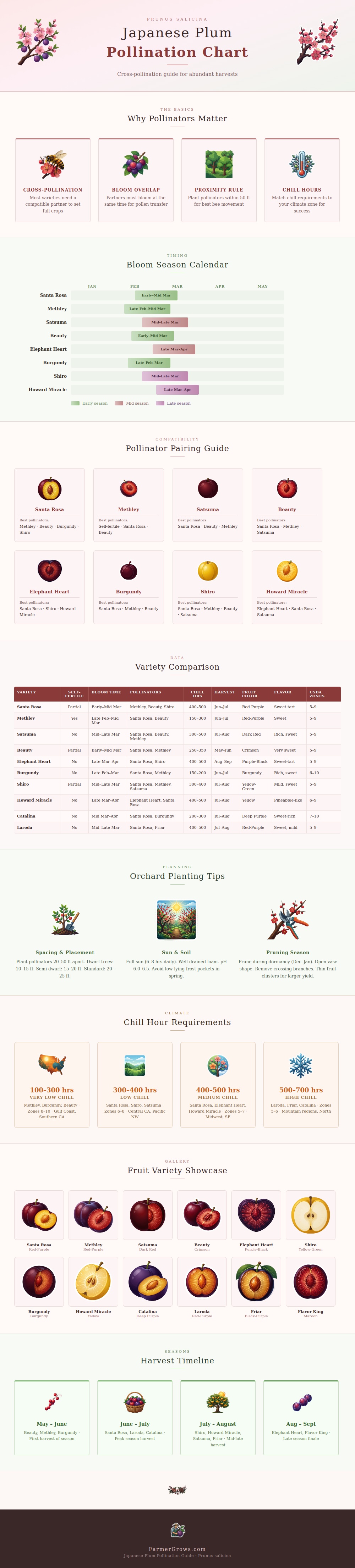
That’s a biological rule, and it makes an ornamental shrub a good fruit producer, or not, depending on which plants pollinate each other. A visual guide show which varieties match. No guesswork needed when shopping the nursery aisle.
Want a Santa Rosa plum? That will not work on its own; it requires a partner, such as Beauty or Methley, whose blooms matches its own. Two trees that flower in mid-February and another two that don’t open up till mid-April? They do not meet each other halfway, so no bees (or you) will get any fruit. Most home orchards is doomed because of this lack of bloom timing, regardless of whether the trees’ soil pH is just right or their winter hours of chill just perfect.
Another confusing element are chill hours. That’s the number of cumulative hours (below 45 degrees F) required before the tree breaks dormancy. For example, a variety such as Methley requires only a hundred and fifty chill hours. That’s why it can absorbs successfully in warmer climates (zones eight and ten).
Further north, where winters are longer, you may have trouble getting consistent blooms from a low-chill variety; or it will bear small crop. You want to match the tree to your climate; in other words, its winter requirements. The chart shows which varieties is suitable for low-, medium-, and high-chilling regions based on their chilling requirement. You will no longer battle the weather each spring.
The type of tree you choose is important, but so is where it go. While bees are efficient, they won’t go far. Isolated trees on a big lawn are no good; they want some flowers right next to them. To get this effect, plant your pollinators within 50 feet of each other, which creates a dense bloom zone for attracting and keeping pollinator action during the bloom period.
The closer the better: This keeps bees’ flight paths protected from disruption by rain or wind, which reduces the chance of failed fruit set. Quickly and reliably, pollen gets transferred when those trees are close.
December-January pruning help next year’s crop: Sunlight must reach the plant. An open vase shape permits sunlight to reach into the canopy. This warmth lures bees even on cool days in early spring. On those days, flowers may be too cold to attract them. Heavier shade = less bloom, and blooms that do occur tend not to attracts insects. Thin the cross branches to allow for better air circulation and greater exposure to light. A little effort now mean a bigger payoff later at harvest time.
The different kinds of flavor is all over the map. That’s one more element to consider as you decide which ones will be partners. Will it be the classic sweet-and-tart mix of a Santa Rosa or something like pineapple in a Howard Miracle? Maybe you want Elephant Heart with its big juicy fruits and outrageous color?
So it’s not just who gets along with whom in a biological sense. It’s picking out a special tasting menu of what’s going to be on your plate this summer. It’s not about discovering one magic plum tree to grow, but rather creating a little neighborhood of them for yourself in your yard. By paying attention to their chill hours, matching up bloom times, and placing them near enough together for bees to visit, you ensure a certain result: a crop of fruit.
The weight of those first ripe plums dangling from the limb is evidence that all that planning and patience should of pays off with sweet rewards.