
The smell is nice; like walking through an apricot orchard in full bloom. The flowers blanket the tree branches. And if everything goes well, you’d think that’s all it takes: Put out some blossoms and reap the crop. Wrong. Whether the blossoms turns into fruit depends on pollination. To achieve good results, you has to know what’s going on between your trees and their surroundings.
They’re fickle creatures: Apricots flower early… And that’s a problem. Their dormancy requirements often clash with late spring frost. Plus: You’ll need at least one apricot tree (most are self-fruitful, requiring only one) but will get bigger yields if you have a couple of different variety growing not too far apart. Why? Genetic diversity is good; bees like it, since it ensures fresher pollen. Which means they’ll spend time in your orchard.
How to Grow Apricots Successfully
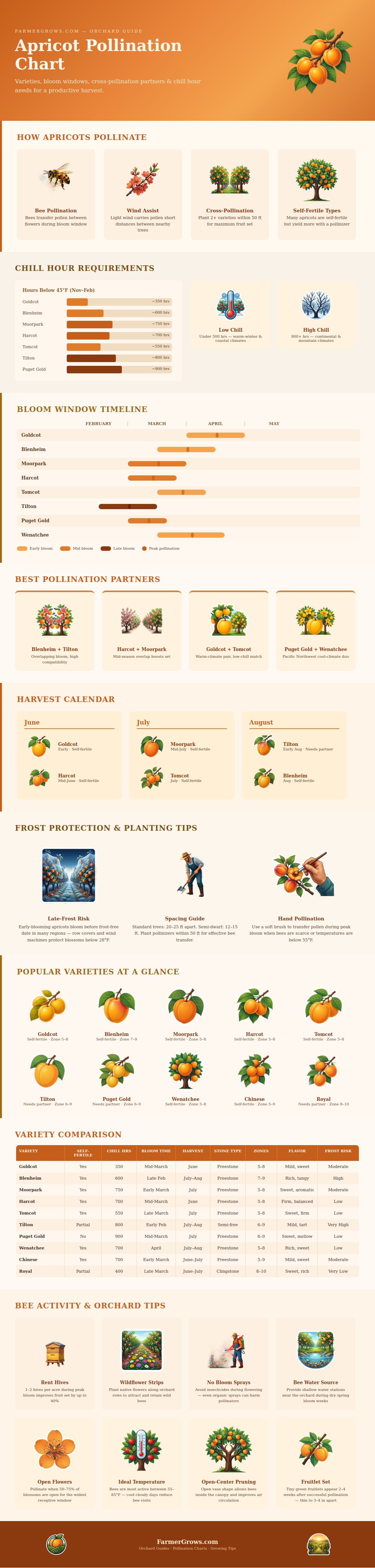
Looking at chart of popular cultivars (above), you’ll see the overlap between their bloom windows, which don’t line up neatly. Some begin as early as February; some aren’t ready till April. If you get this right when selecting varieties for planting, it’s useful. A staggered bloomtime means there will be more than one pollen source available at the same time. This means bees won’t run out of anything, but only if timing works. The trick is to match varieties whose blooms overlap, so that they catch the bees during their most active times. Here are a few examples.
Pairing Harcot (a mid-season bloomer) with Moorpark (an earlier one) forms a kind of pollination bridge, catching early- and late-acting bees alike. You want flowers timed to coincide with insect activity, not early or too late. This timing problem has another twist: chill hours is important. That’s right, these trees must experience some serious cold to get their biological clocks ticking again toward springtime. Certain varieties (like Goldcot) are less picky about chill hours and therefore good choices for milder-winter areas; others (such as Puget Gold) really want to accumulate lots of cold and come from high-country or northerly locations. If you select the wrong type for your local winter conditions, expect slow buds and also lousy fruit set. Before shopping for saplings, it seems, you would of done well to check your own climate history. Better to know what can work in your zone rather than wish for an exception.
The gardener must play an active role in managing the pollination. While it’s largely done by honeybees, wind and a wide variety of other native bees also plays a role. The closer you can have hives (within about fifty feet) to your trees, the more fruit will get set, and it matters measurably. Do not spray any kind of chemical at all during bloom time (including those labeled organic), as insecticides is present on the petals for many weeks following the last spray. When nectar might be scarce, having water nearby with some pebble-like surface so that the bees don’t drown provides them with hydration during a dry spring spell.
An open-center canopy allows for good air movement and light to reach the interior of the tree. This keeps the flowers exposed to flying insect pollinators instead of being hidden by heavy foliage. The earliest bloomers are still vulnerable to frost, even after buds have swelled. If you experience a freak drop into the twenties, it can be game over, killing flower tissue before seed set. To offset such threats, keep soil warm under cover (like row covers) to hold ground heat closer to the flower branches, or use wind machines to create a buffer zone. It’s a careful balance of temperature control those first few precious weeks in March and April. When weather grounds the bees, hand-pollinate with a soft brush, brushing pollen from the stamens onto another flower to compensate for the chill.
Months later, the fruits ripen and swelling little green fruitlets turns into juicy things you can eat. If you don’t thin them at this stage, the branches will snap off because they are weighed down by too many fruits. This is where the payoff is, once everything has been planned for months earlier. Allowing for bee health and using varieties that match the local climate information will set you up for a good year in the orchard. It’s all about potential and those first blossoms reflect that. With thoughtful care, that potential becomes an actual harvest, a thing you get to eat. And it tastes like it was all worth the extra effort made in the still of winter.