
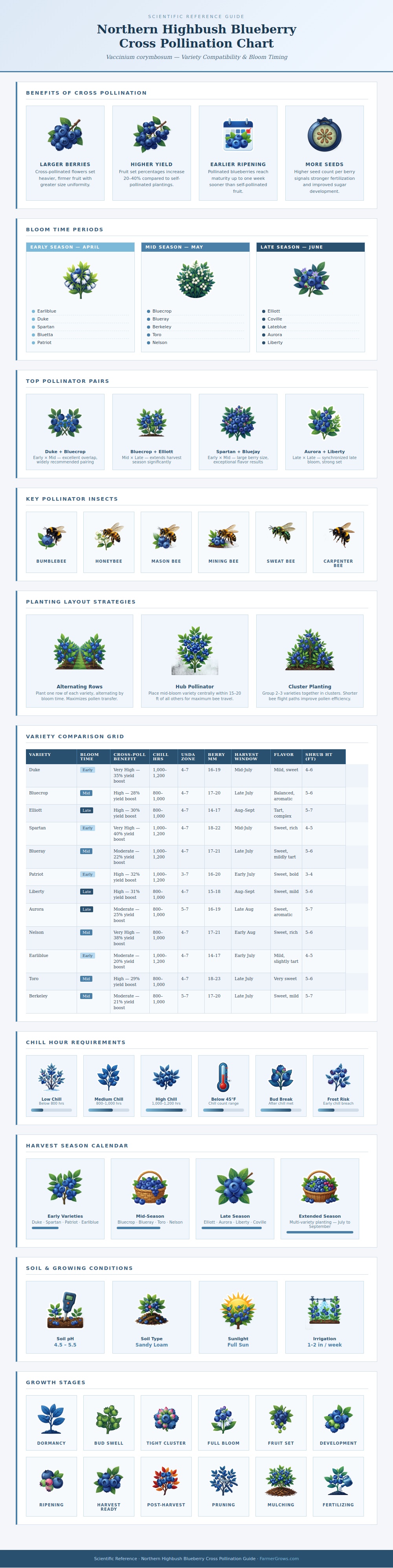
You did your soil ph and mulch right, but now you’re harvesting shriveled-up blueberries? Even if you didn’t, probably not, it’s more likely the wrong variety was planted beside it. Blueberries are not self-sufficient plant, meaning they do require a partner with matching timing of its reproductive cycle (which prompts the hormonal response that causes flowers to become big, plump fruit). Besides boosting yield, cross-pollination enhances fruit quality. The bigger and firmer berries is produced when pollen of one variety fertilizes another. It is not just about looks. Better fertilization, shown by more seeds inside the fruit, lead to more sugar and a longer shelf life. Fruit will also ripen faster if it’s been pollinated. A sooner pick means catching a higher percentage of those prime days of summer heat.
Aside from soil acidity and spacing issues, most gardeners pay little attention to genetic pairing which increases yield. It’s a timing game all the way. You can’t expect that one bush that flowers really early in April is going to catch one that blooms in late May even if you plant them side by side. And it won’t happen if you just have one of each type. The chart makes that clear: Each has its own bloom window. To help get good fruit set, you want early bloomers (like Duke, or Spartan) planted along with something else that’s also busy in that tight time frame. More popular mid-season ones like Blueray or Bluecrop start later and overlap those two periods of activity. With the late varieties like Liberty or Elliott, things really stretch out and they demand company (other late bloomers) when they’re at their peak bloom. Self-pollinating (which happens when you pair an early with a late, for instance) sets much less fruit.
Why Blueberries Need a Partner Plant
You should choose a compatible partner, which is not just about dates (as in “When do I plant?”). The data reveals which pairs work better together. For example, classic choices like combining Bluecrop and Duke has overlapping bloom periods but also bring different harvest heights. This way bees can be hauling around usable pollen all season long. Certain varieties will be much more receptive to cross-pollination than others. With some mid-season types, you’ll get only modest improvement from pairing up, but with the right mate, Spartan shows a huge increase in yields. Always read the compatibility notes on your bare-root purchases. Remember: These are longtime relationships we’re investing in, among plants.
The insects are part of it; you have to do your part as well. For example, blueberries require buzz pollination: a gentle vibration of the blossom releases pollen from within the urn-shaped flower structures. While honeybees help, bumblebees (and mason bees) excel by vibrating the blooms in just the right frequency to loosen the pollen. Without these native pollinators in your garden, even the best possible variety combination won’t work. To increase fruit set, provide nesting spots for the solitary bee, or plant some habitat-friendly blooms near them. It’s not much extra effort for so much more return come harvest time.
Genetic compatibility is just one part of the equation; physical layout is important, too. Pollen doesn’t go very far on its own and bees have short flight paths and limited memory when moving between rows. To increase exposure, plant in alternating rows (or cluster two or three compatible shrubs close together to form a hive of bee activity). Don’t spread things out too thin over a big area, pollination efficiency will be weakened. For consistent cross-pollination, keep your partners within 20 feet.
The biological exchange starts based off soil conditions. As I mentioned, blueberries is fussy: They want slightly acid soil (pH between 4.5 and 5.5). Even if the fruit is well pollinated, it won’t be sweet unless there is enough organic matter and good drainage. Depending on which varieties you have, they may require different amounts of chilling hours, too. Specifically high-chill ones, which require more winter cold to come out of dormancy properly. In milder climates, make sure your potential partners’ chill requirement isn’t too far off. Otherwise, they will awaken at different times. This will defeat the whole point of cross-pollination by flowering at different times.
It’s not all a matter of landscaping when you’re planning a blueberry patch: this is biology. This is an ecosystem where genetics benefits the plants. In this ecosystem, insects prosper and flowers get to meet one another. Begin by plotting the bloom times. Pair up compatible partners. Step back and let nature take over from there. The payoff isn’t simply more berries. It’s better berries, and they taste like what summer ought to feel like. You should of tried it earlier!