
Cherry trees is hard to pollinate, which is bad news for most backyard gardeners. You plant a tree and hope for blossoms, only to have them drop off without setting any fruit? What a waste of money and frustration!
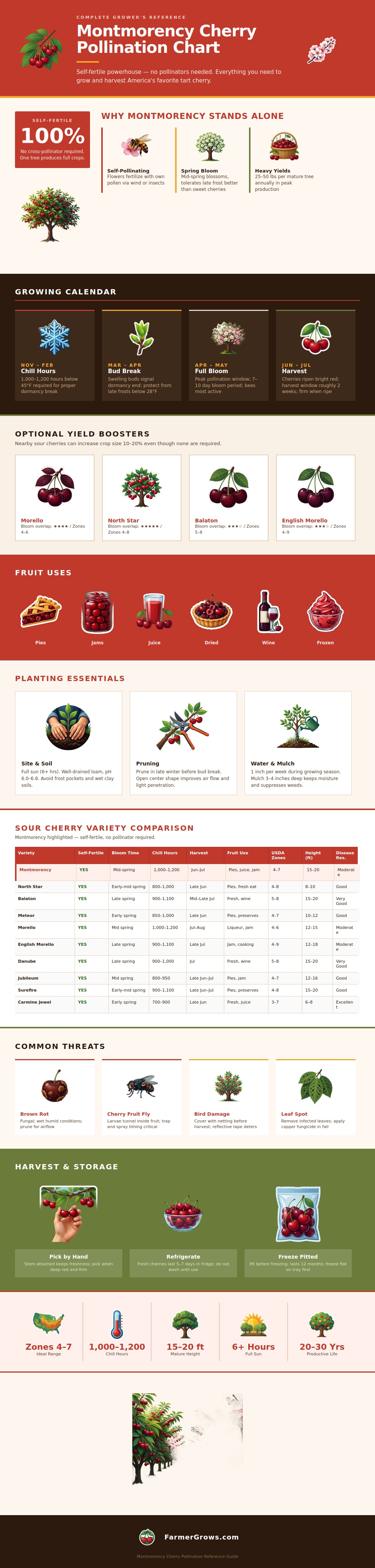
With the Montmorency kind of sour cherry, however, there’s no such issue: It’s completely self-fertile (unlike sweet cherries, which require a nearby partner tree). Plant one Montmorency in your yard and count on a full crop each year (making things much simpler). In case you’re wondering why this one might be unique in your backyard orchard, here’s why: As the infographic up top describes, no other tree need to be planted nearby to pollinate it. That means no calculations is necessary on where to place trees of varying rootstock in relation to each other, Montmorency can pollinates itself, typically with assistance from nearby insects or wind.
Why Plant a Montmorency Cherry Tree
For all those reasons, Montmorency has become the leading variety in both backyard gardens and in commercial production, you simply select a sunny location and start digging. No guessing game involved.
Even without pollination partners, timing remains a part of the equation: You’re still expected to follow the tree’s very precise seasonal timetable, and winter isn’t downtime for it; it’s actualy busy getting ready for the coming year. As the chart points out, the tree wants more than a thousand chill hours (below forty-five degrees Fahrenheit) before it wake up properly from its dormancy. In fact, without frosty nights, it may never really awaken at all, hence one reason Montmorency is recommended for zones four through seven, since winter must be cold enough to reset its biological clock. Without those frosty nights, you won’t see the spring bloom that leads to summer fruit.
In spring, they flower around early May or mid April here. This isn’t exactly a bug; it is a feature. Montmorency tends to bloom just a little bit later then most other stone fruits. This means it avoids the worst late-spring frosts that can ruin crops overnight. Small benefit, but if you’re hoping for an even year-to-year crop, every little bit helps.
Then come the flowers, gone; next up are baby green fruits that start to plump out, and shortly thereafter you’ll spot vibrant red cherries dangling from trees’ limbs. And then comes pickling time: the window is narrow, typically no more than two weeks, so get your pie-crusts rolling well beforehand.
One tree will produce a respectable crop, but adding a companion can increase your yield by up to twenty percent. Some varieties are self-fertile, which means a single plant will pollinate itself. However, you can still gets an additional 20 percent yield gain from cross-pollination effects. This happens with varieties like Morello and North Star, which flower around the same time. If you’ve got room, you might want to add another variety. It’s optional, but they’ll also add some nice diversity to your orchard as long as their bloom windows overlap. Then bees have multiple choices during that brief window anyway.
Growing care of the tree is simple after you have it going. Give it good soil (well-drained loam, preferably slightly acidic at about pH 6). Do not plant in low spots. Even when weather seems fine, frost pockets can kill emerging foliage. Water thoroughly but do not soak the soil. Cut it back each year in late winter to keep the interior open. Reduce humidity around its leaves, as leaf spot and brown rot fungal diseases is a particular problem when the foliage are wet. Pruning also helps. Good air circulation throughout the tree will decrease humidity. Mulch to help maintain moisture in periods of drought without smothering the roots.
The cherries are ready to pick once they’re firm to the touch and deep red. For eating right away, it’s best to pick them by hand; keep the stems attached, though, if you plan to store them for more than a day or two. If planning to store for longer than that, leave stem on (it seals out air, which means moisture will be lost). Stored in refrigerator, they’ll last a week or so. To keep them longer, I like to pit them first and then freeze them. Spread them onto a tray, then place them into bags. Over a year they’ll hold up this way, and are ideal for winter baking.
Tart cherries are a lot of things (a pie ingredient? A jam fruit?) but horticulturally they’re not much: Just respect their rhythm, provide decent soil drainage, and give them what they want (cold winters; warm spring), and they’ll return the favor with juicy fruit. Start now, with one tree, and soon you’ll be eating tart, tart Montmorencys, and making whatever else your heart desires. You should of planted earlier!