
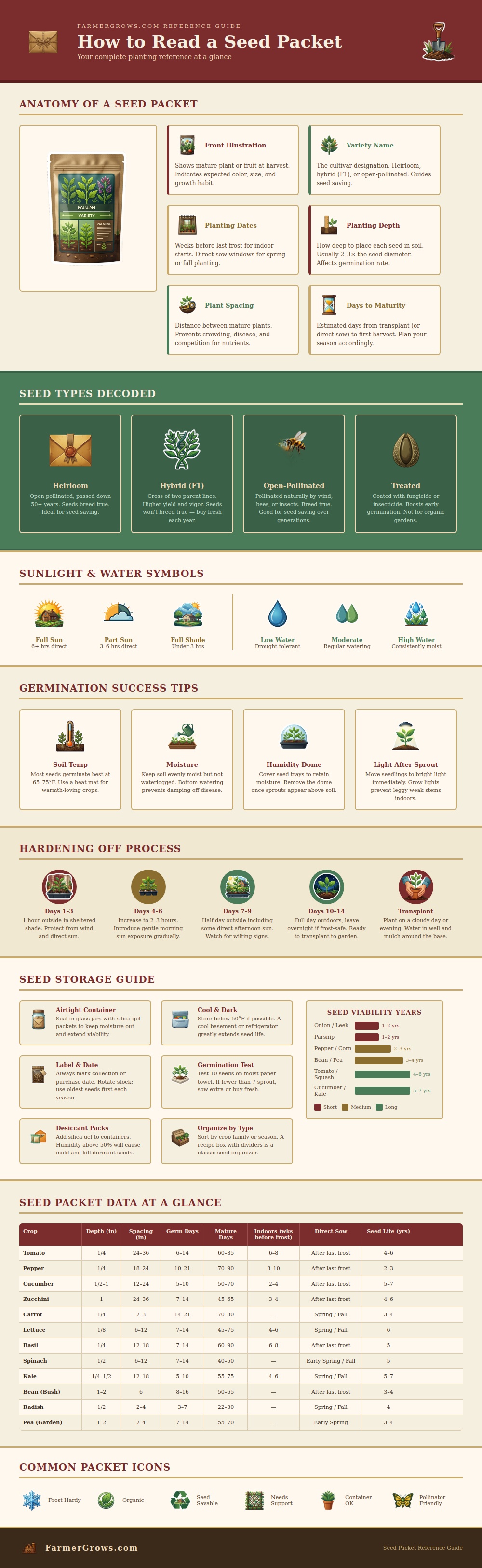
Garden seed packets are your friends. If you focus too much on the illustrations of fruit on them, you might skip over that all-important info in fine print. But that’s the road map for the year ahead. Read it or else…
First check the envelope label: Is it a variety name? A variety name indicate if a seed is an F1 hybrid. Don’t expect seeds saved from hybrids to grow into same plant next year. It also shows if a seed is open-pollinated, which breeds true and means you can save seeds from them or if it is heirloom, which is also open-pollinated.
Read Your Seed Packets
Why does this matter? The difference between hybrids and others impact how well they will grow for you, and where you’ll spend your dollars. Know the difference and avoid disappointment. And spending more than necessary. Open-pollinated are what you’ll select to save seed from. That decision will affect how you do things in garden.
Next: Check your seed packet’s planting depth and spacing numbers. Those aren’t optional; they’re a seed’s biology. If you plant lettuce deep enough to suffocate its seed, it will die. If you plant other seeds too shallowly, they dries out in the wind. The same goes with spacing: Crowded plants fight each other for air and nutrients, which welcomes disease. Radishes can crowd one another tightly; tomatoes requires wide arcs of space. Weak plants don’t fare well in summer heat if you don’t heed those markings.
Timing is another key. When do you sow directly, or start indoors? If tomatoes is sown too soon indoors, they become rootbound monsters who dislike being uprooted and set out. Sow too late and there’s no time for them to reach full fruiting season before fall frost hits.
Tender transplants need to be hardened off first (a gradual transition to life outdoors), which help avoid a jolt called transplant shock. Start them in shade and move them gradually into some sun over a couple of weeks. Let them get their skin toughened to weather wind and UV rays. A slow start saves your backside come planting day in garden.
Seeds last for a few more years, stashed away. Humidity and heat will damage even dormant seeds. Place them in a jar that is air-tight with some drying agent (silica gel). And store in a cool dark place. Some seeds keep longer than others. Onions last one to two years, while kale and cucumbers lasts five or more years. Write down the year you bought seeds, so when you pop open the jar you know how long they’ve been waiting around. That way you’ll use up older seed first. Test any aged beans quickly by placing them between damp paper towel.
The packet tells me how to respect the plant’s requirements. How much seed? Where does it go? When does it get there? No guessing. No more wrestling with Mother Nature. No more. This time, I’m working with her. Everything I need to have a successful crop is inside that envelope. Read it! Pay attention and don’t dig into the ground until you do. What happens in soil will be up to you and your future crop.
Actually, it should of been read sooner. You should of checked carefully. It would of been better if you did. Most people miss detail and then they is disappointed. Naturaly, some plants grows better than others. It’s more difficult than I thought. One should of known. If you want a luxurius garden, you must listen to the packet. If it feels uncomfortabley hard, just take it slow. I am livig my best life in the garden based off these rules. It is different than what I used to do.