
There are many reasons your seedlings stays stunted, and no, you didn’t neglect them. One reason is bad spacing. It’s tempting to cram things in (yes, even herbs). You might think packing them together is the best use of space but then they compete for resources. This is not healthy for any of them.
The plants shade one another, which also means moisture gets trapped in stagnant air pockets breeding mildew. It is a matter of how plants survives, letting herbs spread out so they can breathe.
Why Proper Spacing Helps Herbs Grow
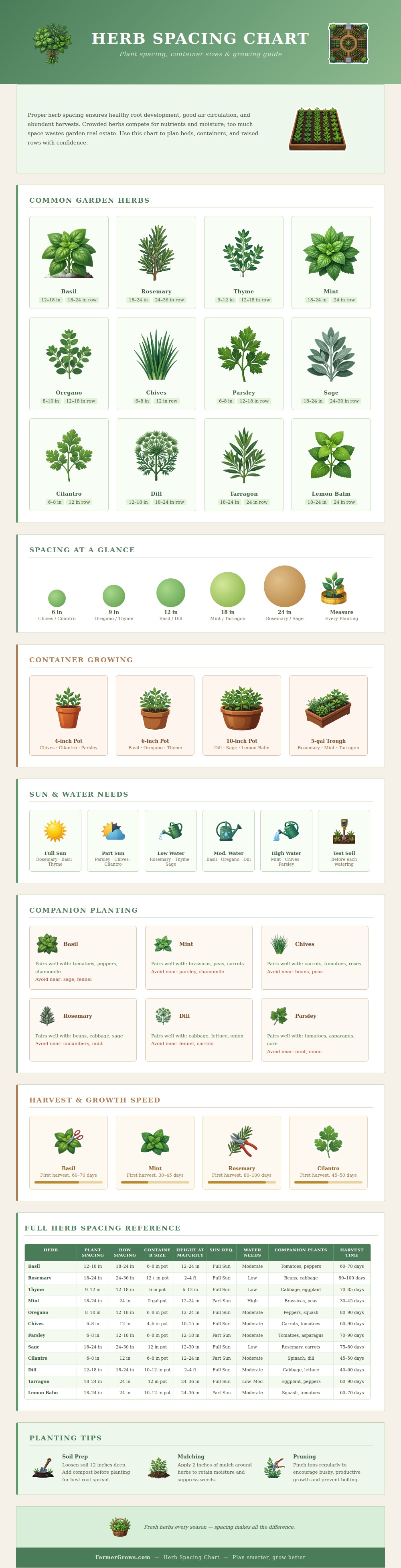
How much room do plant want? There’s a diagram for that. The root system of each plant varies (think: robust vs. Creeping). Basil wants some elbow room; significantly more then thyme. Deep-rooting perennials will stretch out their roots if cramped; shallow feeders won’t mind tight quarters at all. The resulting yield are less, and the stems is weaker.
A classic illustration of such an aggressive plant: Mint is best confined to a container (or perhaps a big trough) because it will overtake a whole bed in just one growing season if you have planted it in the ground without enough room to spare. Isolating mint also ensures that its exuberant nature won’t overrun neighboring crops.
As for their sunlight and watering demands: Rosemary and other Mediterranean herbs will grow best in full sun and dry soil. They won’t take soggy ground, unlike moist, cool-loving parsley or cilantro. Plant them together, but water them different! The same goes for grouping things according to how much space they need; it’s easier to keep everything happy and not beat up the soil when you group what has similar needs.
The great thing about growing herbs in pots is that you can play with scale. You can plant bigger ones in bigger pots or smaller ones in little one. You can also grow chives, which gets going fast and don’t really need much space at all. Placing a full-grown sage in a small four-inch pot will have its roots wrapping around inside and eventually choking it to death. The larger container gives it room to stretch out its roots and store up nutrients as they goes. It’s also ideal if you want to reposition things from season to season.
Another dimension of planting the garden is companion planting. Certain herbs are better with company; certain ones worse. Dill will impede growth of carrots when planted too closely, for instance. Basil prefers being planted with peppers and tomatoes, and it tastes better that way, too. Not all such interactions is folklore. There’s some chemical signaling involved, plus mutual pest deterrence. The who-gets-along-whom factor will help you plan a self-supporting garden.
For best harvest time, space them so they has room to circulate air and light. Herbs that are too close together will be leggy… Reaching for light, and yield fewer leaves and less flavorful ones. Regularly pinch out the tops of your herbs to encourage a bushy habit and to prevent premature flower formation. A well-timed pinching keeps you supplied with fresh, good-flavored herbs.
Gardening begins at the ground level: Preparing the soil is key. Loose, compost-rich soil allows roots to penetrate deeply and access nutrients efficiently. Adding mulch on top will help maintain moisture and keep weeds away that would otherwise compete for food. -> Adding mulch on top will help maintain moisture and keep weeds away that would otherwise compete for food. Wait, I need to rewrite it because “keep weeds away that would otherwise… ” is the awkward part. Rewriting: Adding mulch on top will help maintain moisture and keep weeds away from competing for food. OR Adding mulch on top will help maintain moisture and keep weeds from competing for food. Let’s look at the meaning: The weeds would compete for food if they weren’t kept away by the mulch. Rewriting for plain language: Adding mulch on top will help maintain moisture and stop weeds from competing for food.
Proper spacing further supports your plants’ health, plus it’s good for the gardener, too: better light circulation and less fiddling. Herbs thrive in these conditions…well, most of the time. How do I plan ahead? It is the one thing that makes all the difference between success and struggle in a garden (and even between patches within your own garden). An inch here, an inch there: That’s what separates a wilted plant from a bountiful harvest. First measure; then dig. Fresh garnish, at the ready, is good. So’s fresh air from stepping out the door rather than grabbing it from a jar in the pantry.