
When you buy A healthy sapling of A peach tree, assuming it’s a variety adapted to your area, you think if you just water it well you’ll have a crop. Often not; sometimes even when blooms happen the flower falls off without ever setting any fruit. The problem isn’t lack of love, typically, but rather a misunderstanding about the nature of peach reproduction (and the conditions they prefers).
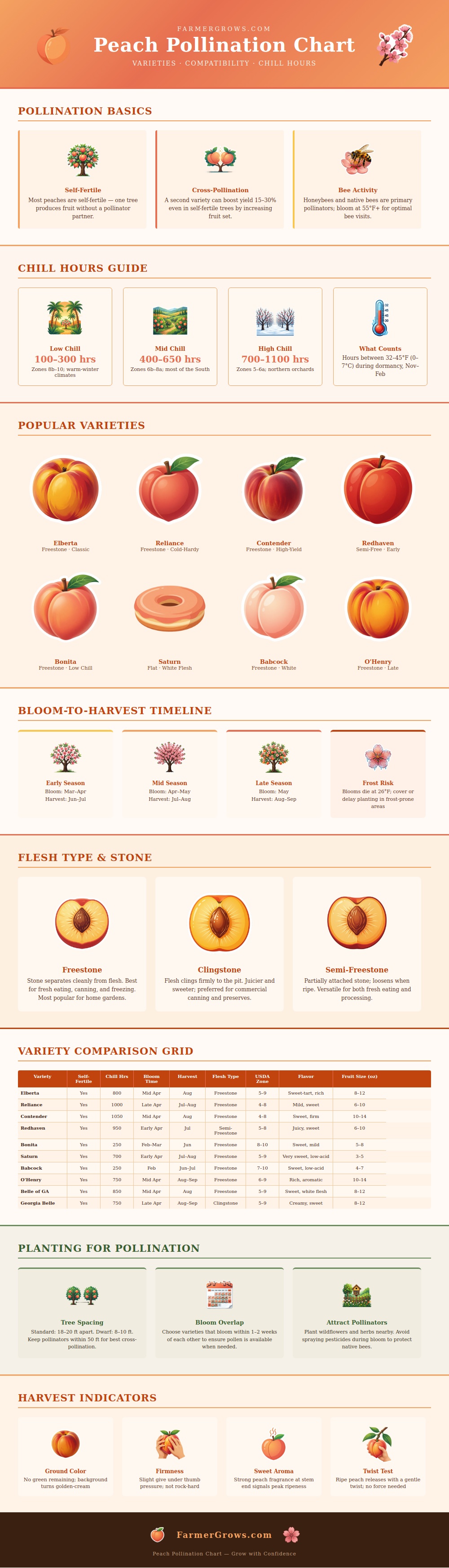
Most moddern peach varieties are self-fertile, meaning a lone tree can indeed produces fruit without a partner nearby. That said: When grown alone, even though they’re self-fertile, they don’t always bear well; adding a different variety can increase your crop by fifteen to thirty percent. This is the reason. When a tree is by itself, cross-pollination provide an insurance policy against lazy bees (or bad weather), ensuring at least some blooms go on to become real peaches. A lot of folks think “self-fertile” equals “self-sufficient no matter what,” but it doesn’t.
Why Your Peach Tree Is Not Making Fruit
Besides considering chill hours (the total number of hours below 45 and above 32 degrees Fahrenheit during the winter months when plants are dormant), which varies by variety, match that number to your growing region’s climate history. High-chill varieties might not sets much or any fruit; in fact, they may even leaf out sporadically if your winters tend to be mild, failing to fully awaken from their winter sleep. In contrast, low-chill varieties, such as those that do well in zones eight through ten, grow happily in warmer climates, whereas northern gardeners want to grow ones that requires seven hundred or more hours of cold. That’s the one variable that matters most when making your selection before you dig.
After you select a tree, it all comes down to timing, since peach flowers are particularly fragile. Down South, they may start to open in February; up North, sometimes not until May. That’s because one wrong late frost, and your whole season of peaches can be ruined within minutes. At twenty-six degrees Fahrenheit, the blooms expire. And there is no bargaining with Mother Nature on this issue. To help ensure against such mishaps, plant your trees near something that will reflect heat (like a wall, say) and/or choose a variety that doesn’t bloom until later in the spring. But you won’t get around it completly.
And then there’s flesh types (meaning: How will you eat it?). If your peach is a freestone variety, the flesh separates cleanly from the pit, making it perfect for freezing or eating fresh. A clingstone hangs on for dear life, but has richer meaty flesh good for canning or jam-making. Between those two adult-sized sofa lie semi-freestones. Knowing which category your peach falls into will avoid wasting time and energy if later in August you change your mind about turning them into salsa. For ease of use, most home gardeners lean toward freestone, which is why I point this out in the visual guide.
The whole thing depends off bees; without them, not even the best-possible cross-pollinating pair of trees will succeed. Native species as well as honeybees starts their active foraging when temps reach fifty-five or so degrees. A wet and cold spring slows pollination. Keeping those insects around means no pesticide sprays in the bloom period; it’s nonnegotiable. A buffer zone of wildflowers planted near the orchard can keep pollinators both healthy and busy all around the place.
It is time to harvest when a ripe peach twists free easily; no forcing is required. Pulling hard means it isn’t quite there yet. You should of waited for it to ripen more naturally. The signs of readiness are a definite aroma near the stem-end, a bit of give when gently pressed between your thumb and finger, and a golden background color underneath all that red blush. These are better indicators than any calendar date.
For peaches, geography and biology determine planting day. It’s not really a question of how or where to plant them. It’s just about getting the chill hours correct, respecting the bloom window, and supporting the bees. Let the rest take care of itself. Every moment of planning is worth those first summer fruits.