
When you plant A moonglow pear tree, thinking how pretty the fruit looks, and how calming that name is, you’re probably setting yourself up to be disappointed…unless you have a pollinator in mind. If you wish to have fruit hanging from those branches come August, a pear tree require a partner to provide it pollen. Many a beginning gardener has been caught out by this biological fact. Learn about it ahead of time, before the first hole’s dug. And save yourself months of what-the-hell-did-I-do?
For example: Moonglow blooms in early to mid-spring; meaning there’s a very small time frame during which it can get pollinated well. That’s the critical consideration of whom you pair the tree with on your property. A candidate might open up two weeks later. By then, the bees may have already left.
Why Moonglow Pear Trees Need a Partner
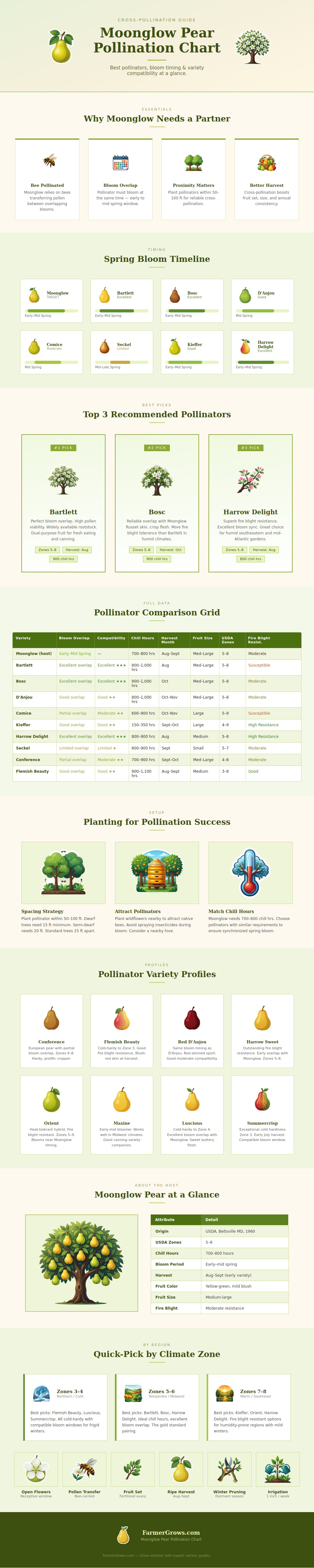
The chart above show what works within that early-spring timeframe. They are not close, but they overlap. If ever there was a standard pick on my list of favorites, Bartlett would of been one. It’s got plenty of good-quality pollen and blooms at the same time. In wetter regions, Bartlett may be prone to fire blight. Depending on your location, this might not even be a factor. Most people rates Bartlett highly as a pollinizer.
Bosc is another favorite that overlaps with Bartlett and also has improved disease resistance in some locations. If your area experiences high humidity, leading to increased fungal concerns, then consider giving the resistant Harrow Delight a try. It doesn’t seem to compromise pollination effectiveness, making it a practical choice.
Success rate hinges on distance. Yes, bees are great workers…but they’re also lazy: convenient creatures of habit. By locating the Moonglow in a range from about fifty to one hundred feet, you’ll guarantee the insects that work it will drift over to its partner tree as well. Put a half a block between them and they may decide not to bother with the added effort. Many gardeners space their trees so far that whether or not any pollination occur is more a matter of luck different than biology.
Chill hours are also important, and so is bloom time. Moonglow needs between 700 and 800 hours of winter chill in order to properly break dormancy. If you plant it with another tree that has radically different chill-hour demands, you’re back to risking desynchronization of springtime schedules, which means one tree waking up too soon (or not coming out of dormancy at all), missing the precious pollination moment altogether. Getting those physiological demands matched makes for a system in which each tree respond to the same cues from the environment.
Pear growing continues to be challenged by fire blight, particularly in warmer areas. That means varieties such as Kieffer and Orient, which is highly resistant to it, have their charms, too, if you’re a southerner contending with other fungal nasties. They may not have quite the most-perfect bloom timing than Bartlett, but consider the trade: perhaps a healthier tree through the rest of the season. And if poor pollination is a problem, there are some hand-pollination tricks to help out, but there is no easy fix for a blighted trunk.
This visual reference shows not only the resistance level to disease but also the harvest month and the chill hour requirements; it shows how all of those things interplay. It eliminates guesswork and provides more than just the compatibility rating. It also gives useful information about each plant, such as if it is a hardy one that will sync up with others. This is true even up North, where Zone 4 gets pretty chilly (Summercrisp is one such option, as is Flemish Beauty). Not everything will work up there, but those ones do; and they bloom synchronously.
Don’t just judge based off fruit size or flower color; consider the bigger picture. Taking on a pear tree is taking on a commitment of planning and patience. It is also welcoming a biological partnership into your home. Timing, bees, and genetic compatibility between partners are what make a pear crop possible. Match those factors right, and the reward is a bounty of sweet, crunchy fruit, earned instead of lucky, each year going forward. Every time you plant more than one variety together, the payback comes again. And know this: If Moonglow wants to put food on your table, she’ll need a friend.