
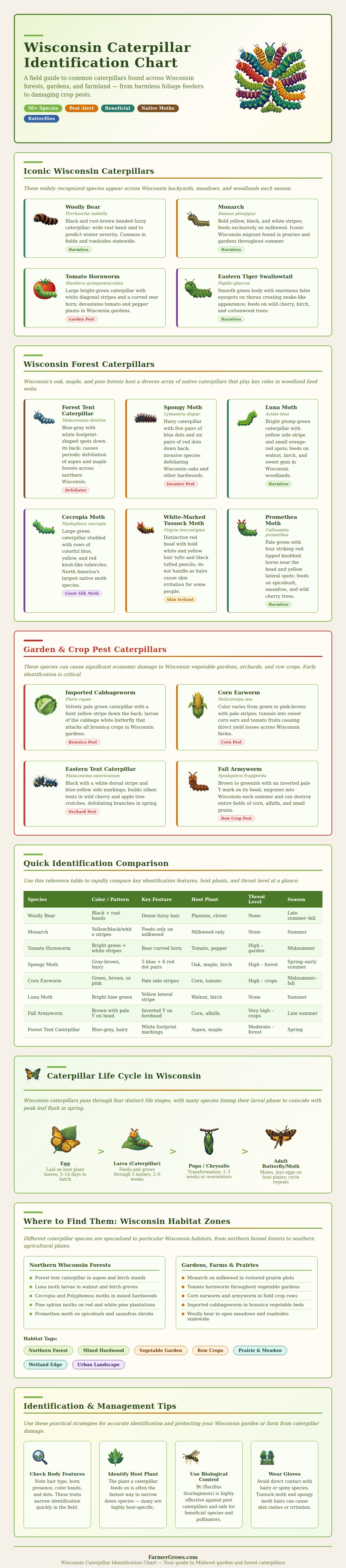
It’s either A potential monarch butterfly headed south toward Mexico, or that thing over there eating your tomatoes. How will you tell? Half the battle is just knowing.
This chart (above) break it down, distinguishing hungry invaders from useful natives, and saves you effort fussing with those bug who aren’t enemies at all but even friends of your eco-system. When you spot some hairiness or sliminess beneath a leaf, don’t panic: Do you want to squash it or spritz it? Take a breath.
How to Tell Good Bugs from Bad Ones
First of all, what’s the location of the animal in question? Many species is really particular about their preferred host plants, and this can be a dead giveaway. A Monarch larva (above) has to be on some kind of milkweed; you got him. Leave that one be; it’s doing a valuable job.
That bright green worm with white stripes chomping its way around your tomatoes? Probably a Tomato Hornworm. Act now: They’re voracious and will chew a plant down to nothing in days.
The differences, whether a distinctive pattern of stripes or other markings, like the curled horn shown below, are clearly shown in the visual guide, so no need to strain your eyes too much trying to get a good look.
Other harmless-looking caterpillars cause trouble in other ways. For example, the Spongy Moth larvae‘s back are covered with distinctive red and blue spots. Their name comes from the way the larvae feed on oaks, defoliating them in forests throughout northern Wisconsin. Losing one tree to leaves is one thing, but a whole stand leafless is another matter.
At the opposite extreme, there’s the Woolly Bear. This black- and-rust-banded fuzzball eat weeds such as clover and plantain, so poses no threat whatsoever to your garden crops. According to old lore, the length of the rusty band tells how severe the coming winter will be, which is more fun fact than science. It is a classic roadside encounter, worthy of letting be.
And safety first: You’re working with fuzzy critters here. And not all fuzz is cuddly. Those eye-catching tufts of white and yellow on the White-Marked Tussock Moth? Pretty…but irritating to bare human hands. Ditto some larvae of the Spongy Moth. Wear gloves if you’re tempted to pluck it off by hand. A little prevention now avoids a rash later. Check the infographic to see which ones are irritants, and read those labels before you touch them.
Not all management requires a can of chemical. For example, the biological control Bacillus thuringiensis (Bt) target the guts of certain pests. This includes caterpillars that tunnel into sweet corn ears and ruin the harvest for both farmers and home growers. The Corn Earworm is not easy to see. It can be pinkish or green, making it vary enough to be hard to pick out until it’s too late. To avoid that, inspect the tips of crops regularly (to catch ’em early). Bt works on the Corn Earworm, among other pests.
There’s more: Life cycles can mean another level of strategy. The larvae (the hatched eggs) will immediately begin gorging for several weeks before seeking out pupation; frequently high up on tree bark or even underground, in the case of many moles and other creatures, awaiting emergence as butterflies or moths. You should of prepared for it. If you interrupt their life cycle at this point, you’ll save yourself a world of trouble down the road (because it is the egg stage that hatches in spring). Knowing when to intervene requires knowing when these creatures will show themselves.
The next time you encounter a crawler on a stem, stop where you are and make an ID first. Then ask: Is it eating something you care about? And is it harmless. Or even beneficial… To me? Matching its image in the visual references here can help you go from garden anxiety to confidence in a moment’s time.
Maybe you’ll allow yourself to be a little more carefree. And keep those vegetables for yourself instead. That’s the essence of good gardening, keeping your efforts targeted at the right things. Actually, it’s just about being mindful based off what grows there. It was naturaly easier to see them yesterday. The moddern way of gardning is harder than it looks. I also recieved some advice about the plants. It is more difficult then I thought.