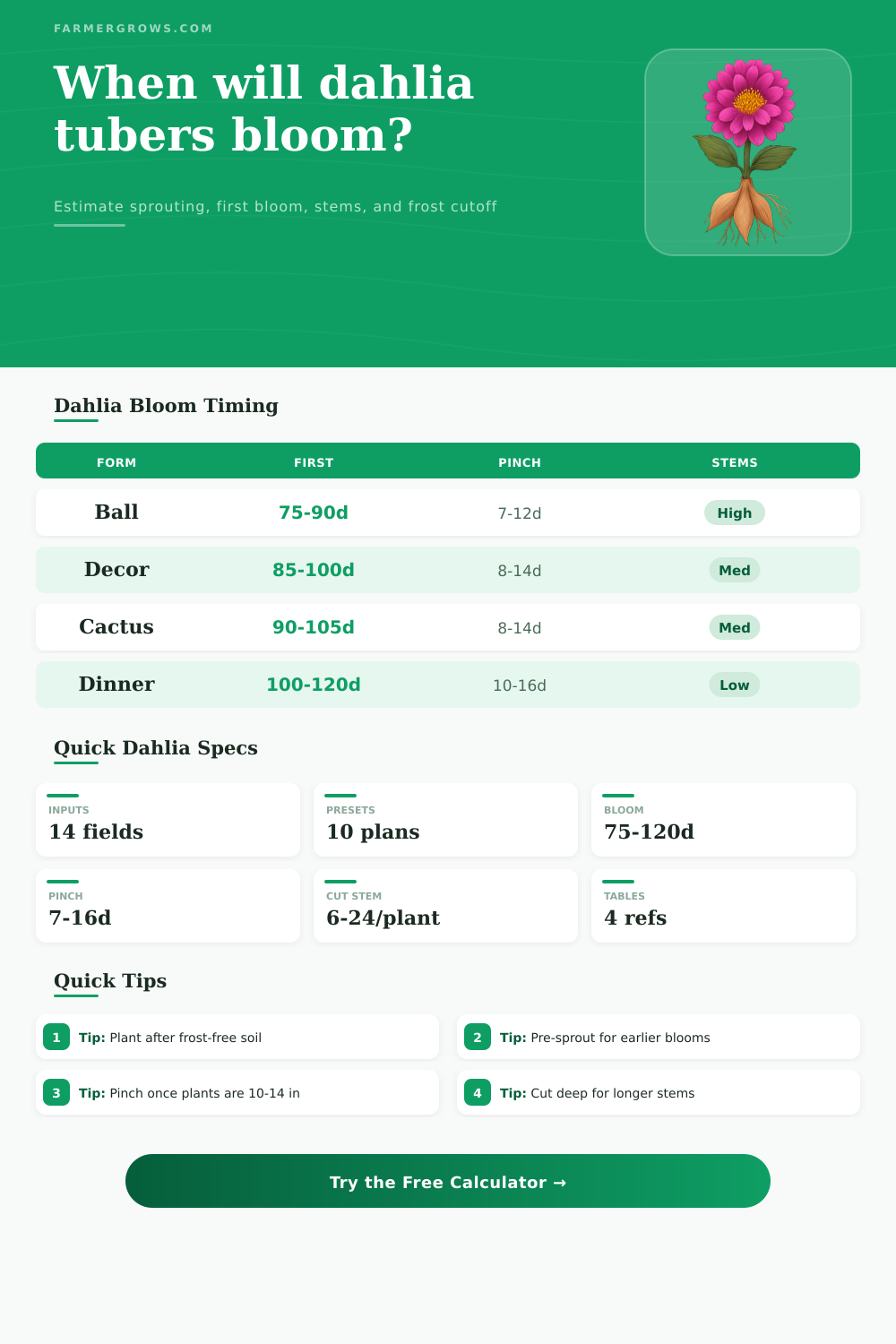
Dahlia Bulb Bloom Time Calculator
Estimate first dahlia blooms from tuber planting, pre-sprout timing, last frost, pinching, cultivar form, clump strength, cutting rhythm, and the first fall frost cutoff.
Dahlias grow from tubers that need warm, frost-free soil. This planner treats potted pre-sprouting, direct planting after frost, pinching, form-specific maturity, and autumn frost as the main bloom timing controls.
Dahlia Bloom Time Results
Your dahlia tuber bloom estimate will appear here.
| Dahlia form | Typical first bloom from planting | Stem habit | Best calculator use |
|---|---|---|---|
| Ball and mini ball | 75 to 90 days | Many cut stems with tidy heads | Productive cutting rows and bouquets |
| Pompon | 78 to 92 days | Small flowers, frequent cutting | Dense patches and filler stems |
| Decorative | 85 to 100 days | Medium stem count, broad form range | Most garden and cut-flower cultivars |
| Cactus or semi-cactus | 90 to 105 days | Medium stems, dramatic petals | Statement cuts and mixed borders |
| Dinnerplate or giant | 100 to 120 days | Fewer stems, large blooms | Show blooms and display beds |
| Collarette or open-centered | 78 to 95 days | Pollinator-friendly, lighter stems | Garden display and mixed cutting |
| Tuber setup | Sprout advantage | Bloom effect | Watch point |
|---|---|---|---|
| Dormant direct-planted tuber | None | Standard season clock starts after warm planting | Do not plant into cold wet soil |
| Potted 3 to 4 weeks before set-out | 10 to 18 days | Earlier first bloom if hardened off well | Protect brittle shoots during transplant |
| Actively sprouted tuber | 14 to 22 days | Fastest start after frost date | Avoid frost and sunburn on soft growth |
| Large clump or strong division | 3 to 7 days | More early vigor and stem potential | Too many shoots may need thinning |
| Small single-eye tuber | Slow | May bloom later with fewer early stems | Keep evenly warm until rooted |
| Dry or questionable tuber | Negative | Delayed sprout and lower stem forecast | Pre-sprout to confirm living eyes |
| Choice | First bloom shift | Stem effect | Best fit |
|---|---|---|---|
| No pinch | 0 days | Earlier first flowers, fewer side stems | Display beds and late starts |
| Light pinch at 10 to 12 inches | 7 to 10 days later | Moderate branching and better stems | Balanced home garden dahlias |
| Standard pinch at 4 to 5 leaf pairs | 10 to 14 days later | Higher quality cut stems | Cut flower rows and bouquets |
| Late or hard pinch | 14 to 20 days later | Can improve branching but costs season | Long seasons only |
| Weekly cutting | No delay after first bloom | Keeps new buds coming | Most cutting gardens |
| Spent blooms left on plant | No bloom start delay | Lower later stem count | Display-only patches |
| Season point | Calendar cue | Bloom or tuber action | Calculator meaning |
|---|---|---|---|
| Safe planting | After last frost and warming soil | Set tubers or hardened plants outside | Bloom clock starts only after safe planting |
| Pre-bloom growth | First 45 to 70 days | Rooting, shoot growth, pinch recovery | Mostly vegetative development |
| Main cutting window | First bloom until first frost | Cut or deadhead every few days | Drives total stem estimate |
| Frost cutoff | First hard frost blackens foliage | Flower production stops outdoors | End date for stems in this model |
| Tuber lift wait | About 7 to 14 days after frost | Allow skins to set before digging where needed | Storage timing note, not bloom production |
Pre-sprout tip: Pot tubers in a warm bright place before the frost date when your season is short. Harden plants off carefully so the head start is not lost to sunscald or snapped shoots.
Cutting tip: Once blooms begin, cut deeply to a branching node and keep spent flowers removed. Regular cutting usually increases total usable stems before frost.
If you’re A dahlia gardener who digs around in soil in late summer and finds nothing but dirt where there used to be a gorgeous tuber, well, you’re just plain heartbroken.
Those of us who buy beauties and get them planted on time; who wait….and wait….the waiting’s the thing. Dahlias don’t bloom according to our timetable. There is an elaborate biology behind what makes them tick. It is based off factors like tuber mass, soil temperature, and even how many growing tips we cuts off and pinch away when we want more growth. With perennials like these that take months for each bloom, guesswork costs money. You may spend an entire spring gazing at a dormant root and have no idea if it’s dead…or asleep.
How To Use The Dahlia Calculator
This calculator takes your gut reactions and turns them into real dates. So yes: It tells you if your dinnerplate dahlias is going to make it through to finishing their flowering before the frost arrives in your zip code.
The biggest mistake is failing to account for soil temperature. Tubers won’t sprout, or will rot, if ground is cold. Soil needs to be at least sixty degrees F for dahlias to use its energy producing shoots instead of roots. The calculator asks for your last frost date and how many days after that you plan to plant, assuming the soil is warm enough for them to grow. Better to have waited another couple of weeks for a strong plant then forced an early start with a sickly one.
Another tricky issue: When do I pinch? At ten inches high, or whenever the plant has snapped up its main stem. That’s hard to do, since you’re taking away the part that’s supposed to bloom. But if you don’t pinch, there’s just one very early bloom, followed by nothing for weeks. Why? Because without pinching, the plant concentrate on going vertical rather than branching out. Side shoots will develops if forced to, and those result in more flowers over time.
The calculator factors in the wait. If I pinch, the first bloom may be delayed by a couple of weeks (it says). But it predicts more stems overall, and thus a bigger number of flowers over all. One flower now, or a season long of them? You decide what’s most important in your garden.
How does the dahlia’s form impact care? The following guide explains when different types flower: A ball or a pompon dahlia will bloom quickly (about seventy-five to ninety days). This is good news if the garden needs many small flowers quickly, such as for a cutting garden. In contrast, a dinnerplate dahlia takes 100 to 120 days to mature to the flowering stage because the plant has to stockpile energy reserves for producing those giant blooms. Plant dinnerplates late, and you’ll find frost hits before the first open bud if you live in a short-season area; the calculator will confirm this. Knowing this can spare you from buying a cultivar that won’t complete its life cycle in your conditions.
Alternatively, you can alter the result by doing some presprouting. Starting tubers in pots indoors three or four weeks before the last frost give them a headstart, which makes them bloom sooner without the risk of damage from planting them in the cold. Choose whether you are planting “dormant tubers,” meaning set out in the ground straight from the bag, or “pre-sprouted,” meaning they are plants already up and going from having been started indoors in pots. That will adjust the calculator’s days to bloom accordingely.
Tuber strength is also a variable in the tool. Because of biomass, a big, sturdy clump will grow faster than a tiny single-eye division, for example. A larger root system support more shoots. This helps it reach full flowering maturity sooner because it doesn’t need to grow new roots from scratch.
Dahlias are a balance between weather and time in the garden. How much time? And what kind of weather? The calculator works out the math by balancing the biological needs of the different plant you want to grow with your location’s frost dates. It takes the emotion out of waiting. Will you have to pinch (for more plants) or not (to get them bigger faster)? Is this going to be a giant-bloom season or not? Are there enough days left at all for giants?
If you knew how these factors fit together, you’d never wonder what happened to the plants; why they’re suddenly so silent. And then you’d know just when they’ll speak up again. You should of known that would of helped.