Habanero Pepper Growth Time Calculator
Estimate habanero seed germination, warm-season transplant timing, first fruit set, green pod stage, orange or red ripening window, container or bed yield, and frost fit.
Habaneros are not as slow as ghost peppers, but they are usually slower than jalapenos, cayennes, and sweet peppers. This planner is tuned for the long warm season, aromatic chinense fruit set, orange or red color finish, and productive patio or bed crops.
📋Habanero Growing Presets
🌶Cultivar, SHU, And Ripening Grid
⚙Growth Inputs
Habanero Growth Time Results
Your habanero timing will appear here.
📚Habanero Reference Tables
| Cultivar | Typical SHU | Ripe color | Transplant to green pods | Transplant to ripe color |
|---|---|---|---|---|
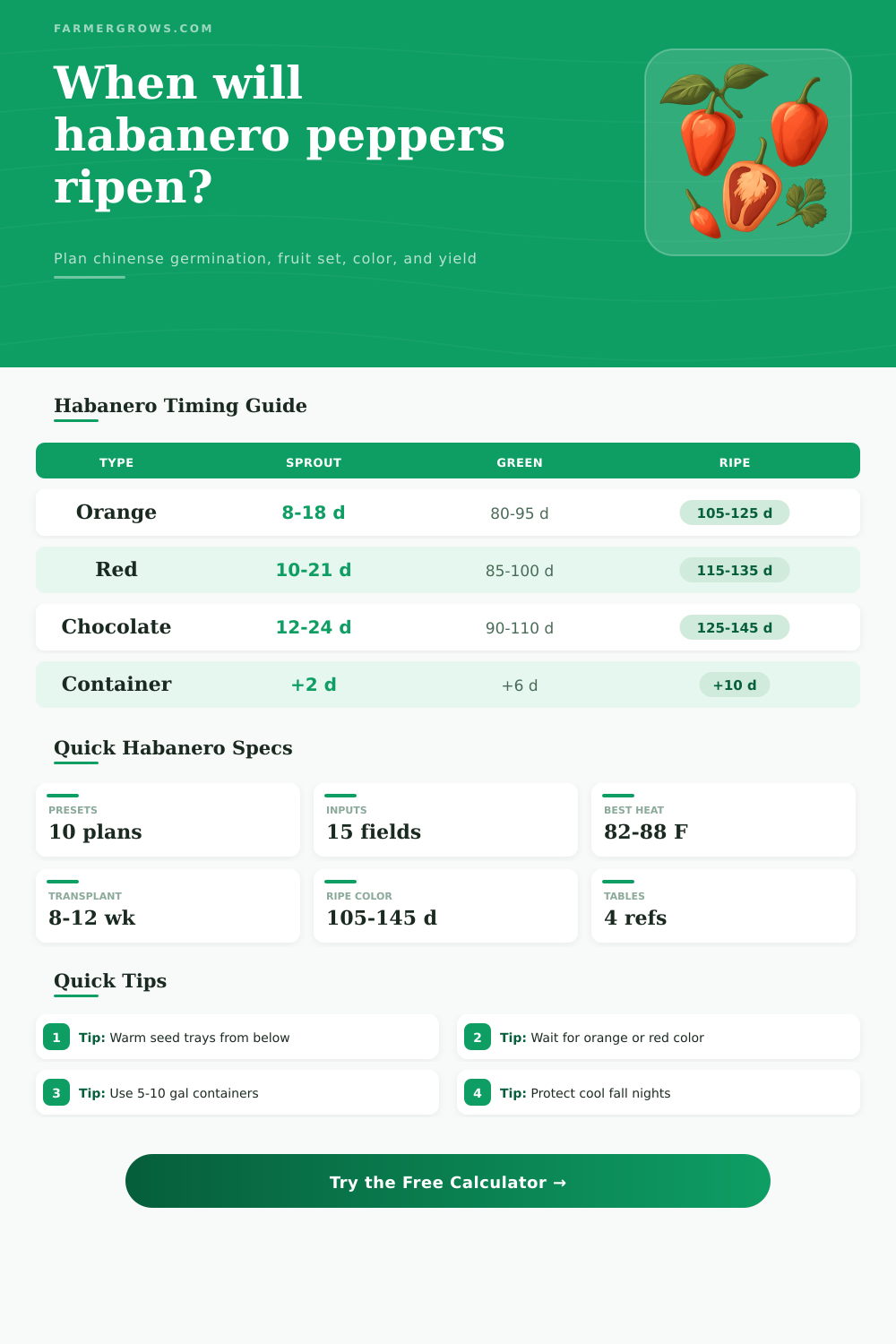
| Orange habanero | 100,000 to 350,000 | Bright orange | 78 to 96 days | 105 to 125 days |
| Red Savina | 350,000 to 577,000 | Red | 86 to 104 days | 118 to 138 days |
| Caribbean Red | 300,000 to 475,000 | Red | 84 to 102 days | 116 to 136 days |
| Chocolate habanero | 300,000 to 425,000 | Chocolate brown | 90 to 110 days | 125 to 145 days |
| White Bullet | 100,000 to 350,000 | Creamy white | 74 to 90 days | 98 to 118 days |
| Stage | Typical timing | What to look for | Main delay trigger | Grower action |
|---|---|---|---|---|
| Sprout | 8 to 24 days | Hooks or cotyledons above mix | Media below 78°F | Use bottom heat and even moisture |
| Transplant age | 8 to 12 weeks after sprout | Stocky plant with active roots | Low light or rootbound cells | Pot up before the plant stalls |
| First fruit set | 45 to 75 days after transplant | Small lantern-shaped pods | Nights below 58°F | Wait for warm soil and protect nights |
| Full green pods | 75 to 110 days after transplant | Firm full-size green fruit | Dry swings or small pots | Keep roots evenly moist |
| Ripe color | 98 to 145 days after transplant | Orange, red, brown, peach, or white color | Cool fall and short days | Add cover or move containers |
| Growing setup | Timing effect | Container or spacing | Expected pods per plant | Best use |
|---|---|---|---|---|
| Raised bed with mulch | Balanced warmth and root room | 18 to 24 in spacing | 35 to 80 pods | Main garden crop |
| In-ground row | Slower spring soil, strong late roots | 20 to 24 in spacing | 30 to 70 pods | Warm climates and market rows |
| 5 gal container | Warms fast but dries faster | One plant per pot | 25 to 55 pods | Patio plants and mobile frost cover |
| 10 gal container | Better water buffer and yield | One large plant per pot | 35 to 75 pods | High-yield patio habaneros |
| High tunnel or greenhouse | Adds 3 to 8+ useful weeks | Stake and prune for airflow | 50 to 110 pods | Northern ripe color and sauce harvests |
| Condition | Habanero response | Timing adjustment | Yield effect | Practical target |
|---|---|---|---|---|
| Media 82 to 88°F | Fastest reliable germination | No delay | Even seedling batch | Use a thermostat on heat mats |
| Nights below 58°F | Slow bloom and root recovery | Add 7 to 18 days | Early blossom drop | Transplant after warm nights settle |
| 8+ hours sun | Strong branching and color | No delay | Better ripe pod load | Keep plants out of afternoon shade |
| Small pot under 5 gal | Root restriction and water swings | Add 7 to 14 days | Lower pod count | Use 5 to 10 gal or larger |
| Cool fall nights | Green pods hold color longer | Add 5 to 20 days | More green than ripe pods | Use frost cloth before the first frost |
💡Habanero Timing Tips
Ripening tip: Habaneros often look full-size while still green, but their fruity heat develops best when the pod reaches its mature orange, red, chocolate, mustard, peach, or white color.
Container tip: A 5 to 10 gallon pot warms early and can be moved under cover in fall. Keep watering steady because dry swings delay fruit set and reduce late ripe pods.
Because growing habaneros is not like growing any of the others, plan your pepper season accordingly. Unlike most people, who sow seeds extra early while waiting for a heat wave, you should of not do that with habaneros. Remember: Jalapeno and bell types is fast growers that finish their life cycles quickly. That is the pace you should follow to meet their needs.
Not so with habaneros. Habaneros (Capsicum chinense) prioritize building a massive vegetative structure before they bother setting fruit. That’s where the math in the calculator above comes into play, but knowing why will help you prevent all-green fruit (or no fruit).
Why You Must Wait to Grow Habaneros
First challenge: Usually it’s the question of when to sow seeds based off when your last frost occurs, which also determines when you transplant them. From day one, habaneros require warmth. They may take three weeks or longer to germinate if sown in the cool of a room temp corner of the house. That puts everything behind by the time they emerge.
Because heat mats make such a big difference, the tool factors in the temperature of the medium they’re growing in. Warmer soil mean quicker sprouting, which gives seedling more time to grow before you must move it outside. You don’t want a spindly plant with stems that flower too early; you want one with strong roots.
Then comes the wait. Once those seeds pop up, you have to wait. People generally wants to get transplants in as soon as ground can be thawed, but for some reason, habaneros just get stalled when planted prematurely in cold soil. The calculator asks for both the night temperature and the age of your seedlings, and then tells you when they’re ready for prime time. If they’re getting cooler than 60 degrees at night, they won’t flower; instead, they’ll conserve their energy. This is why many folks don’t get good fruit set: The season hasn’t warmed up enough to support all that fruit.
Choosing between containers and raised beds really alters things with timing. Containers will let you get a headstart earlier in spring (they’ll warm up sooner) but on the flip side, they’ll cook hotter later, especially in high-summer when they may run dry more quickly. A small five-gallon container provides less of a buffer than a bigger ten-gallon one, as this chart on the page illustrates. Water fluctuations in small containers knocks off flowers. It is not just about sun exposure. Root space also matter if you want high-quality sauce from your yield. Larger containers maintains moisture levels longer, which is helpful since hungry plants needs nutrients to produce fruit.
Waiting Pays Off… Or Doesn’t: Peppers don’t truly ripen until they’re orange or better (green ones taste hot, not fruity as the pepper’s name promises), so again it’s wait-or-not time. Depending on your frost date, the calculator estimates when various cultivars should be ripe. Some of the earliest peppers to reach maturity are actualy some green varieties; others (like chocolate, below) requires a full season to really show their rich coloring. Move pots under cover or use row covers to give the fruit a few more crucial weeks to change color. If the first fall frost catches you with unripe, pale-colored pods, you’ll have plenty, just not much flavor.
Another big issue is heat stress at bloom time. When combined with high temperatures (above ninety degrees) and low humidity, flowers just abort. You know how to avoid this. The tool takes into account the watering habits you report and your sun hours. If the air’s hot, mulch will help keep soil cooler. Whether you get eighty pods or only thirty depends on keeping those roots happy in July’s heatwave.
The last piece of the puzzle is planning for frost. Starting your seed early won’t matter if your season shortens and stops before it ever reaches ripeness on the end of those late fruiting varieties. The extension weeks section of the calculator accounts for the extra weeks of protection you get from using tunnels or greenhouses. An extra month can be the difference between abundant crops and good ones. Give habaneros a long, warming season and they will produce heavily if the conditions are stable.
They don’t forgive root neglect or rushing their starts. Instead of battling nature, I’m learning that growing these hot peppers is more a matter of working within their thermal limits. When you plant according to what’s really happening (the temperature of the soil) instead of by calendar date, it stops being guesswork and becomes manageable. The projections are based on some math; the filling-in-the-gaps part comes from watching the plants along the way.
If you honor their naturaly slower pace, especially for those of the chinense type, you’ll find yourself with jars of complex, livig heat. Give them the time they truly need; it is all connected.