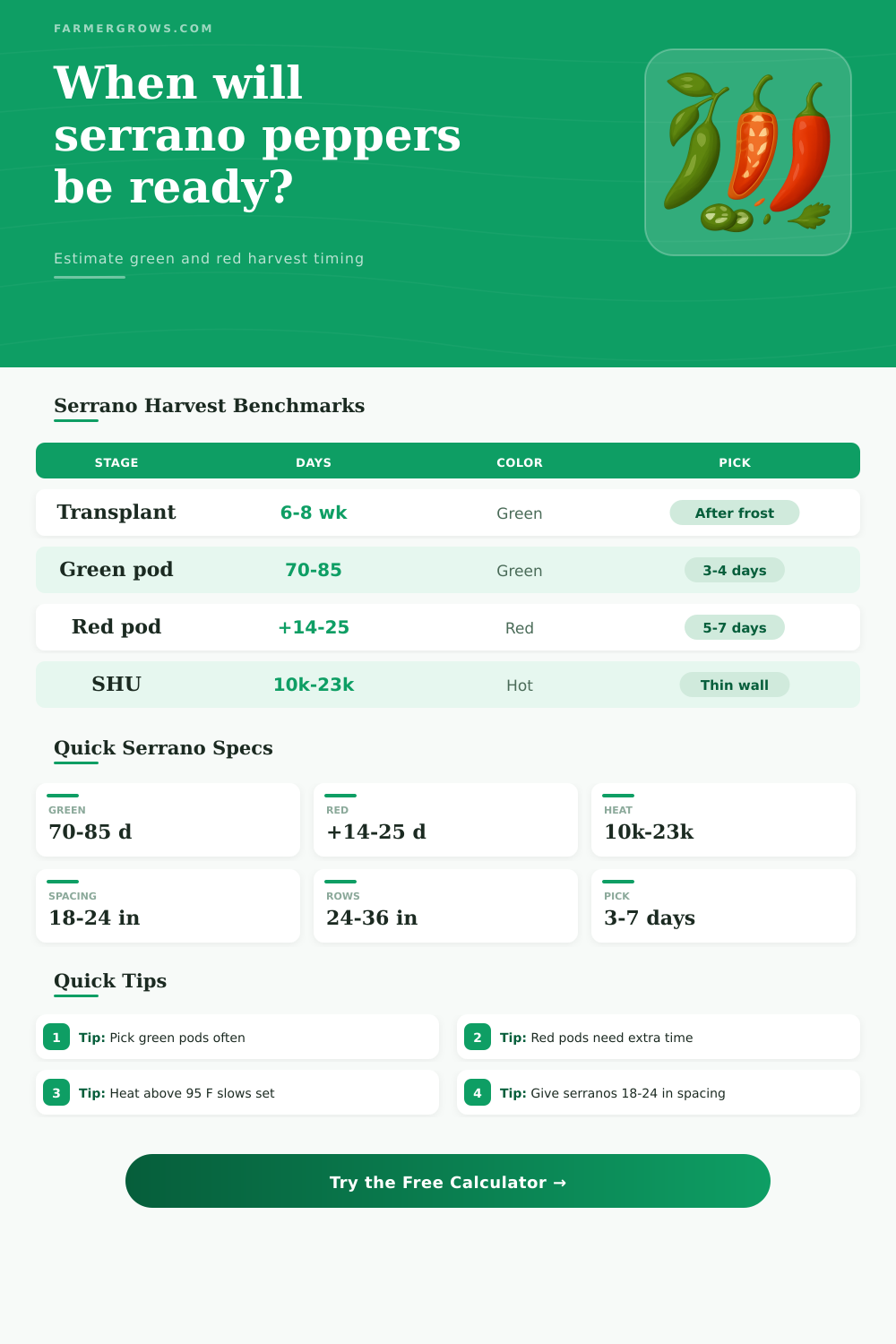
Serrano Pepper Growth Time Calculator
Estimate serrano harvest timing from seed, transplant, or flowering stage with green and red pod dates, SHU-aware cultivar notes, thin-walled pod yield, spacing, heat stress, and pick frequency.
Serranos are usually picked glossy green for salsa and fresh use, then left longer for red color and sweeter heat. This calculator adjusts maturity from transplant by cultivar, spacing, sun, temperature, heat stress, container size, and how often you pick.
Serrano Growth Time Results
Harvest timing is ready.
| Cultivar | Typical SHU | Green harvest from transplant | Red harvest note |
|---|---|---|---|
| Serrano Tampiqueño / classic | 10,000-23,000 | 75 days | Red usually follows 18-22 days later. |
| Serrano del Sol | 8,000-18,000 | 72 days | Useful where early green picking matters. |
| Serrano 25 | 12,000-23,000 | 78 days | Heavier plant; allow room for repeated harvests. |
| Altiplano serrano | 10,000-20,000 | 80 days | Steady set in warm dry gardens. |
| Balin type serrano | 8,000-16,000 | 73 days | Often chosen for uniform green pods. |
| Early hybrid serrano | 9,000-18,000 | 68 days | Best when the season is short. |
| Large-pod serrano | 8,000-15,000 | 82 days | More pod weight but slower first pick. |
| Heirloom market serrano | 12,000-25,000 | 77 days | Expect variable pod length and heat. |
| Step | Serrano timing | Temperature target | Calculator use |
|---|---|---|---|
| Indoor sowing | 8-10 weeks before outdoor planting | 75-85°F soil for germination | Seed preset adds seedling days before harvest count. |
| Hardening off | 7-10 days before transplant | Nights above 55°F preferred | Cool nights add delay to the maturity estimate. |
| Outdoor transplant | After frost and warm soil | 70-90°F days drive growth | Transplant mode starts maturity from this date. |
| First flowers | Often 3-5 weeks after transplant | Avoid repeated 95°F+ stress | Flower mode estimates pod fill from bloom forward. |
| Small pods | Pick size develops fast after set | Steady water prevents drop | Small-pod mode shortens the remaining wait. |
| Planting setup | Spacing | Plants per 100 sq ft | Yield signal |
|---|---|---|---|
| Field row serranos | 18-24 in plants, 30-36 in rows | 17-27 | Good airflow and strong repeated picking. |
| Raised bed intensive | 16-18 in plants, 24 in rows | 33-37 | Higher count but some crowding penalty. |
| Container patio | 1 plant in 5-7 gal | By pot count | Yield depends on water consistency. |
| Greenhouse trellis | 18-20 in plants, 24-30 in rows | 24-33 | Longer season can raise total pick count. |
| Too tight | Under 14 in plants | 51+ | More leaf competition and smaller pods. |
| Condition | Growth effect | Calculator adjustment | Pick cue |
|---|---|---|---|
| Best growth | 75-90°F days with 60-75°F nights | Little or no delay | Green pods every 3-4 days. |
| Cool nights | Slow roots and flower set | Adds maturity days | Wait for glossy full-size pods. |
| 95°F+ heat spells | Blossom drop and pause in pod set | Adds delay and lowers yield factor | Pick green before pods dull. |
| Red harvest focus | Pods stay on plant longer | Adds 14-25 days after green maturity | Pick ripe pods every 5-7 days. |
| Missed picking | Older pods slow new flowers | Reduces yield when interval is long | Use frequent passes for thin walls. |
Green harvest: Pick serranos when pods are firm, glossy, and full length. Frequent green picking keeps new flowers moving on compact pepper plants.
Red harvest: Leave selected pods to ripen red, but avoid holding every pod on the plant if you need a long harvest window and steady yield.
Success with growing serranos depends on following certain timeline for producing fruit, which is all about understanding that natural cycle of the pepper. Get out of sync with those dates and you’ll be missing the fruit entirely or getting it way too late in the season. Fortunately, there’s a calculator to do the math for you. It take your local conditions and start date and calculates what harvest date to expect. You won’t have to guess if your crop will be harvested before frost arrives even if you have a late spring.
Spacing between plants also impacts light penetration and airflow to the lower branches. Generally speaking, the closer they are sown together (less than eighteen inches), the more humid it become between them, creating a humidity trap that invites disease (and slows foliage drying after rainfall). The tool will adjust your expected yield based off this planting spacing, since crowded-in plants don’t photosynthesize as efficient, either. Small details matter; proper spacing change the final weight.
Tips for Growing Serrano Peppers
Summer weather and heat impact how well the flowers grow. Serranos don’t like super-hot weather; they like it warm, and as daytimes reaches into the nineties with consistency, pollen viability begins to decline. In such conditions, the flower simply abort before any fruits can set. The process pauses for two or three weeks, pushing back when you’ll harvest by that amount of time. That’s why the calculator includes expected hot days, so it will give you a reasonable guess at what date to expect those pods to be red. If you’re located in a city heat island or desert climate, add on some delay days.
It’s also a matter of time: Which harvest are you after, green or red? At any point during the growing season, picking a green (firm) pod gives you maximum levels of capsaicin. As red (ripe) ones soften, they have drawn some of that precious energy away from fruit to focus it on ripening. Overall yields will be lower, though less hot: That’s the tradeoff. That said, you’ll see type differences in how this plays out, as shown in the reference table below. Some early hybrids deliver green pods in sixty-eight days, while bigger-pod types might need as long as eighty-two or longer to get there. Once you know your pepper type, your picking plan will follow.
But here’s the kicker: How often you pick also matters to plants’ productivity. Once those thin-walled serrano-type peppers begins to go dull (and lose their ability to be stored on the plant), it’s game over. If you don’t check in regularly enough, the older ones will tell the plant that no more please. That’s nature talking not being malicious. Every three or four days makes the metabolic engine run; otherwise the plant stops generating new blooms. The calculator tells you how often to pick (based on what interval you select). That helps with planning out when to visit the garden so you don’t miss best time to eat.
The key is starting from seed indoors, where you have control at this early stage of growth. Too-early transplanting sets roots back by stalling them in cool soil; and then what happens? Not much happen until it warms up. Let nature do that work for you; waiting until the soil warms up ensures the first few weeks are spent building biomass. Same thing in five-gallon containers as it is in raised beds: They require plenty of light and moisture to drive those seventy-five days. The tool will help you visualize the finish line so you can plan for your salsa ingredients to match, with confidence that there’s a date you can rely on.
You should of planned ahead. To grow serranos, one must work on the same schedule as the plants, not against their nature. Respect their heat limits; let them breathe. Regularly pick so they continues to produce all season long. Be patient and you’ll have a continuous supply of fresh peppers to eat. Once your plants is in the rhythm of regular picking, the wait for your first fruit isn’t so bad anymore. Actualy, it feels naturaly easy.