Poblano Pepper Growth Time Calculator
Estimate when poblano plants will set harvest-size green pods, when selected fruit can ripen red for ancho peppers, and how much fresh or dried yield to expect from your spacing.
Use this calculator for Capsicum annuum poblano and ancho types. It models transplant age, days after transplant, temperature drag, pod color stage, spacing, and dry-down losses so the estimate stays distinct from banana, cayenne, shishito, or other pepper harvest patterns.
Poblano Growth Schedule
Dates are adjusted for cultivar, starting point, temperature, sun, spacing pressure, and crop stress.
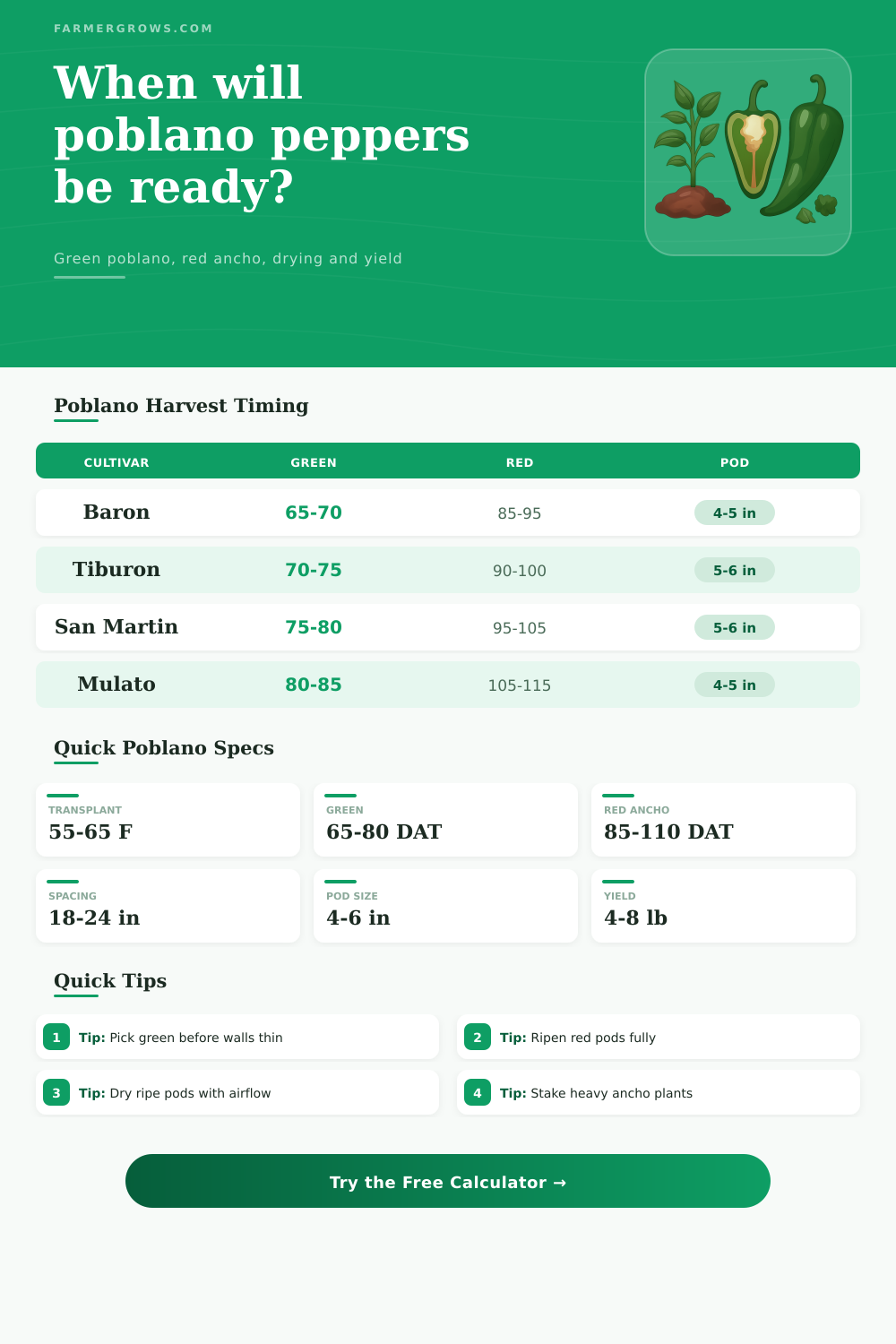
| Cultivar or Type | Green Poblano Harvest | Red Ancho Ripening | Best Use |
|---|---|---|---|
| Baron poblano | 65 to 70 days after transplant | 85 to 95 days after transplant | Reliable green roasting pods and short-season gardens |
| Ancho Gigante | 72 to 78 days after transplant | 95 to 105 days after transplant | Large red ancho pods, stuffing, and drying batches |
| Tiburon hybrid | 70 to 75 days after transplant | 90 to 100 days after transplant | Market green poblanos with uniform shoulders |
| San Martin ancho | 75 to 80 days after transplant | 95 to 105 days after transplant | Classic red ancho drying flavor |
| Mulato Isleno | 80 to 85 days after transplant | 105 to 115 days after transplant | Dark mature pods for mole-style drying |
| Open-pollinated poblano | 72 to 82 days after transplant | 95 to 110 days after transplant | Home garden roasting, stuffing, and seed saving |
| Stage | Pod Signal | Timing Use | Yield Effect |
|---|---|---|---|
| Green poblano | Glossy dark green, full shoulder, firm wall | Pick repeatedly from the first flush onward | Highest fresh weight and more follow-up flowering |
| Breaker color | Green pod shows bronze, brown, or red patches | Hold for ancho if frost window allows | Stops adding much size but gains mature flavor |
| Red ripe ancho | Fully red to red-brown, slightly softer wall | Pick for drying before rain or sunscald damage | Lower fresh yield count, stronger dried flavor |
| Overripe field pod | Wrinkled, thin wall, cracking, or soft spots | Use only sound sections and dry quickly | More trimming loss and storage risk |
| Post-Harvest Plan | Best Starting Pod | Typical Window | Handling Note |
|---|---|---|---|
| Roast fresh green poblanos | Firm green pods, 4 to 6 inches long | Roast within 3 to 5 days after harvest | Chill unwashed pods and blister skins when ready |
| Air-dry ancho pods | Fully red ripe pods with sound walls | 10 to 14 days in warm moving air | Split thick shoulders if humidity stays high |
| Dehydrator ancho pods | Red pods, stem trimmed, walls opened | 8 to 14 hours at low heat | Dry until leathery and no cool wet spots remain |
| Smoke-dry ancho pods | Red ripe pods with mature flavor | 1 to 2 smoke sessions, then finish drying | Use gentle heat so sugars do not scorch |
| Planting Pattern | Recommended Use | Expected Pod Size | Yield Planning Range |
|---|---|---|---|
| 18 in plants, 30 in rows | Intensive beds and small farms | Medium-large 4 to 5 inch pods | About 4 to 7 lb fresh per plant |
| 20 to 24 in plants, 30 to 36 in rows | Large ancho pods and better airflow | Broad 5 to 6 inch pods when watered evenly | About 5 to 8 lb fresh per plant |
| 14 to 16 in plants, tight row | Short-season green harvest only | More medium pods, fewer giant pods | Reduce estimate by 10 to 20 percent |
| Container plant, 5 gal or larger | Patio poblanos with regular feeding | Usually 3.5 to 5 inch pods | About 2 to 5 lb fresh per plant |
Transplant timing: Set poblanos out after soil is near 60°F and nights are reliably mild. Cold starts delay the first green harvest more than the calendar suggests.
Ancho planning: Leave only the best, thick-walled pods to turn red. A split harvest keeps plants producing green poblanos while still giving a focused drying batch.
MID-MAY: You survey a tray of barely-big Poblano seedlings, thinking, panic, it’s going to get hot (ninety degrees, says the prediction), and you need roasted peppers come July. But who can say how long things will take? How fast they grow depend on the genetic makeup of the variety (or cultivar); how regularly you water; even the temperature of soil.
The calculator above does all that math for you. If you plug in facts such as your start date and growing conditions, to help you know if your seedlings is merely taking their time to establish roots, or truly running behind. It’s more than days-in-the-ground arithmetic. It’s reading the biology of day.
How to Plan Your Pepper Harvest
The “days after transplant” count resets based off whichever action happens first, and this is where most gardener make a mistake. If you do an indoor sowing of seeds on March first and then set out transplants on May tenth, the counting starts at day one of the transplant day, May tenth. The tool requires you to choose your start date as either first flower, or seed sowing or transplanting.
Why? Because everything happening inside the plant’s body slow down if it gets any stress like early shade or cool soil. Waiting around for warmer temperatures, roots won’t grow till the soil temperature reach at least sixty degrees Fahrenheit, which delays things even more then the calendar does. That lag isn’t accounted for in the calendar; it shows itself in adjusted harvest dates the calculator generates. It is a tiny thing, but it make all the difference in the timeline.
You must also decide which peppers will be ripe when. Because the variety’s expected ripening time can vary so much, choosing between harvesting green pods or letting them ripen into red ancho chiles is one of many options that require different timing. With the green ones, you harvest at full-size but still-firm-walled fruits, about 65-80 days (so by mid-summer here) to roast or stuff them; those same plants would of kept producing, eventually turning pods red as they ripened (and drying them for future use). To plan for red-podded plants, you must also wait for the pods to change color before the frost comes.
This is why some people seeking the sweetness of dried ancho chilies want to know the exact day it happen. Some cultivars, such as Mulato Isleno, mature a lot later then others like Baron, which grow faster and make it easier to meet the sweet-drying-anchos target. The chart on the page explain it all and shows how choice of cultivar affects your ultimate cutoff date for harvesting.
Crowding plants might seem like a way to maximize yield per square foot, so we tend to plant them closer together… Until the consequences is noticed. Reduced airflow leads to thicker humidity around leaves, which invites disease and thins the pepper walls. It tweaks the expected yield count according to distance between plants, in inches.
Looser spacing usually results in thicker-walled, larger pods good for drying. Tighter spacing may result in fewer but smaller pods all told. What’s most important to you: quantity, or quality? And last: What will you do with it after harvest? Because different methods require slightly different maturation on the vine, think about that now.
You need leathery, fully mature red pods if air-drying; fresh green ones will roast up smoky and have some bite. Dried yield is also calculated, since there is a lot of weight loss, up to a factor of ten. Knowing this allows you to sow what you’ll really need to be happy in the kitchen rather then disappointed at harvest time!
You can have a jar for stews through winter, or a salsa bar all summer long. Don’t freeze or lose any more precious unpicked fruit by not having the timing down. Let the data work for you, and keep an eye out on your plants. The tool should of working your schedule, not vice versa.