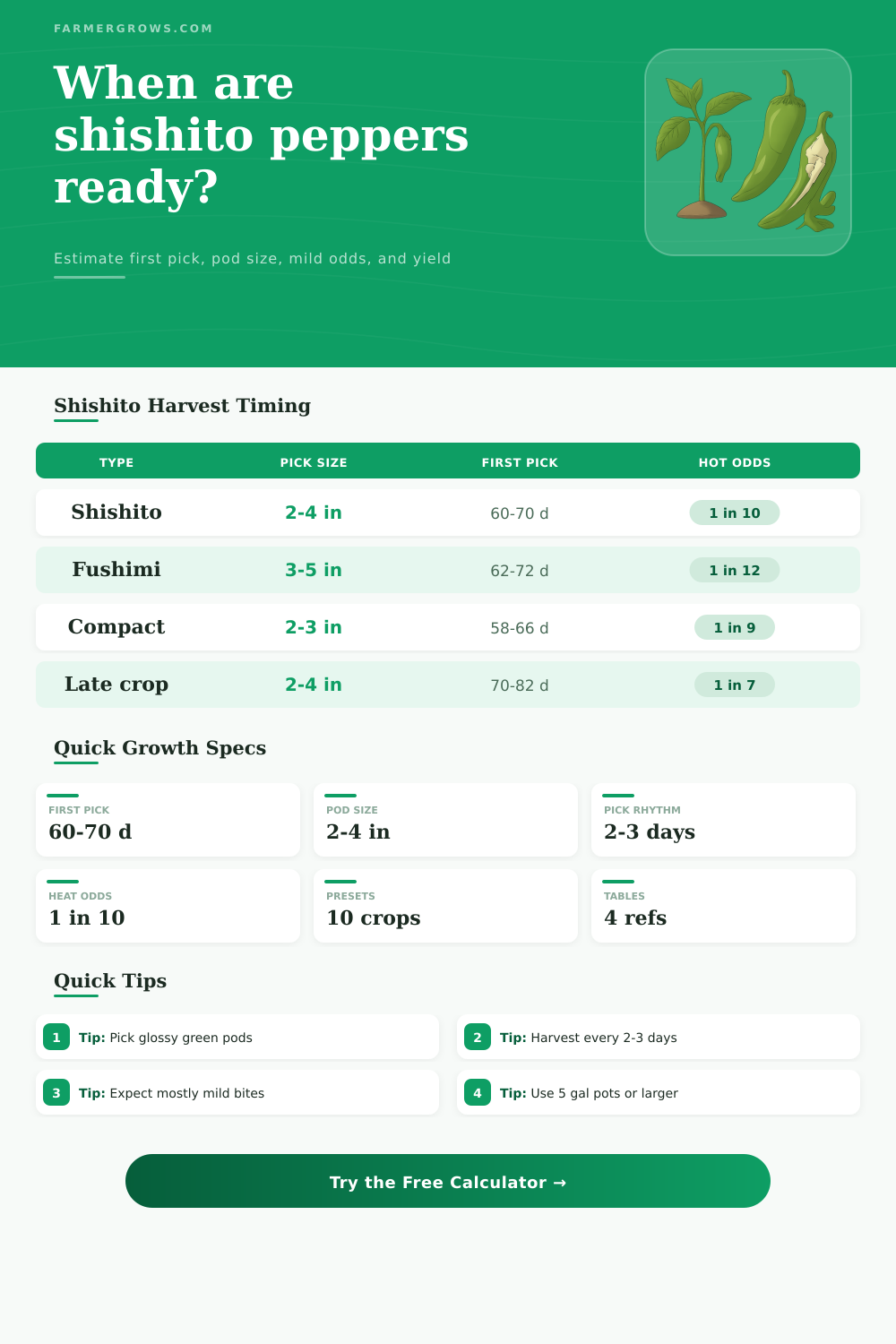
Shishito Pepper Growth Time Calculator
Estimate transplant-to-first-pick timing, glossy wrinkled green pod size, succession picking rounds, container or bed yield, and the odds that a usually mild shishito pod turns spicy.
This planner is tuned for shishito-style Japanese frying peppers picked early while green, thin-walled, glossy, and wrinkled. It treats red pods as a late-season option, not the main blistering harvest.
Shishito Growth Estimate
Enter your growing conditions to estimate first pick and harvest rounds.
| Type | Best green harvest size | Transplant to first pick | Pod texture cue | Heat note |
|---|---|---|---|---|
| Classic shishito | 2 to 4 inches | 60 to 70 days | Glossy green, wrinkled, thin wall | Usually mild, about 1 hot in 10 |
| Early hybrid shishito | 2 to 3.5 inches | 55 to 65 days | Light wrinkle before pod gets heavy | Mild unless stressed or over-mature |
| Fushimi sweet type | 3 to 5 inches | 62 to 72 days | Long slender green frying pods | Often milder than classic shishito |
| Compact container strain | 2 to 3 inches | 58 to 68 days | Short pods, quick repeat flowers | Small pots can raise heat odds |
| Late or cool crop | 2 to 4 inches | 70 to 82 days | Wrinkled pods may size slowly | Cool starts delay harvest more than heat |
| Planning start | Typical timing | What to enter | Why it matters |
|---|---|---|---|
| Indoor seed sowing | 10 day germination plus 7 to 9 week seedling | Seed date mode | Calculator converts seed date to transplant date |
| Store-bought transplant | Start clock at planting outdoors | Transplant date mode | Best for garden-center starts and plugs |
| Warm soil transplant | 60 to 65 days to first green pods | 65 to 75°F soil | Warm roots move quickly into bloom and pod fill |
| Cold soil transplant | 68 to 82 days to first green pods | Under 60°F soil | Plants stall before branching and flowering |
| Protected early crop | 55 to 65 days to first green pods | Tunnel or warm microclimate | Protection improves transplant-to-first-pick timing |
| Pick interval | Pod stage | Effect on new flowers | Kitchen use |
|---|---|---|---|
| Every 1 to 2 days | Small glossy green pods | Fastest repeat set, lower pod weight | Snack-size blistered peppers |
| Every 2 to 3 days | 2 to 4 inch wrinkled green pods | Best balance of pod size and repeat blooms | Classic skillet blistering harvest |
| Every 4 to 5 days | Mixed full-size green pods | Moderate repeat set, heavier picks | Grilling, roasting, and meal prep |
| Every 6 to 7 days | Large green to color-turning pods | Slower new set as pods stay on plant | Mixed flavor, more chance of heat |
| Over 7 days | Over-mature or red pods | Flowering slows until pods are removed | Seed saving or small red pepper batches |
| Growing setup | Spacing or volume | Typical pods per plant | Yield behavior |
|---|---|---|---|
| 5 gallon container | One plant per pot | 18 to 35 pods | Works well if water is steady and roots stay cool |
| 10 gallon patio pot | One large plant, or two light plants | 25 to 45 pods | Better water buffer and longer harvest window |
| Fabric pot or grow bag | 5 to 10 gallons | 20 to 40 pods | Good roots, but dries fast in hot wind |
| Raised bed | 18 inches apart | 25 to 55 pods | Strongest garden option for repeated green picks |
| Market bed | 12 to 18 inches, picked often | 30 to 60 pods | Frequent harvest keeps small pods coming |
For blistering harvests: Pick while pods are glossy green, lightly wrinkled, and about 2 to 4 inches long. Smaller frequent picks keep new flowers setting.
For low-heat odds: Avoid drought swings, tiny hot containers, and over-mature pods. Stress does not make every shishito hot, but it can raise the roulette bite.
But there’s something risky about growing shishito peppers: One in ten pods will be hot. You think you’re eating sweet, blistered vegetables, but suddenly, boom! Heat. That happens frequent enough that it leaves you wondering. And that means you have to plan carefuly for harvest.
If you know your soil conditions and your transplant date, you can plug those numbers into the calculator, which does the math for you: When should you expect those green pod? The primary factor is soil temperature. When gardeners looks at calendar dates or air temperature, they’re forgetting that plants are roots-down creatures and that their roots responds to heat in the soil. If you transplant when the soil is still around 50 degrees, the plant will mostly stop growing while it tries to develop its root system. This cold shock sets back both flower formation and the first crop by two weeks or more. Transplant into warm soil and the plant form fruit right away. Count days from indoor seed-sowing or not; what counts is whether you checked your thermometer at planting time.
How to Grow Shishito Peppers
Once the plants start producing they follow a harvest rhythm. With shishitos, they don’t drop their fruit as they ripen; they simply hang on. To continue production, therefore, you must pick them every two or three days. When you remove the pods, the plant respond by forming new blooms very fast. Waiting a week before harvesting reduces your overall yield for the season and also lengthens the cycle.
The pod size matter to taste and texture. Younger, smaller pods is thin-skinned, which means they’ll blister up fast in the skillet. They will be crisp-tender in a few moments. Older, larger pods are thicker fleshed and take longer to cook, going leathery. They’re hotter then, as they mature. All sizes follow the one-in-10 rule, but capsaicin production go up on stressed plants as a defense mechanism. Well-watered plant stay less hot, and younger pods maintains a steady level of heat and texture.
Adding a twist: Pots, such as these ones on a patio or balcony, is even more challenging because their contents dry out quickly. Even if you have a five-gallon pot, it doesn’t hold much against the forces of summer wind. Water repeatedly to prevent soil from swinging between wet and dry, which will stress the plants and make them overheat. On patios and balconies, use bigger pots and layer mulch heavily over the top. Keeping the root zone steady and cool helps the plant concentrate on forming peppers, not surviving drought.
Gardening with shishito peppers is about following the right routine rather than using exact recipe ingredients. Get them growing in warm soil. Pick frequently to keep them coming, don’t let them get too hot or dry. You should of picked them just when they’re ready. It’s all knowledge that adds up to feeling as if you have control over when things happen (not luck). Yes, sometimes there will be some hot ones, but now they’ll show up when you want, not at random.