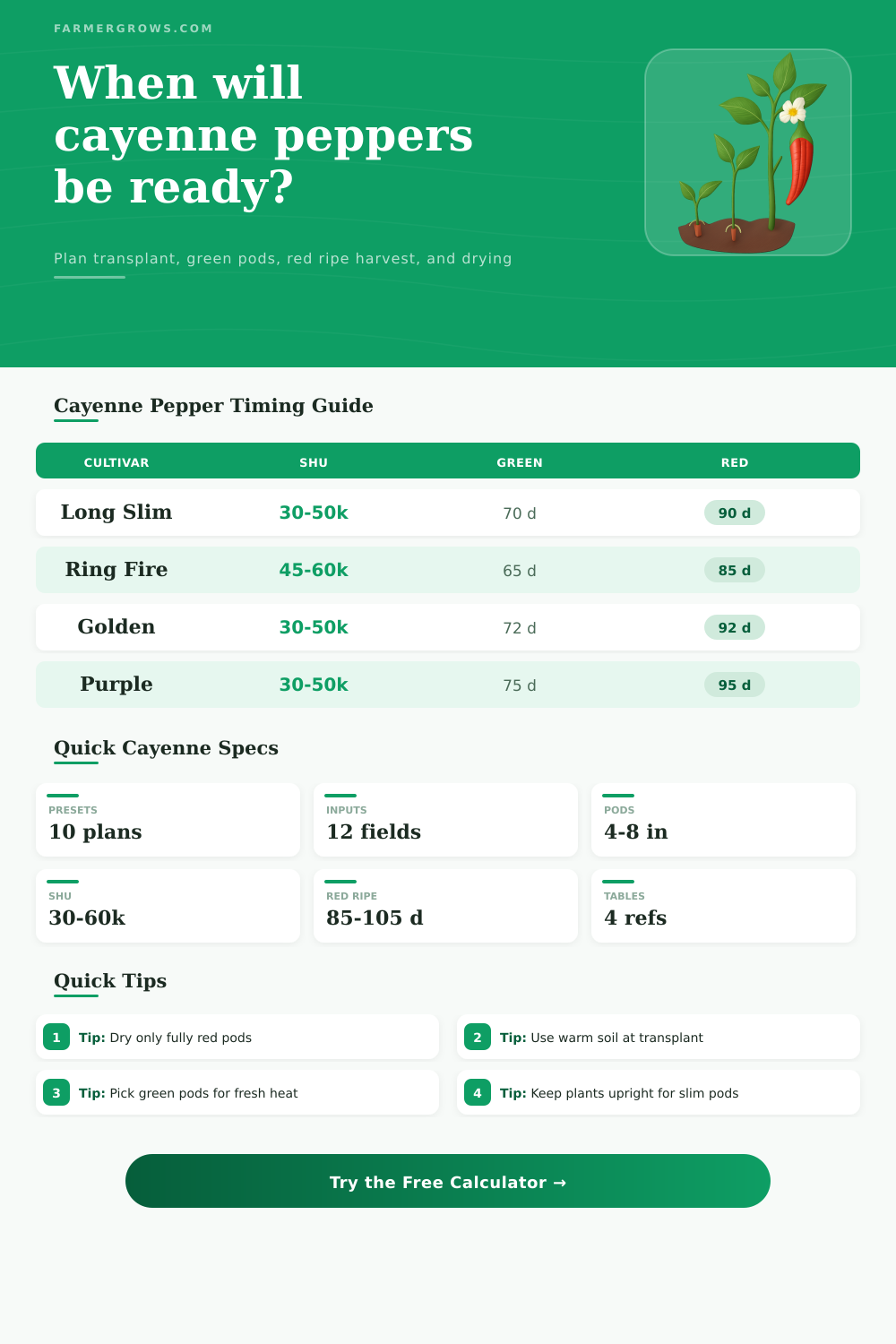
Cayenne Pepper Growth Time Calculator
Estimate cayenne transplant timing, first green picking, fully red ripe harvest, dehydration finish, plant density, and fresh-to-dry yield for long slender pods grown for flakes, powder, strings, or fresh heat.
Cayenne is not a generic hot pepper schedule. This planner is tuned for narrow 4 to 8 inch pods that are often picked fully red for drying, flakes, powder, or ristras, while still allowing earlier green harvests for fresh cooking.
📋Cayenne Pepper Presets
🌶Cayenne Cultivar Snapshot
⚙Cayenne Growth Inputs
Cayenne Growth Schedule
Adjust the inputs and calculate to build a cayenne-specific calendar.
📊Cayenne Cultivar, SHU, And Drying Grid
| Cayenne cultivar | Typical SHU | Pod shape | Best harvest use | Drying note |
|---|---|---|---|---|
| Cayenne Long Slim | 30,000 to 50,000 | 5 to 7 inch narrow red pods | Red ripe powder, flakes, sauce | Thin walls dry evenly in dehydrator or warm air |
| Ring-O-Fire | 45,000 to 60,000 | Shorter slim red pods | Short-season red harvest | Earlier color makes it useful where frost arrives fast |
| Golden Cayenne | 30,000 to 50,000 | Slender yellow-orange ripe pods | Colorful powder and fresh heat | Dry separately if you want bright yellow powder |
| Purple Cayenne | 30,000 to 50,000 | Purple young pods, red when mature | Fresh color plus ripe red drying | Wait for full red if storing dry peppers |
| Joe's Long Cayenne | 30,000 to 50,000 | Extra long pendant pods | Strings, ristras, whole dried pods | Support branches so long pods hang cleanly |
| Carolina Cayenne | 30,000 to 50,000 | Slim red cayenne pods | Humid gardens and red processing | Good airflow still matters before drying |
⏱Growth Stage Timing Table
| Stage | From seed | From transplant | Cayenne-specific cue | Adjustment trigger |
|---|---|---|---|---|
| Germination | 7 to 21 days | Already complete | Warm media speeds cayenne seedlings | Cool seed trays can add 7+ days |
| Transplant-ready seedling | 7 to 10 weeks | Day 0 | Sturdy stem, roots filled, no flower stress | Hold longer if nights stay below 55°F |
| First flowers and pod set | 12 to 15 weeks | 35 to 55 days | Small white flowers followed by thin pods | Cold nights and heat spikes cause drop |
| Green cayenne harvest | 15 to 18 weeks | 60 to 78 days | Full length, firm, glossy green pods | Useful for fresh heat before red color |
| Red ripe drying harvest | 18 to 23 weeks | 85 to 105 days | Fully red or final cultivar color | Required for reliable dried flavor and color |
☀Heat Units And Weather Adjustment Table
| Condition | Fast cayenne pace | Average pace | Slowdown risk | Calculator effect |
|---|---|---|---|---|
| Soil at transplant | 65°F to 80°F | 60°F to 64°F | Below 60°F | Cool soil adds days before pod set |
| Night temperature | 60°F to 72°F | 55°F to 59°F | Below 55°F or above 78°F | Cold or hot nights delay fruiting |
| Daily heat units | 12 to 20 GDD | 9 to 11 GDD | Below 9 GDD | Low heat units stretch red color |
| Sun exposure | 8+ hours | 6 to 7 hours | Under 6 hours | Low sun reduces yield and ripening speed |
| Water and roots | Steady moisture, mulch | Normal garden care | Drought or wet feet | Stress lowers pod count and harvest weight |
🌱Plant Density, Yield, And Dry-Down Table
| Spacing plan | Plants per 100 sq ft | Fresh red yield | Dry yield estimate | Best use |
|---|---|---|---|---|
| 18 in x 30 in | 32 plants | 12 to 24 lb | 1.5 to 3.0 lb | Balanced garden rows |
| 15 in x 24 in | 48 plants | 15 to 28 lb | 1.9 to 3.5 lb | Market bed or tunnel |
| 24 in x 36 in | 20 plants | 8 to 18 lb | 1.0 to 2.3 lb | Large plants and airflow |
| Container, 1 plant | Varies | 6 to 16 oz | 0.7 to 2.0 oz | Patio drying batches |
| Dense 12 in x 24 in | 72 plants | 18 to 32 lb | 2.2 to 4.0 lb | Requires staking and steady water |
🔥Dehydration Window Table
| Drying method | Usual window | Pod prep | Best cayenne fit | Ready sign |
|---|---|---|---|---|
| Dehydrator | 8 to 14 hours | Whole or split lengthwise | Reliable flakes and powder | Pods snap, seeds rattle |
| Warm air screens | 10 to 21 days | Single layer with airflow | Dry climates or protected porch | No soft spots near stem |
| Ristra or strings | 14 to 28 days | Needle through stem end | Joe's Long and Long Slim pods | Wrinkled, leathery, then brittle |
| Sun drying | 3 to 7 days | Split pods, cover at night | Hot dry weather only | Even red color, no moisture pockets |
| Low oven finish | 4 to 8 hours | Split pods on racks | Small emergency batches | Brittle walls without browning |
💡Cayenne Timing Tips
For flakes, powder, or whole dried cayenne, wait until pods reach their final red, yellow, or purple-to-red ripe color. Green cayennes can be useful fresh, but they dry with less sweetness and weaker color.
Cayenne plants tolerate productive spacing, but long slender pods stay cleaner and dry faster after harvest when branches are staked, rows have airflow, and irrigation does not keep foliage wet overnight.
The dilemma is particular to late summer: Cayenne has long, green pods, so they appear ripe enough to pluck. If you do, though, the flavor will be grassy, not sweet at all. Wait until the pod have ripened red, and who knows? Frost; or a bird, may ruin the season’s haul.
To help you navigate the balance of good timing versus ease of harvest, you need to get to know how fast your plants grows… And when. It’s a clock with an ever-shifting tick. The calculator does the math, but knowing the variables makes you feel good about the number it spits out.
How to Grow Cayenne Peppers
When most gardener think about when their plants were set outside as seedlings, that’s just one piece of the puzzle; there’s also what we call the temperature record of each plant to consider. Maybe your ground was cool at transplant time, so the root system had difficulty setting up, slowing down fruit set no matter how long it’s been since then. The tool has a place to enter your nighttime lows and soil temperature. A warmish night (above sixty degrees Fahrenheit) gets the plant moving again faster, but a chilly one (below fifty-five) slows everything back down. Big deal if you’re racing to get something picked before the threat of frost arrives.
The time frame can vary a lot depending on what cultivar you pick. For example, thinner-walled types like Long Slim cayenne dry fast; it’s the classic standby for drying. If you’re in a hurry (as I am when my growing season is shorter), try the Ring-O-Fire, which matures early and is also hotter. Golden cayenne gets yellow as it ripens, not red, so be alert to the color shift as well as the appearance of ripe fruit. Each variety fits into a different schedule, as this chart indicates. Pick a preset based off the one listed on your seed packet; don’t pick whichever variety sounds hottest. Heat units and speed do not always match up perfectly. Note that some milder varieties yields their fruit fast; not all slow growers need much heat, and not all heat-loving plants grow slowly.
Experience does not always guide us well on how many plants to put in a row. Because cayenne plants are upright but branch heavily under the weight of their own fruit, they can get top-heavy. Are they too crowded together? Air circulation will be poor and fungus-prone humid air in the foliage will cause disaster, turning weeks’ work into days. For some reason, even if you calculate your yield based on your chosen row spacing, the tool still assumes you have a well-maintained canopy. Toss up a tomato cage if needed, or better yet, stake as soon as you set out the seedlings. The aim: to ensure a clean, dry surface all along the length of each pod while it’s growing.
When the picking starts, remember: more surface area exposed to air means you’ll have drier pods for drying. But when’s it time to harvest? That really depends on what you’re growing for (and when). For example, a green cayenne makes a nice hot pepper for eating fresh in things like stir-fries and salsas, where its vegetal heat is more pronounced. Once the pepper ripens and turns red, the heat mellows and the flavor change. Want powder? You’ll need patience, since capsaicin heat is balanced by sugars that form later in the season, which means waiting until the fruit has changed color completely. Try drying a batch green and see what happens, just bitter and pale and less complex.
When it’s finally all ripe, though, it can go into a dehydrator fast, or even get strung into ristras and hung slowly dry in air. The trick: Think back from whatever will happen next, whether you plan to powder or dehydrate or something else. Either way, the drying window is brief. It would of been better not to let it rot on the vine after you cut it down too soon or too late because you thought it would turn red. Patience is better than haste when growing cayenne. You won’t save anything by rushing it except time, and you’ll probably end up with less-flavorful fruit as well.
By matching transplant timing to actual heat accumulation and honoring the biology of whatever variety you’re growing, you transform guesswork into a solid production plan. Plant in warm soil to help the blooms survive without stress, then wait until they show you that last color shift.