Banana Pepper Growth Time Calculator
Estimate transplant timing, flower set, pickling-size harvest, yellow wax stage, red ripe stage, frost fit, and yield for sweet banana, hot banana, and Hungarian wax pepper plantings.
Banana peppers are usually picked young for rings and pickles, yellow at full wax stage, or left longer for orange to red ripe fruit. This planner keeps those stages separate, then adjusts for transplant age, warm soil, night temperature, site, spacing, and water stress.
Banana Pepper Growth Results
Windows are tuned for banana peppers picked at pickling size, yellow wax stage, and fully ripe red stage.
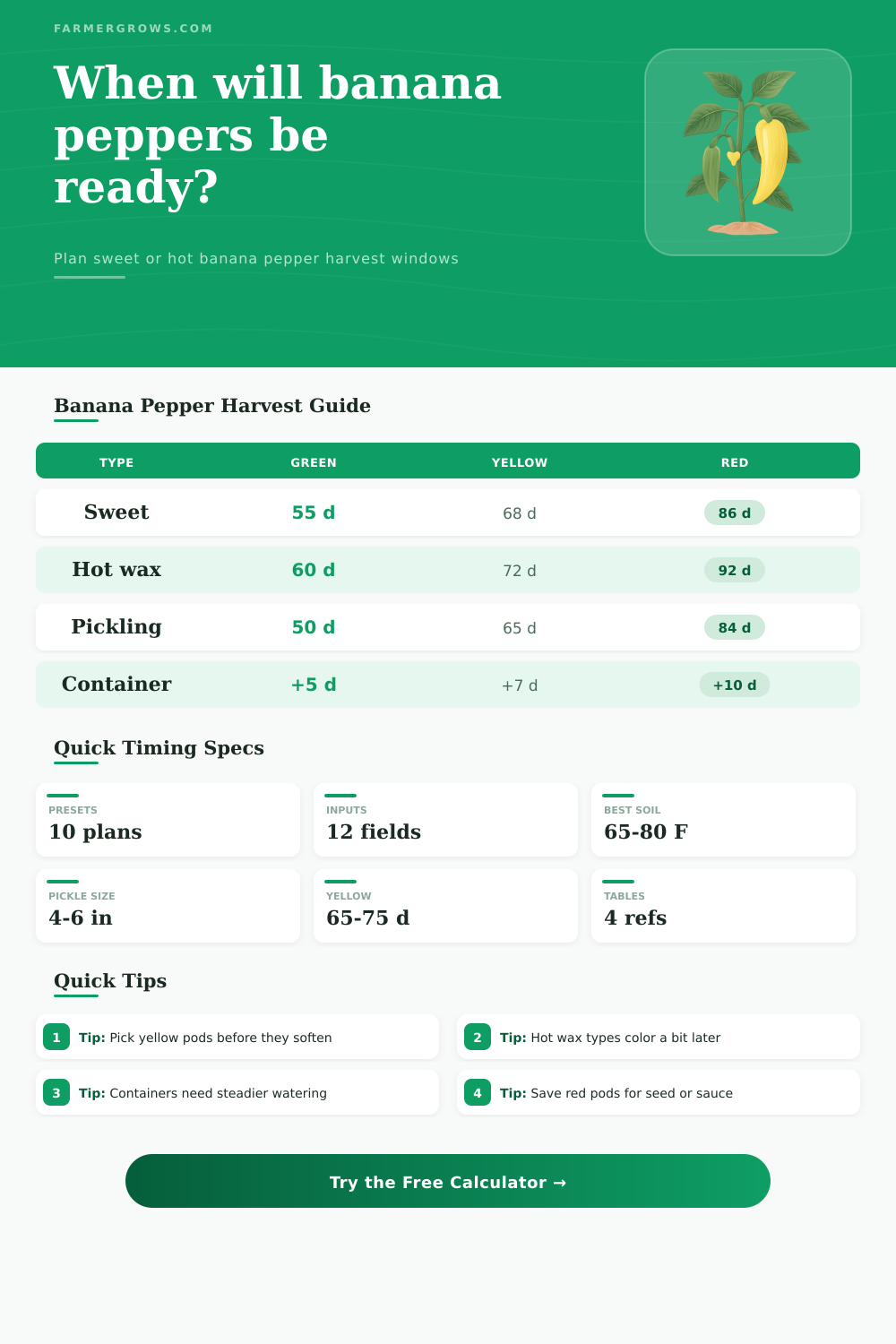
| Cultivar type | Heat level | Pickling size | Yellow wax | Red ripe |
|---|---|---|---|---|
| Sweet Banana | 0 to 500 SHU | 50 to 58 days, 4 to 6 in | 63 to 72 days | 82 to 95 days |
| Sweet pickling banana | Very mild | 48 to 56 days, thin walls | 62 to 70 days | 80 to 92 days |
| Hot Banana | 5,000 to 15,000 SHU | 55 to 64 days, firm pods | 68 to 78 days | 88 to 104 days |
| Hungarian Hot Wax | 5,000 to 10,000 SHU | 56 to 66 days, pale wax | 70 to 82 days | 92 to 110 days |
| Inferno or hot wax hybrid | Medium hot | 57 to 67 days, larger pods | 72 to 84 days | 94 to 112 days |
| Condition | Banana pepper response | Timing adjustment | What to check |
|---|---|---|---|
| Soil below 60°F | Roots stall and flower set drifts later | Add 7 to 14 days | Delay or use black mulch and a tunnel |
| Soil 65 to 80°F | Best root growth after transplanting | No delay | Plant after nights are settled |
| Transplants under 6 weeks | Need more vegetative time before buds | Add 4 to 8 days | Keep light strong and do not crowd trays |
| Transplants 7 to 9 weeks | Ideal size for quick flowering | No delay | Harden off for wind and sun |
| Rootbound over 10 weeks | May pause after planting out | Add 3 to 7 days | Loosen roots and water evenly |
| Harvest stage | Typical pod size | Texture | Best use | Picking note |
|---|---|---|---|---|
| Green baby banana | 3 to 4 inches | Very crisp, thin wall | Whole pickles and mixed jars | Pick early to push more flowers |
| Pickling size | 4 to 6 inches | Firm and easy to slice | Rings, brine, quick pickles | Harvest every 2 to 3 days |
| Yellow wax | 5 to 7 inches | Sweet, crisp, full size | Fresh eating and roasting | Do not wait until walls wrinkle |
| Orange to red | Full size | Sweeter but softer | Seed saving, sauce, ripe relish | Leave the earliest clean pods |
| Overripe red | Soft full pods | Lower crunch | Seed only or cooked sauce | Remove split or sunken fruit |
| Planting setup | Spacing or pot | Expected pods per plant | Season behavior | Yield caution |
|---|---|---|---|---|
| Raised bed block | 16 to 20 in | 25 to 40 pods | Fastest rebound after picking | Stake if loaded with ripe fruit |
| In-ground row | 18 to 24 in | 22 to 36 pods | Long steady harvest with mulch | Wet soil can slow root growth |
| Large container | 5 to 7 gal pot | 18 to 30 pods | Good patio crop with daily water | Dry swings drop blossoms |
| Small container | 3 gal or less | 10 to 20 pods | Earlier stress and shorter window | Feed lightly but regularly |
| Low tunnel bed | 16 to 18 in | 28 to 45 pods | Earlier yellow stage in cool climates | Vent when blooms need pollination |
Pickling tip: For crisp rings, pick banana peppers when they are firm, glossy, and 4 to 6 inches long. Leaving every pod to turn yellow or red reduces the next flush of flowers.
Container tip: A large pot can grow excellent banana peppers, but the schedule depends on moisture. Daily dry-downs can delay flower set and shrink the harvest window even when sun is strong.
Transplant day is A finish line in most gardeners’ minds: Mark it off the calendar, let the frost danger recede, and then go shove those seedlings in the ground with high hopes. But the truth is that planting is just starting gun in what can be a very long, weather-dependent race. I have found that banana peppers in particular are finicky about the timeline.
Radishes are one thing because they offer instant gratification and mature fast. But not bananas. No, those babies needs some warmth to sign on for fruit duty. You can wait in vain for the first pick if your nights are still dipping too low and/or your soil remains cold. The plant will stall out; focus on making leaves rather than pods.
How to Grow Banana Peppers Well
Know the windows for each color stage, green, yellow, red, and avoid pulling up healthy plants that just aren’t done growing yet. Of course, those days-in-a-packet calculations aren’t as simple as that. They also take into account soil temperature on day one. The colder it was, the slower the plant’s roots will forms, which essentially puts you back even further by a few days or weeks. Root growth almost ceases in anything below 60 degrees Fahrenheit.
When it’s really cold, the calculator (above) adjusts accordingly, and adds additional time to your countdown. That way, you won’t be frustrated in July with plants that produce nothing after expecting an early harvest because the weather got too cold last month. And it takes into consideration that hot wax types tend to take slightly longer to reach maturity then sweeter ones. A little patience might be required to wait for heat lovers to catch up, but harvesting them prematurely can mean missing out on fully ripe seed-saving potential.
Everything you do with the plant after that depends on what color you choose for your harvest. If you pick the pods green and firm, then it will keep going all season long, producing flowers and more pods. That’s the plan if you’re growing picklers and want an ongoing supply of crunchy rings.
If you let them go yellow, however, you add some time (often two weeks or so) to the wait. When you wait until they really start to get red, well, now we’re talking even longer still. For each of these stages there’s a reason. The green ones are nice and mild, and crisp. Wax peppers turn yellow, and take on a pronounced sweeter taste as well. And ripe ones; red ones, are full-flavored and loaded with sugars and intense heat. They are great for seed-saving or maybe in sauce. But they’ll be mushy fast.
Do you want lots of product over time, or quality late in the season?
The timing penalties of container growing: Because a five-gallon pot holds less moisture than a raised bed, the roots dry out faster and stress sooner under summer heat (which shortens their potential harvest window because it stalls flower development). To reflect that factor, the tool will adapt its calculations based off where you say you’re planting something. Plan on a shorter season if the containers is smallish ones on a sunbaked patio. Water regularly; don’t shock them. Pots also need regular feeding (unlike ground beds).
In-ground beds has greater capacity to retain moisture and act as a thermal mass, so produce steadily over a longer time.
Transplant age matters more then people realize. Seedlings that are too young need extra vegetative time before they can support fruit, while those that are too old and rootbound may pause after planting while they adjust to their new environment. Ideally you’re at seven to nine weeks, which is typically considered the sweet spot for banana pepper transplants. That’s just enough plant to overcome any transplant shock without having been so long in a tiny container that it’s experiencing transplant stress.
In other words, if your start date was seed sowing rather than transplanting, you need to add the germination period to that total timeline. Depending how cool the soil was, most banana pepper seeds will sprout in about 10 days, though this could easily stretch longer.
Frost dates are the hard stop to your planning. Freezing weather can’t be tolerated by banana peppers (and neither will you). So if your calculated red ripe date comes after your average first frost, you’re not getting that harvest unless it’s from inside a greenhouse or under row covers. Using local climate data to adjust expectations makes those plans realistic. Better to shoot for a short-season harvest of a good yellow color than chase the hard-to-find red.
Knowing when to plant makes all the difference in growing a productive garden versus a decorative one. Knowing precisely which days after each color stage you should transplant, and timing it to match warm soil, eliminates guesswork. You’re no longer just picking, but doing so on purpose. The confidence is what transforms a crazy summer into a consistent crop of peppers, from fresh salsas to jars of pickles.
You should of planned ahead for the weather. It will make things much more comfortabley. Most gardeners find that actualy helps them recieve better results. Moddern methods also help with the vegetitive growth.