Purple Potato Growth Time Calculator
Plan purple potato emergence, seed piece callusing, hilling, tuber bulking, new-potato digging, main harvest, skin set, curing, and storage timing by variety.
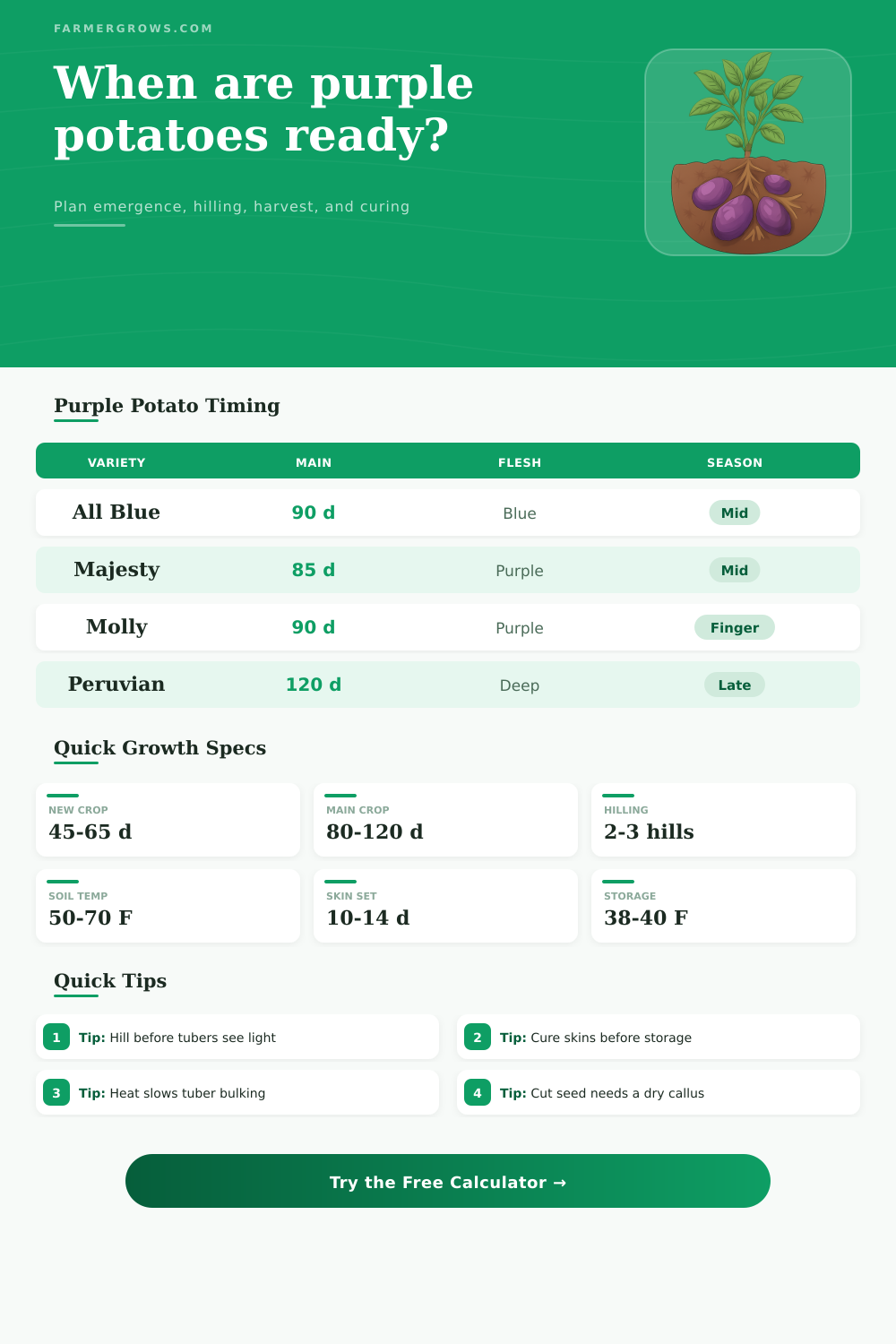
Purple potatoes can look ready above ground before their skins are set below ground. Use the calculator as a crop calendar, then confirm with vine dieback, tuber size, skin firmness, and local weather.
Purple Potato Crop Calendar
Results combine the selected variety range with seed prep, soil temperature, planting depth, hilling, moisture, and harvest goal.
| Variety | Color and type | New potato window | Main harvest range | Storage note |
|---|---|---|---|---|
| Purple Majesty | Dark purple skin and flesh, oblong table potato | 55 to 65 days | 85 to 100 days | Good main-crop candidate when skins are allowed to firm. |
| Adirondack Blue | Blue-purple flesh and skin, round to oblong tubers | 55 to 70 days | 90 to 110 days | Handle gently; vivid flesh can bruise like other thin-skinned potatoes. |
| All Blue | Blue-purple flesh with pale ring, classic specialty potato | 55 to 65 days | 85 to 105 days | Useful for home storage after full vine dieback. |
| Magic Molly | Deep purple fingerling, color holds well after cooking | 60 to 70 days | 85 to 100 days | Fingerlings size gradually; dig samples before clearing the row. |
| Purple Viking | Purple-pink skin, white flesh, large early tubers | 50 to 60 days | 80 to 100 days | Not purple-fleshed, but included for purple-skinned crop planning. |
| Huckleberry Gold | Purple skin, yellow flesh, mid-season specialty potato | 55 to 65 days | 85 to 100 days | Can store well when cured; similar timing to mid-season table types. |
| Purple Peruvian | Deep purple fingerling heirloom, long season | 70 to 85 days | 110 to 130 days | Needs a longer frost-free window for full-size fingerlings. |
| Vitelotte | Dark violet-blue flesh and skin, late specialty type | 70 to 85 days | 110 to 130 days | Best treated as a late crop; harvest after skins resist rubbing. |
| Blue Tomcat | Dark blue-purple skin and flesh, large specialty type | 65 to 80 days | 105 to 125 days | Give room and time; late types benefit from steady moisture. |
| Purple Pelisse | Purple fingerling with purple flesh, specialty market type | 60 to 75 days | 90 to 110 days | Harvest carefully to keep fingerlings clean and unscuffed. |
| Stage | Typical timing after planting | What to look for | Best action |
|---|---|---|---|
| Seed callus and sprout push | 0 to 14 days | Cut faces dry, sprouts remain firm, no sour smell | Keep soil moist, never waterlogged; protect from hard frost. |
| Emergence | 14 to 28 days | Purple potato shoots break soil, often dark green to purple-tinged | Start watching for first hilling once plants reach 6 to 8 in tall. |
| First hilling | 25 to 40 days | Stems elongate and lower leaves are easy to bury | Pull loose soil or mulch around stems before tubers reach light. |
| Tuber initiation | 35 to 55 days | Flower buds or first bloom may appear on many varieties | Keep moisture steady; avoid high nitrogen that pushes only vines. |
| Tuber bulking | 50 to 95 days | Canopy is full, tubers size quickly underground | Water evenly and keep soil cool; heat and drought can pause sizing. |
| New potato harvest | 45 to 75 days | Small tubers, thin skins, often near or after flowering | Lift a side plant or bandicoot gently without exposing the row. |
| Main harvest | 80 to 130 days | Yellowing vines, mature tuber size, skins beginning to resist rubbing | Wait for dry soil if possible; dig gently to reduce bruises. |
| Storage curing | After harvest | Skins dry and small scuffs heal | Cure in dark ventilation, then store cool and humid. |
| Seed prep | Time before planting | Growth effect | Best use |
|---|---|---|---|
| Chitted, cut, and callused | Chit 2 to 4 weeks, callus 1 to 3 days | Fastest emergence when soil is ready | Short springs, early purple table potatoes, market timing. |
| Whole seed potatoes, chitted | Chit 2 to 4 weeks | Quick start with low rot risk | Small seed tubers, wet-prone soil, valuable specialty varieties. |
| Cut pieces, callused | Dry 1 to 3 days after cutting | Normal timing with better rot protection | Most garden rows where seed potatoes are large enough to divide. |
| Fresh cut at planting | Same day | May slow or fail in cold wet soil | Only when soil is warm, loose, and well drained. |
| Dormant whole seed | No pre-sprouting | Slowest emergence | Late planting where storage sprouts are not available. |
| Harvest state | Skin condition | Cure and storage timing | Best use |
|---|---|---|---|
| New purple potatoes | Very thin skins rub off easily | No storage cure; refrigerate briefly and eat soon | Fresh boiling, roasting, and sampler harvests. |
| Main crop, fresh eating | Skins mostly set but may scuff | Cure 7 to 10 days if not using immediately | Kitchen use over the next few weeks. |
| Storage crop | Skins resist thumb rubbing after vine dieback | Wait 10 to 14 days in soil, cure 10 to 14 days after digging | Longer holding in dark, cool, humid storage. |
| Wet-soil harvest | Skins and lenticels can be fragile | Dry gently, avoid washing, cure with extra air movement | Sort for early use; do not store damaged tubers deep in bins. |
| Frost-threat harvest | May be mature but vines end suddenly | Dig before hard freeze reaches tubers; cure only sound potatoes | Save uninjured tubers and use nicks first. |
Protect the color: Purple tubers that push above soil can green like any potato. Hill or mulch before tubers swell, especially with shallow-set fingerlings.
Separate new from storage harvest: Dig a few plants early for thin-skinned new potatoes, but leave the main row until vines yellow and skins set for storage.
Purple potatoes are not like other kinds of potatoes. Meaning you treat them differently, since growing conditions for bringing out their color are specific. Getting soil temperature and timing right result in those strikingly colorful tubers (the pigment is called anthocyanins). It’s no mystery; just don’t make mistakes that cause rot or turn your tuber green. And: Get the calendar right, or the deep violet flesh won’t show up.
With the calculator, all you need to do is input your variety (they emerge at different times!) and planting date, and it tell you when to expect emergence; no more guessing about how long ago you planted. For instance, a purple potato such as Purple Majesty have a very clear window of emergence; all potatoes don’t sprout at the same rate, and these varieties has their own distinct windows.
How to Grow Purple Potatoes
When you bet the timing of when things emerge, you’re staking your life on: When will the soil be sufficiently cool enough for tuber bulk-up, but never too cold as to stress the plant? Plan to account for the fact that chitted seeds that began to sprout indoors might already is ahead of schedule if your spring was chilly and late. Better to give them a jumpstart than leave them waiting in damp soil while they try to rot!
When the potato plants’ vines grow weary, gardeners are tempted to lift them prematurely. The underground tuber’s skins need time to harden off (sometimes weeks longer than the tops above die down), and digging them prematurely lead to scabs and bruises, points of entry for germs. To compensate for this delay, the tool’s cure time provide time for curing once the vines have been killed. Potato skins should of be hardy enough to endure months in a cool root cellar. It’s a tedious process, but not as much fun than seeing your crop get all mushy by December.
Purple potatoes are especially sensitive to soil temperature. They do best at temperatures of 50-70 degrees Fahrenheit in the growing season when they puts their energy into bulking up. Above that, they cease focusing on growing roots and continue to produce vine growth. This results in lots of foliage but smallish potatoes. Enter the data for how much and when heat is likely in your area to see if it will interfere with their growth. For those in hotter areas, that frequently translates into an earlier springtime start (or a fall crop).
Purple ones are even more fussy about hilling, because that’s what can turn their purpley skin green and make it bitter as it encounters any light. To protect young tubers from the UV rays, build up soil against the stems of plants as they emerge and form new tubers; keeping them shrouded in darkness. The preset options in the tool help you plan whether you’re doing two timely hills or relying on deep mulch. Deep mulching?), set at the beginning of the tool. If it keeps darkness in the root-zone area, either method will do.
With fresh eating, another set of rules applies: Harvesting early (new purple potatoes have thin skins) means they won’t keep even a week or two. They are meant to be boiled and eaten right away, or roasted to display their color. For storage purposes, wait till the foliage turns yellow all over, when the skins is thick and firm.
Now what? The cure! Shallow wounds will close if left in the dark and well-ventilated for 10-14 days. Then place them in humid darkness at about thirty-eight degrees Fahrenheit. It is a small detail, but it matter.
The page includes reference tables that show each type and how many days it need to reach maturity. That’s your benchmark against which to compare your results. Some varieties, such as Blue Tomcat or Vitelotte, can be slower than others. So patience is also in the plan. Don’t force a late variety to catch up when an early one look about ripe right beside it. They have their rhythm.
With purple potatoes, it’s just as much a matter of watering and waiting as it is knowing what to expect. It’s a tradeoff between rapid production and eye-popping color (not to mention edibility). Plan your harvest dates around when the skins harden, not when the flowers fade. Ensure tubers stay hidden from view by keeping them in cool ground, but leave timing to the calendar. The wait will be worth it when you unearth those vibrant, earthy roots and get to eat your dinner. After all, that is why we got the timing right in the first place.