Leaf Composting Time Calculator
Estimate when fallen leaves become leaf mold or leaf-based hot compost from leaf type, shredding, nitrogen addition, pile depth, moisture, turning, season, and finish goal.
Fallen leaves are mostly carbon, so they can turn into excellent leaf mold slowly by fungal breakdown or move faster as hot compost when shredded, moistened, aerated, and paired with a nitrogen source.
Leaf Composting Estimate
Your estimate will appear here.
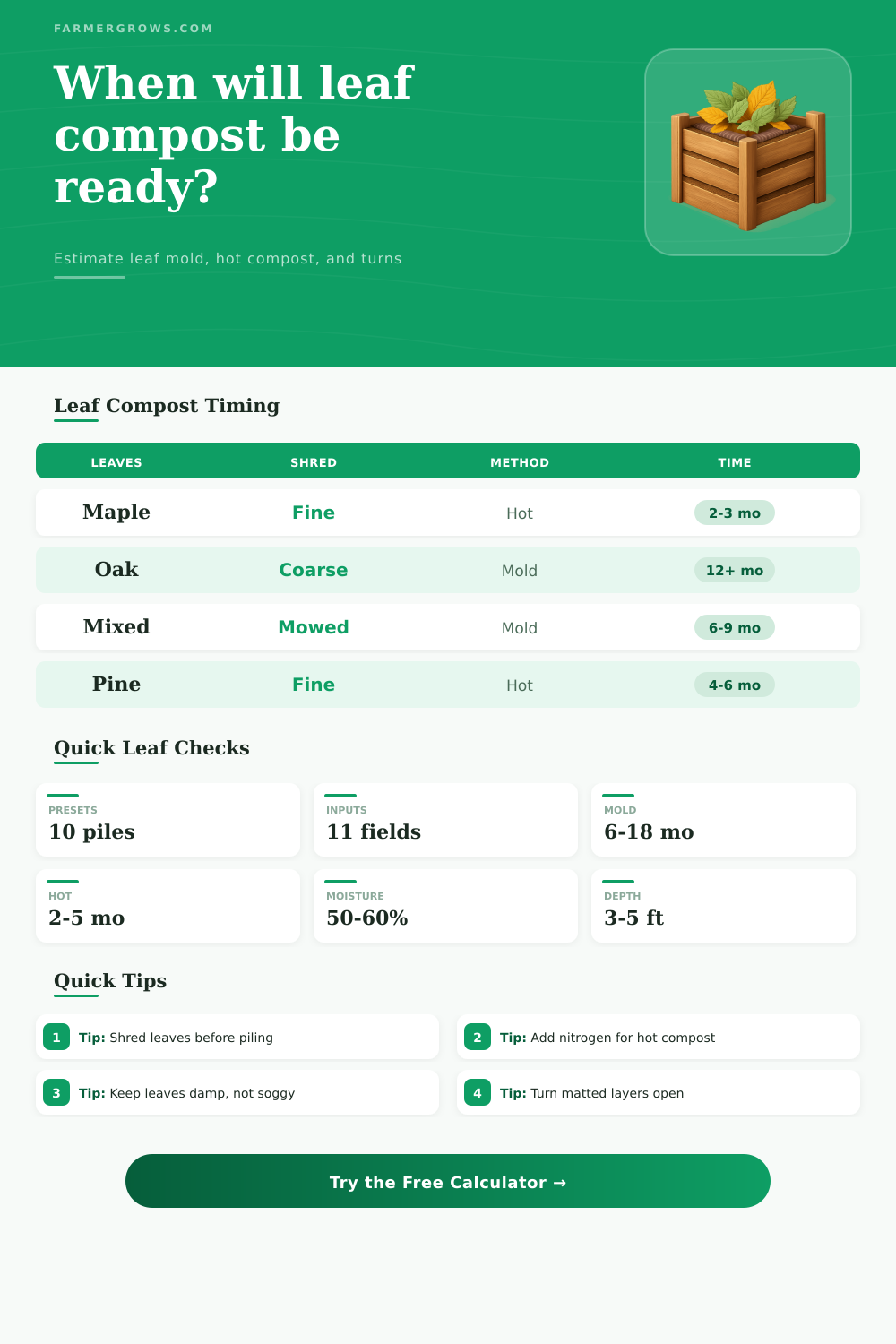
| Leaf type | Leaf mold time | Hot compost time | Special handling | Best use |
|---|---|---|---|---|
| Maple, ash, fruit tree leaves | 6 to 9 months | 8 to 12 weeks | Shred once for faster fungal edge area | General leaf mold and bed mulch |
| Mixed deciduous leaves | 8 to 12 months | 10 to 16 weeks | Mow and blend dry and damp layers | Raised beds and soil conditioning |
| Oak or beech leaves | 12 to 18 months | 14 to 24 weeks | Shred well; tannins slow the first phase | Long-cure leaf mold and shrub beds |
| Sycamore, magnolia, thick leaves | 10 to 16 months | 12 to 20 weeks | Chop to prevent leathery mats | Coarse mulch after partial breakdown |
| Pine needles and evergreen litter | 14 to 24 months | 16 to 28 weeks | Mix with softer leaves or use as mulch | Paths, acid-loving plants, slow mold |
| Shredding level | Surface area | Matted risk | Timing effect | Practical method |
|---|---|---|---|---|
| Whole leaves | Low | High when wet | Slowest | Use for long passive bins only |
| Mowed once | Moderate | Moderate | About 20% faster | Run mower over a thin leaf layer |
| Shredded or mowed twice | High | Low to moderate | About 35% faster | Best all-around leaf mold prep |
| Fine shredded | Very high | Can compact if soggy | Fast if fluffed | Blend with coarse leaves for air |
| Nitrogen addition | Approximate blend | Best for | Watch for | Timing effect |
|---|---|---|---|---|
| None | Leaves only | Classic leaf mold | Slow start in dry piles | Slow, fungal, low heat |
| Light | Small grass, coffee, or meal dusting | Managed leaf mold | Uneven pockets if not mixed | Modest speed gain |
| Moderate | About 1 part greens to 4 parts leaves | Warm leaf compost | Needs moisture and turning | Large speed gain |
| Strong | About 1 part greens to 2 parts leaves | Hot compost with leaves | Odor if wet or compacted | Fast when aerated |
| Measured meal or urea | Small measured dose per layer | Dry shredded leaf piles | Can overheat or burn if excessive | Fast but monitor heat |
| Pile depth and moisture | Good range | Too little | Too much | Correction |
|---|---|---|---|---|
| Depth | 3 to 5 ft | Dries and cools | Compacts if very deep | Rebuild into a wider, fluffier pile |
| Moisture | 50% to 60% | Leaves stay papery | Sour, sealed mats | Water dry layers or add dry leaves |
| Turning | Monthly for mold, weekly for hot | Slow center | Loses heat if overdone | Turn when temperature or smell changes |
| Cover | Damp but rain managed | Wind dries edges | Rain fills pore space | Use a tarp, lid, or breathable bag holes |
For leaf mold: Think moisture and time, not heat. Shred fallen leaves, keep the pile damp, and fluff mats so fungi can reach the interior.
For hot leaf compost: Leaves need nitrogen help. Blend in fresh grass, finished compost, alfalfa meal, blood meal, or a measured fertilizer source, then turn before the pile collapses into wet layers.
Fall driveway leaves seem like a mess. But if you can resist raking them up, they’ll turn into rich leaf mold once nature adds moisture and a bit of nitrogen. Nature does the work; time is the key ingredient.
A pile of whole oak leaves sit dormant for a year or more. (A heap of intact oak leaves could wait a year or more.) If you shred first, then mix shredded maple with grass clippings, it can be ready in just weeks because microbial machinery has an easier time getting at contents. Not magic, just mechanics.
How to Make Leaf Mold
The calculator will give you an estimate, though knowing how it works helps you avoid failure. Decomposition rate depend on leaf type. Soft leaves from maples or other fruit trees break down quickly because they have no tough fibers. Leaves with tannin like beech and oak has lots of preservatives, taking longer to compost. Finely shred oak to speed things up. The more surface area, the better for entry of bacteria and fungi. It is a labor-for-time trade.
The chemistry works based off moisture. Decomposition begins after leaves absorbs water (they’re dry by default). You want dampness like a wrung-out sponge. Microbes will starve if you don’t provide enough water. If you overdo it, air pockets collapse; microbes work anaerobically which slows things down and gives off foul odors. Depending on how wet you think your heap is (and its depth), the tool adjust to find the right mix of too-much and not-enough.
The deeper the pile, the more insulated it is so the insides stay cooking even if nighttime temperatures drop. The right kind of nitrogen make all the difference in the heap. To support microbial growth, leaves (which are heavy with carbon) requires some sort of green material to get them going. Blood meal, finished compost or even grass clippings will add nitrogen. Adding nitrogen can speed things up, but more is not always better; the calculator adjust the timeline based off how much you introduce.
Speeding things along with a bit of turning also hastens decomposition, much more different than a lazy pile. But overdoing the nitrogen and not turning enough could of resulted in a stinky, goopy disaster. It’s all about getting the oxygen balance just right. You don’t need to turn leaf mold often, but you do need to turn hot compost. Because fungal breakdown is at work in passive piles, they needs very little disturbance, or they’ll mat up. With hot compost, you want oxygen in there every few days to maintain heat and bacterial action. How often you turn it is one of the things included in tool’s estimate, which makes it a more realistic guess. If you turn things monthly, for instance the timeline will be longer (since things slow down in between). Turn weekly and process stays fast and active.
Decomposition is seasonal. What decomposes faster? One pile starts in warm soil in summertime, while another is exposed to frost in January. Because microbes are cold-blooded creatures, they will be sluggish in cooler weather. So: the calculator factors in initial season and doesn’t have high expectations of rapid action on winter piles. It’s working with nature, not against it. Respect nature’s biological processes and process will respect you right back.
It takes time: shred leaves, moisten them regularly, then let nature do the heavy lifting. No need for ideal conditions to succeed; just pay attention, as ever, to air and moisture levels. By the time you’re sifting out the finished product (a dark, crumbly material) and incorporating it into your garden beds, all that waiting will seem worth it. Nature’s nutrient loop is closed tight. The leaves has returned to their place in the soil.