Onion From Seed Growth Time Calculator
Estimate a full dry-bulb onion crop calendar from seed sowing through emergence, transplanting, bulbing, harvest, curing, and storage readiness.
This planner is for bulb onions grown from seed, not green onions, spring onions, bunching onions, or germination-only timing. Adjust the variety class, transplant plan, and season speed for your farm conditions.
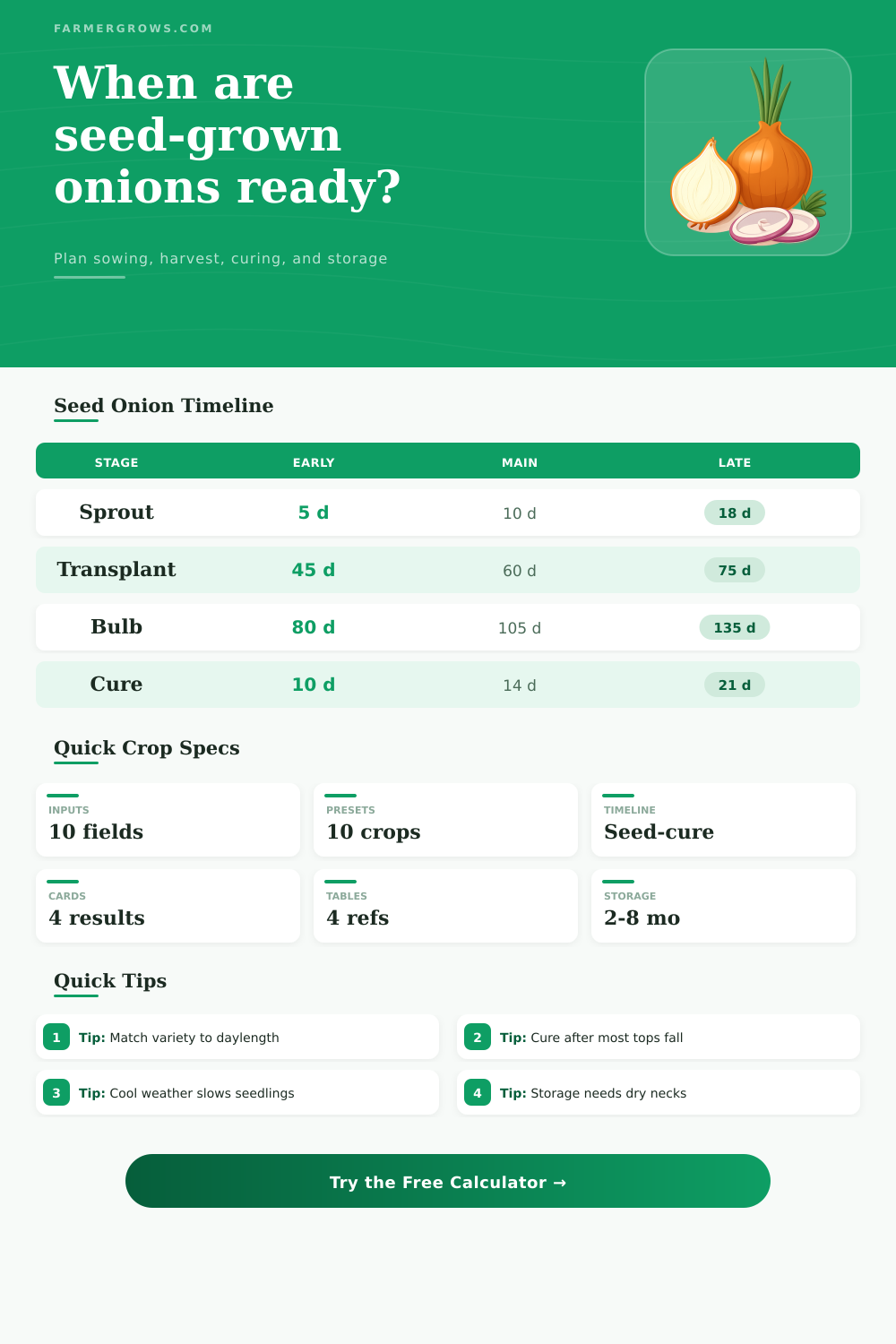
Seed-Grown Onion Timeline
Dates include seed emergence, nursery time, bulb sizing, harvest maturity, curing, and storage readiness.
| Stage | Fast season | Typical season | Slow season |
|---|---|---|---|
| Seed emergence | 5 to 8 days | 8 to 12 days | 12 to 18 days |
| Seedling nursery | 40 to 50 days | 50 to 65 days | 65 to 80 days |
| Field establishment | 10 to 14 days | 14 to 21 days | 21 to 28 days |
| Bulb enlargement | 35 to 50 days | 45 to 65 days | 60 to 80 days |
| Curing after lifting | 10 to 14 days | 14 to 21 days | 18 to 28 days |
| Class | Best latitude fit | Bulbing trigger | Common crop use |
|---|---|---|---|
| Short-day | Southern zones | About 10 to 12 hours | Winter or early fresh bulbs |
| Intermediate-day | Middle latitudes | About 12 to 14 hours | Flexible spring bulb crops |
| Long-day | Northern zones | About 14 to 16 hours | Main-season storage bulbs |
| Day-neutral | Broad adaptation | Less daylength dependent | Market crops where fit is uncertain |
| Bulb goal | Typical seed to harvest | Curing focus | Expected storage |
|---|---|---|---|
| Early market bulbs | 95 to 120 days | Short cure, clean neck | 1 to 3 months |
| Fresh sweet bulbs | 105 to 130 days | Gentle dry-down | 1 to 3 months |
| General kitchen bulbs | 115 to 145 days | Firm necks and dry skins | 3 to 5 months |
| Long-storage bulbs | 130 to 165 days | Complete cure before trimming | 5 to 8 months |
| Example crop | Sowing style | Usual harvest range | Timeline note |
|---|---|---|---|
| Short-day southern fall sowing | Nursery or trays | Late spring bulbs | Bulbs as days lengthen in mild weather |
| Long-day indoor transplants | Winter trays | Mid to late summer bulbs | Seedlings wait for long summer days |
| Direct seeded long-day bed | Spring field seed | Late summer to early fall | Often slower than transplant systems |
| High tunnel early bulb crop | Protected start | Early summer bulbs | Protection speeds establishment |
Daylength fit: A healthy onion can still bulb poorly when the variety class does not match local daylength. Use the label from the seed packet before adjusting dates.
Curing check: Start curing after most tops fall naturally, then store only bulbs with dry necks, papery outer skins, and no soft spots.
Don’t trust what’s printed on a seed packet, either; onion timing isn’t dictated by any calendar month. It’s all about the warming soil plus the amount of daylight hours it gets each day. The calculator does complicated math for you: “Is my long-day type going to bulb in time for winter?” It requires you to know why those entries is more important than actual planting date.
The biggest trap: ignoring daylight requirements, each onion have its preferred number of daylight hours at which to turn on the bulb-producing switch. Plant a long-day northern type storage onion down South and guess what? You’ll end up with lots of bolts and seed, the days were never long enough for the bulbs to swell propery. Or if you put short-day types up North, they runs out of light hours before the summer solstice can even flip their growth switch, so they just continues to grow green and stringy. Matching the variety class to your latitude is key, and starts everything. A little thing, but oh-so-important to yield.
Why Onions Need More Than Just a Calendar
Also, transplant size matter hugely, as both very small plants will have trouble in open ground and larger ones will get leggy and stressed (or even bolt) if they linger too long in trays. To handle this, the tool allow you to fiddle with your transplant timing depending on whether your plants was started indoors under lights, or planted directly outdoors in cold ground. How much earlier does a direct seeded row emerge compared to a five-week-old transplant? Lots. Direct seeds must spend weeks developing root systems at the mercy of many kind of unpredictable weather conditions, rather than using their energy to form bulbs. That’s what folks is missing when they compare seed to set onions.
Another reason that no set-in-stone schedule can cover is weather. Metabolic processes also goes more slow in cooler, overcast springs (but don’t kill the plant). The planner takes this into account when you choose a slower season speed. It knows that a warm February doesn’t mean fast growth unless there are no gray skies and no freezing rain in March.
Another key input is soil temperature at sowing, because even with so-called mild air temps, cold soil slow emergence. A damp onion sitting in the mud will wait out weeks of chill for its soil to warm up enough to get going, and then push back all dates after that on your calendar.
As important as growing onions is what happens after harvest (post-harvest). When the plants’ tops have fallen over on their own, it’s time to cure the bulbs; otherwise you’ll have moist-skinned onion that will rot in storage within weeks. Dry them off thoroughly, in a well-ventilated place so they’re brittle and tight on the neck, and the outer skins are papery. Again: No excuses about skipping the curing! It takes time, how long depends on how much air circulation and humidity there is. As do all those months of tender care.
That’s where good curing quality… Meaning how well they keep in storage; is important, since sweet types designed for eat-now don’t keep as long as more pungent dry ones. To cook from homegrown stock over the winter, focus on long-storage classes, and make sure those necks closes up tightly first. Then trim them later. The key is to understand what to expect regarding storage, as shown in the tool’s tables, and then plan to live by those expectations.
You need light, temperature, and patience instead of trying to force nature to obey some strict timetable. It would of been easier if you just used the calculator earlier.