Strawberry Seed Germination Time Calculator
Estimate strawberry seed sprout timing from variety type, cold stratification, soil temperature, light, seed age, humidity, sowing depth, elapsed days, and transplant target.
Strawberry seed is small, slow, and sensitive to pre-chilling. This calculator focuses on germination and early seedling handling, not bloom or fruit harvest timing.
Strawberry Seed Timing Estimate
Your tray estimate will appear here after calculation.
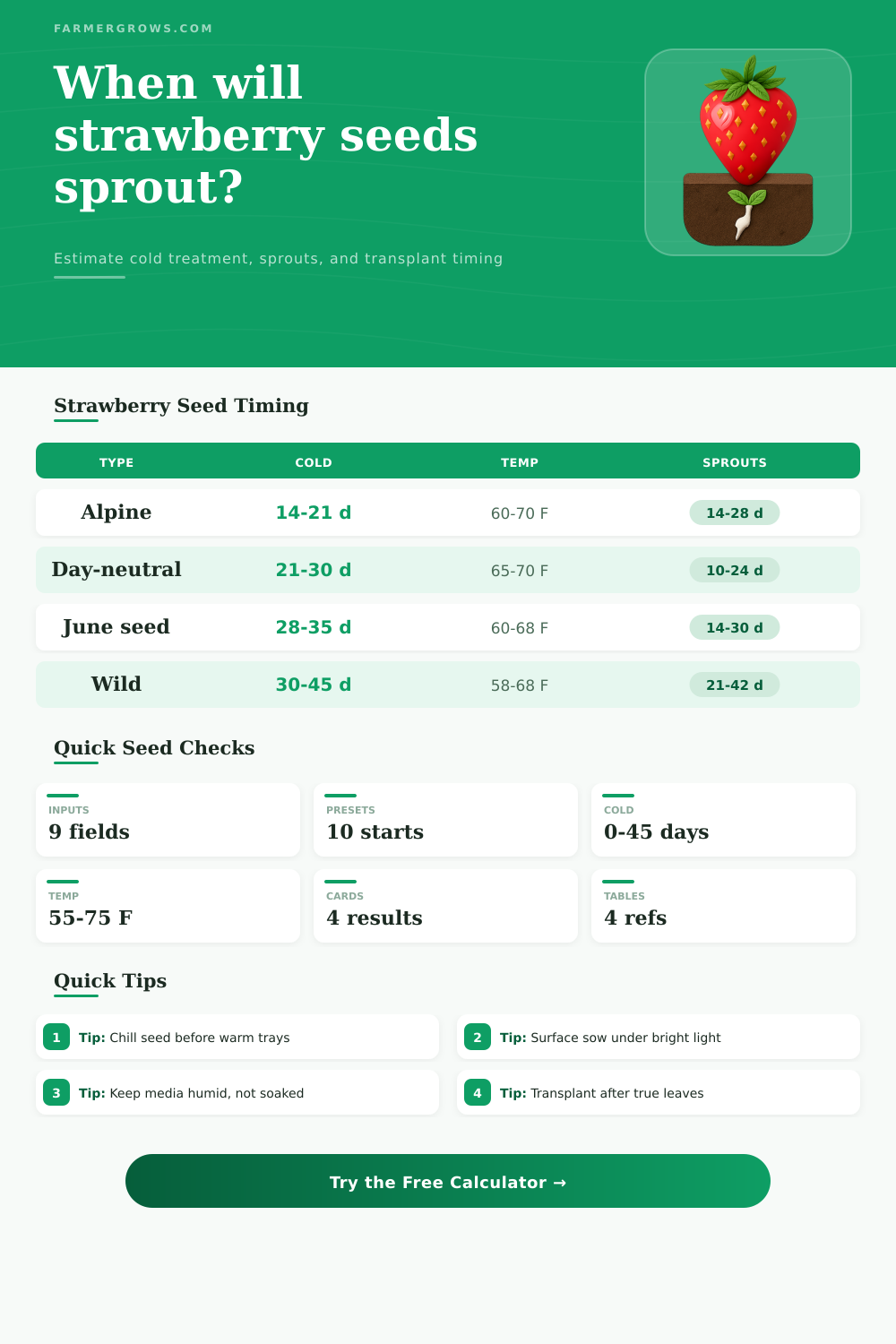
| Cold stratification | Typical result | Best use | Tray note |
|---|---|---|---|
| 0 to 7 days | Often slow and uneven | Fresh alpine seed only when packet says no chill | Keep the tray longer before giving up |
| 14 to 21 days | Good improvement for many packets | Alpine and day-neutral home starts | Move from fridge to bright warm media |
| 28 to 35 days | Stronger dormancy break | June-bearing and mixed garden seed | Good balance for most planned starts |
| 40 to 45 days | Slow wild seed support | Wild, woodland, or old seed lots | Avoid freezing wet seed solid |
| Media temperature | Germination effect | Expected timing | Management note |
|---|---|---|---|
| 50 to 55°F | Very slow | Often 30+ days | Use gentle bottom heat if possible |
| 58 to 62°F | Slow but workable | About 20 to 35 days | Useful for patient cool-room starts |
| 64 to 70°F | Best general range | About 10 to 28 days | Bright light and humidity dome help |
| 72 to 75°F | Fast if not too dry | About 9 to 24 days | Vent dome and watch surface drying |
| 78°F and higher | Stress risk rises | Patchy or stalled | Remove from hot mats during the day |
| Seed age | Expected viability | Timing effect | What to do |
|---|---|---|---|
| Fresh seed | Best stand | Tighter sprout window | Sow thinly and keep surface moist |
| 1 year old | Usually good | Slightly wider window | Use normal cold treatment |
| 2 years old | Moderate decline | Several extra days | Sow extra cells for backups |
| 3 years old | Low to moderate | Patchy emergence likely | Pre-test or over-sow lightly |
| Old or warm-stored | Unreliable | Long and uneven | Use a small germination test first |
| Transplant stage | Approximate timing | Root condition | Handling advice |
|---|---|---|---|
| Cotyledons open | 3 to 7 days after sprout | Threadlike roots | Keep in tray; do not prick out yet |
| First true leaves | 10 to 18 days after sprout | Roots starting to branch | Move carefully to larger cells if crowded |
| 2 to 3 true leaves | 18 to 30 days after sprout | Small plug forming | Best general pot-up stage |
| Root ball holds | 28 to 45 days after sprout | Plug lifts with mix | Harden before outdoor transplant |
For better sprouting: Press strawberry seed onto moist sterile mix, add only a dusting if needed, and keep it under bright light after chilling.
For cleaner transplants: Wait until seedlings have true leaves and visible roots. Tiny strawberry seedlings stall when handled too early.
Growing strawberries is a little gamble, but it has big payout. The seeds is very small, they must be exposed to light to awaken, and most kinds don’t begin until after exposure to cold. If you do not chill them yourself or purchase pre-chilled ones, like many people who skip the refrigerator do, they may take weeks to even try to emerge. This causes a delay that some people get stuck waiting for.
Plug the actual conditions you’ll experience into the calculation above (soil temperature, number of cold days, your kind) and let the calculator does the rest. The first lever is cold stratification: The packet says most will be better after several days in the fridge, moist but not wet, where they are learning to awaken from their sleep. Not long enough and they remain half-awake; too long and they can rot and be otherwise weakened. The tool include the number of days, since some seed varieties require fewer chills (alpine ones) and some is downright difficult (wild things). Enter the number and it tells you if what you did worked well. Or that there’s still some dormancy on the tray.
How the Calculator Works
Another thing that matters is the temperature at sowing time. Strawberry seed like it best around the mid-sixties to low seventies. Warmer than that dries off the medium, presumably not good; cooler slows things down but doesn’t stop them. The calculator incorporates what temperature you recorded into its timing estimate (did a heat mat help or hurt?).
It also consider how many hours of light you have. These seeds are light-sensitive, too. Heavy covering can pushes everything later. A second wrinkle involves seed age. The humidity of the trays also matter. Older seed will open up the sprout window, spread out the range and reduce your chances of a full stand. Seed that’s fresh will keep things tighter. Too-high humidity invites damping-off. Too-low humidity dries up the seed zone.
Those get fed into the calculator which spits back an estimate of its confidence score… How reliably it figures the tray is going to do. This score is useful when deciding not only if to sow more cells but also if existing batch still stands a good chance.
Finally, there is the transplant timing estimate. This consider the desired stage of your seedling, such as having its first true leaves. It also considers a firmer root ball and the seedling stage you want at transplant time, which include the variety and how long it needs chilling. You might like to transplant as early as the first set of true leaves emerge, or maybe not; some growers just wait until they feel that the rootball has firmed up. The tool provide a day count to help you plan your hardening-off time, no guessing required.
But you can’t see what the tray feels like. There is still concern with surface drying. You may need to vent that dome if it gets too wet inside. You also want to keep those seedlings out of low light where they stretch. All of these little things each day are more important than anything else you put into this. The calculator just takes away the math so you can focus on the livig aspect.
You should of used actualy accurate data for better results. It could of been even more accurrate if you checked the moddern humidity levels too.