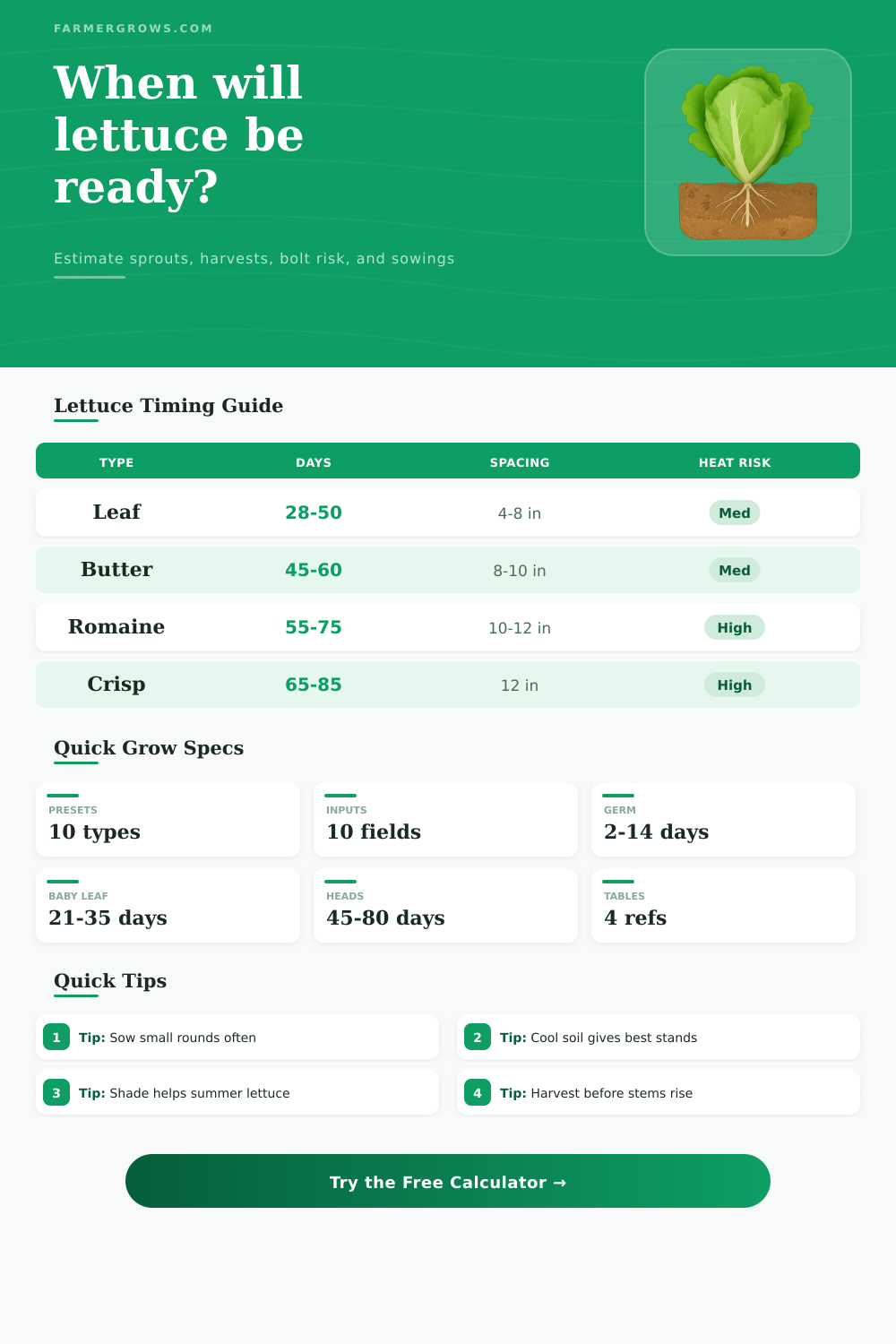
Lettuce Growth Time Calculator
Estimate lettuce germination, first harvest, full harvest, bolt pressure, and succession sowing dates from variety type, start date, soil temperature, day length, heat stress, spacing, and harvest style.
Lettuce is fast, but it is also temperature sensitive. Use the calculator as a planning range, then adjust for local variety strain, row cover, shade cloth, irrigation, and actual field heat.
Best for baby greens, salad mix, and frequent harvests before heat builds.
Forms soft heads with a moderate window before bolting in warm weather.
Takes longer but gives crisp ribs and strong hearts when spacing is wide enough.
Useful for warm slots, especially with shade, water, and quick harvest timing.
Needs the longest cool period and usually bolts fastest when heat arrives.
Your Lettuce Harvest Plan
Adjust the inputs above to model a different planting.
| Variety or type | Growth habit | Typical maturity | Best use | Heat notes |
|---|---|---|---|---|
| Black Seeded Simpson | Looseleaf | 40 to 50 days | Baby leaf, repeated leaf cuts | Fast, but can turn bitter in hot weather. |
| Green Star | Looseleaf | 45 to 55 days | Summer leaf lettuce | Better heat tolerance than older leaf strains. |
| Buttercrunch | Butterhead | 50 to 60 days | Small tender heads | Moderate bolt pressure in long hot days. |
| Little Gem | Mini romaine | 50 to 60 days | Dense mini hearts | Harvest promptly once hearts fill. |
| Parris Island Cos | Romaine | 65 to 75 days | Upright full romaine | Needs a cool finish for best texture. |
| Muir | Summer crisp | 50 to 60 days | Heat-tolerant heads | Still benefits from shade and even moisture. |
| Salanova | One-cut leaf | 45 to 55 days | Uniform salad mix heads | Quick harvest helps avoid quality loss. |
| Winter Density | Compact romaine | 55 to 65 days | Shoulder-season heads | Good cold slot, less suited to high heat. |
| Soil temperature | Expected sprout window | Stand quality | Planning adjustment | Grower note |
|---|---|---|---|---|
| 35 to 39°F | 14 to 21 days | Slow and uneven | Add 8 to 12 days | Use only for very early protected sowings. |
| 40 to 49°F | 7 to 14 days | Fair to good | Add 3 to 6 days | Acceptable for spring beds with patient timing. |
| 50 to 68°F | 2 to 7 days | Best range | No penalty | Often gives the most even lettuce stands. |
| 69 to 75°F | 3 to 8 days | Good but warming | Add 1 to 3 days | Keep surface moist and shaded if sunny. |
| 76 to 85°F | 5 to 14 days | Patchy risk | Add 4 to 10 days | Consider pre-sprouting, evening sowing, or shade. |
| Above 85°F | Often poor | Thermal dormancy risk | Delay or protect | Start indoors or wait for cooler soil. |
| Harvest style | Suggested in-row spacing | Row spacing | First harvest | Timing effect |
|---|---|---|---|---|
| Baby leaf cutting | 1 to 2 inches or band-sown | 2 to 6 inches | 21 to 35 days | Fastest harvest, little head sizing. |
| Cut-and-come-again | 3 to 6 inches | 8 to 12 inches | 28 to 45 days | Earlier leaf harvest with later regrowth. |
| Mini head or one-cut | 6 to 8 inches | 8 to 12 inches | 35 to 55 days | Balances speed and quality. |
| Butterhead full head | 8 to 10 inches | 10 to 15 inches | 45 to 60 days | Crowding delays head fill. |
| Romaine hearts | 10 to 12 inches | 12 to 18 inches | 55 to 75 days | Needs wider spacing for dense hearts. |
| Crisphead | 12 to 15 inches | 15 to 18 inches | 65 to 85 days | Slowest and most heat sensitive. |
| Condition | What it does | Risk level | Timing move | Practical response |
|---|---|---|---|---|
| Cool days, 50 to 70°F | Steady leaf growth and sweet flavor | Low | Use packet timing | Keep moisture even and harvest by target date. |
| Long days over 14 hours | Pushes some varieties toward flowering | Moderate | Shorten harvest window | Harvest heads a few days early if stems stretch. |
| Several days over 80°F | Adds stress and bitterness risk | Moderate to high | Harvest sooner | Use shade cloth and morning irrigation. |
| Hot soil above 80°F | Can slow or block germination | High | Start transplants | Pre-chill seed or sow after the bed cools. |
| Tight spacing for heads | Slows fill and traps humidity | Medium | Add 2 to 7 days | Harvest as mini heads or thin alternate plants. |
| Repeated leaf cutting | Extends production after first harvest | Variable | Add regrowth cycles | Cut above the crown and keep plants watered. |
Lettuce quality can change quickly once heat and long days arrive. For spring heads, treat the calculated main date as the latest comfortable target, not a deadline to ignore.
Instead of one large summer sowing, plant smaller rounds 7 to 14 days apart, switch to heat-tolerant types, and use shade so harvests do not all bolt at once.
Until conditions turn sour, lettuce is a cinch. Then things start to bolt. The question is: When? That’s a matter of timing. Timing depends on day length, soil warmth, and how fast you want to harvest something.
There’s a timing calculator that will help you juggle all the variables. Enter your data different than remember dates from seed packets, and watch what happens in reality. Real conditions in the field: inputs. How fast do seeds emerge and how uniform is your stand? Which plants will pushes to flower first (affected by day length and heat stress)? So, a variety that are good in April might taste bitter by July.
How to Plan Your Lettuce Harvest Time
The harvest style and spacing between plant also affect results. Full heads take longer then baby leaves. Close spacing also slows growth and increases humidity. If you have a tool that takes this into account, you get a better idea of what to expect instead of just a single date on package.
For instance: Compare full-head harvest against cut-and-come-again plans (for brassicas like kale); direct seeding against transplants of any given variety; or compare an early-maturing variety to one that bolts easly. How much bolt pressure are you up against? When might it be best picked, how early?
You have to decide whether there is enough reason to switch to a heat-tolerant type, given factors like local heat patterns and shade. That’s hard data to make in your head. So do the numbers work for succession planting, too? Yes. A little math makes sure there’s always some coming on. You can do small rounds every two weeks or so, so each one has time to mature in cool weather. There is no point scheduling another sowing while previous one bolts in heat.
The calculator plots your followup dates so that you don’t plan a second sowing at the same moment as the first bolt. It also tells you when to throw in the towel completely. That is perhaps the toughest call of all during growing season.
A little planning in the field helps, too. Harvesting in the morning will yield the crispest leaves, because too much moisture dulls flavor. Cut early if stems gets long (they will want to stretch), don’t wait for plants to grow on their own. The tool gives a target window, but the plants let you know when that window is coming due.
That’s why having something to help make a plan has value: It brings together different information into single plan of action. You’ll still be walking the row, adapting to what you find along the way, but now you have more than a hunch; you have a map. And that makes all the difference in whether lettuce grows well and reaches table on time.