Bulb Spacing Calculator
Estimate flower bulb quantity from species, bed shape, usable area, row spacing, in-row spacing, planting depth, cluster size, bloom layer, layout style, and overage.
Use this planner for spring bulb beds, meadow pockets, borders, containers, and summer bulb rows. It sizes the order from spacing math, then checks whether the entered depth and density fit the selected species.
Bulb Spacing Plan
Results combine usable bed area, spacing grid, cluster size, bloom-layer density, layout style, planting depth, and overage into a practical bulb order.
| Bulb species | Typical spacing | Planting depth | Cluster habit | Notes |
|---|---|---|---|---|
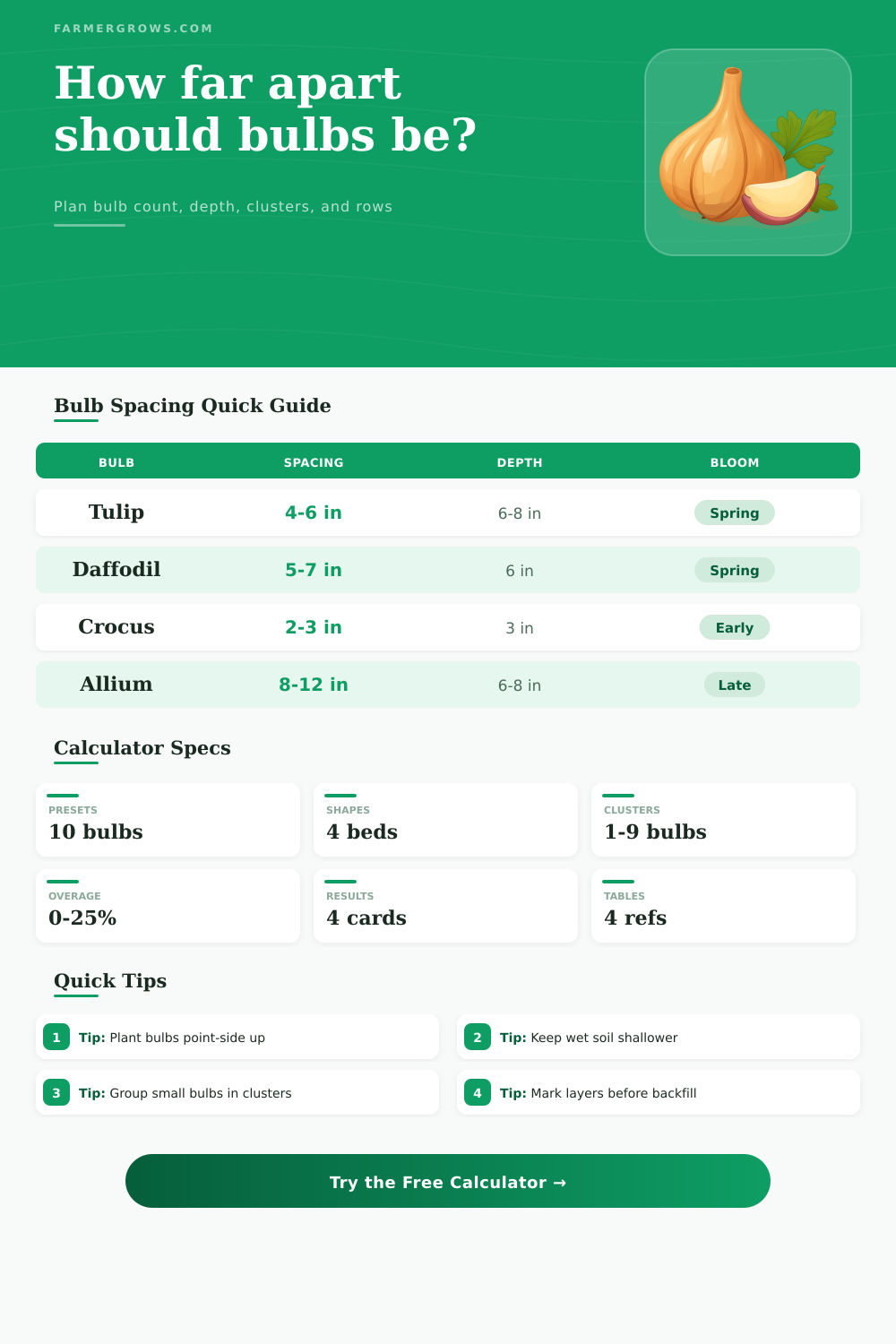
| Tulip | 4 to 6 in | 6 to 8 in | 1 to 3 bulbs per pocket | Dense blocks look best; protect from browsing where needed. |
| Daffodil | 5 to 7 in | 6 in | 1 to 5 bulbs per pocket | Good for naturalizing and usually avoided by deer. |
| Crocus | 2 to 3 in | 3 in | 5 to 9 bulbs per pocket | Works in lawns if foliage can ripen before mowing. |
| Hyacinth | 5 to 6 in | 6 in | 1 to 3 bulbs per pocket | Strong fragrance near walks; avoid wet winter soil. |
| Ornamental allium | 8 to 12 in | 6 to 8 in | 1 bulb per pocket | Tall heads need room among perennials. |
| Grape hyacinth | 2 to 3 in | 3 in | 5 to 9 bulbs per pocket | Excellent front carpet and underplanting bulb. |
| Snowdrop | 2 to 3 in | 3 in | 5 to 9 bulbs per pocket | Often planted in small colonies while dormant or in green. |
| Reticulata iris | 3 to 4 in | 4 in | 3 to 7 bulbs per pocket | Early color in sunny, well-drained pockets. |
| Lily | 8 to 12 in | 6 to 8 in | 1 to 3 bulbs per pocket | Leave space for stems, mulch, and staking. |
| Gladiolus | 4 to 6 in | 4 to 6 in | 1 corm per site | Cutting rows can be succession planted. |
| Bloom season | Typical bulbs | Spacing approach | Layer position | Planning note |
|---|---|---|---|---|
| Very early spring | Snowdrop, crocus, reticulata iris | Small clusters or carpets | Front or under trees | Best in visible pockets near paths and entries. |
| Early to mid spring | Muscari, hyacinth, early tulips | Dense color ribbons | Front to middle | Pairs well above deeper daffodils in layered beds. |
| Mid spring | Tulip, daffodil | Blocks, rows, or drifts | Middle color layer | Let foliage ripen before cutting back. |
| Late spring | Allium, late tulip | Wider accent spacing | Middle to back | Use perennials to hide fading bulb leaves. |
| Summer | Lily, gladiolus | Rows or clusters | Back or cutting row | Plant after soil warms and stake tall stems as needed. |
| USDA zones | Bulb fit | Spacing adjustment | Depth note | Climate caution |
|---|---|---|---|---|
| Zones 2 to 3 | Hardy daffodil, crocus, allium, snowdrop | Standard spacing | Use full depth for freeze protection | Plant early enough for root growth. |
| Zones 4 to 5 | Most spring bulbs | Standard spacing | Normal listed depth | Mulch after soil cools if heaving is common. |
| Zones 6 to 7 | Tulip, daffodil, hyacinth, muscari | Dense blocks or drifts | Standard to slightly deep | Good balance for most spring bulb beds. |
| Zones 8 to 9 | Daffodil, allium, muscari, some tulips | Use overage for weaker perennial return | Avoid extra-deep wet planting | Tulips and hyacinths may need pre-chilling. |
| Zones 10 to 11 | Gladiolus, lily in suitable climates, treated tulips | Plan as seasonal color | Follow supplier guidance | Many spring bulbs need artificial chilling. |
| Center spacing | Square grid bulbs per sq ft | Staggered estimate | Best bulb size | Use case |
|---|---|---|---|---|
| 2 in | 36.0 | 41.4 | Tiny minor bulbs | Very dense container or display pockets |
| 3 in | 16.0 | 18.4 | Crocus, muscari, snowdrop | Carpets, lawn islands, underplanting |
| 4 in | 9.0 | 10.4 | Small iris, small tulips | Dense color blocks and short ribbons |
| 5 in | 5.8 | 6.6 | Tulip, hyacinth | Formal spring beds and walkway bands |
| 6 in | 4.0 | 4.6 | Daffodil, tulip | Balanced beds with some room to return |
| 8 in | 2.25 | 2.6 | Allium, lily | Accent bulbs among perennials |
| 12 in | 1.0 | 1.15 | Large allium, large lily | Specimen dots and back-border stems |
For layered beds: Put large bulbs deepest, backfill partway, then place smaller bulbs between the gaps instead of directly above the largest bulbs.
For natural drifts: Toss bulbs by handful, adjust only the tightest clumps, then plant where they land for a less mechanical pattern.
Whether your bed’s going to look like a sea of color or one of patches will depend partly on how far apart you space each kind of bulb when planting. Some bulbs requires more space underground than others; and then there’s what you want the arrangement to look like. With a little help from a calculator, that can be translated exactly into how much of each bulb to buy.
Just enter in your layout preference, which bulbs you’re planning to use, their cluster size, and shape of bed. Every input makes a difference, adjusting the number of bulbs you’ll use up in the space. The shape of the bed affect how much space will be available (minus the edges). How close you plant rows together, plus how far apart you plant bulbs within them sets the dimensions of each planting pocket. Planting more than one bulb per hole (called cluster size) help you reach your total number of bulbs faster.
Plan Your Bulb Garden Easily
Bloom layer adjusts the density: It can makes back-border bulbs stand out individually but creates a lush carpet effect in front. Add an overage as a buffer against some bulbs being eaten or failing to sprout. With those figures entered, the calculator will tell you exactly how many you need to order and whether your depth is appropriate for that species.
The depth you plant bulbs at matters for both their winter survival and timing of their spring emergence. If you plant them too shallowly, they might be pushed out of the ground by freezing and thawing; if you plant them too deep, they will use up precious energy and be delayed. If you are outside the general range, the tool flags it so you can make an adjustment before digging.
It also tallies volume of soil you’ll displace. This is useful when you need to improve drainage or are tackling a heavy clay.
On the page, reference tables illustrates the behavior of various species in the same bed. For example: Why are alliums best planted apart from one another, but not crocus and muscari? How should things be staggered so you get more bulbs into a square footage versus making straight rows? How will combining bulbs with perennials that push up later in the season work? Those comparisons comes in handy if you are mixing early- and late-bloomers.
It’s convenient: You get to experiment with various combinations before ordering. Try staggering the layers versus the drift, spacing them farther apart; and note the number goes down. Replace the middle block with the front carpet layer, and density increases, building a continuous carpet of color.
Each option affects the math, but message isn’t: How much can you squeeze into there? How many bulbs can you grow? Before the bulbs go in the ground, it’s better to know the answer to that, don’t you think? On paper, it’s simpler to add a few more pockets than having to dig new holes when the days are short and soil is frozen. You should of known before starting. Actualy, if you use this tool it makes planning much easier than doing it by hand.