Rock Ground Cover Calculator
Estimate landscape rock volume, tons, bag counts, delivery loads, density, depth, compaction, and edging loss for beds, paths, tree rings, drainage strips, and rock gardens.
Use measured finished dimensions and the actual depth you want after raking. Decorative stone is sold by volume or weight, so this calculator keeps both visible and lets you adjust density when your supplier lists a local value.
Rock Ground Cover Estimate
Results include selected depth, density, settling allowance, edge loss, overage, and the chosen purchase unit.
| Project or rock size | Typical depth | 1 cu yd covers | Field note |
|---|---|---|---|
| Refresh existing chips | 1 to 1.5 in | 216 to 324 sq ft | Best only when fabric and old stone already cover soil. |
| Pea gravel paths | 2 in | 162 sq ft | Use edging; rounded stone moves under foot traffic. |
| River rock beds | 3 in | 108 sq ft | Common depth for weed fabric coverage and visual fullness. |
| Large cobble accents | 4 in | 81 sq ft | Needed when stones are large enough to bridge and expose fabric. |
| Riprap drainage swales | 6 in | 54 sq ft | Use thicker layers where flow or erosion can move stone. |
| Rock material | Typical lb per yd3 | Tons per yd3 | Best estimating use |
|---|---|---|---|
| Pea gravel | 2,900 | 1.45 | Walkways, patio joints, dog runs, and small drainage beds. |
| River rock | 2,800 | 1.40 | Decorative foundation beds and planted borders. |
| Crushed granite | 2,700 | 1.35 | Angular edges, utility strips, and compacted stone zones. |
| Decomposed granite | 2,600 | 1.30 | Fines for patios and firm paths after compaction. |
| Lava rock | 1,500 | 0.75 | Lightweight xeriscape beds and decorative dry gardens. |
| Marble chips | 2,800 | 1.40 | Bright decorative beds where reflection and color matter. |
| Slate chips | 2,300 | 1.15 | Flatter chips for modern borders and dark accent beds. |
| Riprap | 3,000 | 1.50 | Drain outlets, swales, erosion edges, and large-stone work. |
| Depth | 1 cu yd covers | 1 ton covers at 2,800 lb/yd3 | 0.5 cu ft bag covers |
|---|---|---|---|
| 1 in | 324 sq ft | 231 sq ft | 6 sq ft |
| 1.5 in | 216 sq ft | 154 sq ft | 4 sq ft |
| 2 in | 162 sq ft | 116 sq ft | 3 sq ft |
| 3 in | 108 sq ft | 77 sq ft | 2 sq ft |
| 4 in | 81 sq ft | 58 sq ft | 1.5 sq ft |
| 6 in | 54 sq ft | 39 sq ft | 1 sq ft |
| Project | Example area | Typical depth | Base volume before overage |
|---|---|---|---|
| Mailbox or small accent bed | 50 sq ft | 2 in | 0.31 cu yd |
| Foundation border strip | 160 sq ft | 3 in | 1.48 cu yd |
| Pea gravel walkway | 240 sq ft | 2 in | 1.48 cu yd |
| Tree ring, 12 ft diameter | 113 sq ft | 2 in | 0.70 cu yd |
| Xeriscape front bed | 600 sq ft | 3 in | 5.56 cu yd |
| Drainage swale with riprap | 180 sq ft | 6 in | 3.33 cu yd |
Depth tip: A stone layer should usually be at least one and a half to two times the largest stone size, or fabric and soil will show through after raking.
Delivery tip: When buying by the ton, confirm whether the supplier uses short tons and whether wet material, fines, or mixed sizes change the listed density.
There is more to selecting your rock ground cover than simply picking out what looks good. It needs to be something that doesn’t blow away and drains well. Once everything is in place, it should also look complete. Consider weight, depth, size and what additional amount you will require to ensure you don’t run out on that final corner of the bed.
After you determine your actual depth (how much of the bed will be covered by a rake) and the size you’d like your finished bed to be, the calculator up top do all the math for you. But knowing what each input means is key.
How to Choose Rock Cover
The first input is area shape. This determines how big an area you’re covering. Changing the area shape without changing the length affect volume quickly. Next comes depth, that’s the key decision, since depth will dictate whether your fabric underneath stays hidden, as well as how much stone you’ll require. If it’s too shallow, it’ll look patchy; if too deep, you wasted money and added a lot of weight on the soil.
The kind of rock makes a difference (both to look and to perform). Pea gravel will move around beneath your feet; plan a bit more space for it to migrate, and edge it firmly in place. Crushed granite (which comes in various sizes and shapes) stays in place better because its angular shape lock together, so less of it spills out the sides, but it may feel firmer underfoot then rounded pea gravel. Lava rock may be lighter (per yard) than other materials, making it easier to haul around if you’re doing it by hand, but also may hold leaves and such in place over time. Plan on matching the actual density setting of the specific supplier (since gradation and moisture contents vary rock-to-rock), which adjust how much a certain volume of rock weighs.
You don’t think of compaction, right? There is also edge loss. You know: stone settling in from traffic and rain, and some always slipping out beyond the border when you spread it. A little extra for both of these (a small percent) pre-empts what everyone else does: orders exactly what they measure, only to find that they’re a half-yard short and need more.
You can also order extra as a buffer for hand raking, curves, and other things that will cause your pile to come up just short of the truck, which always happens.
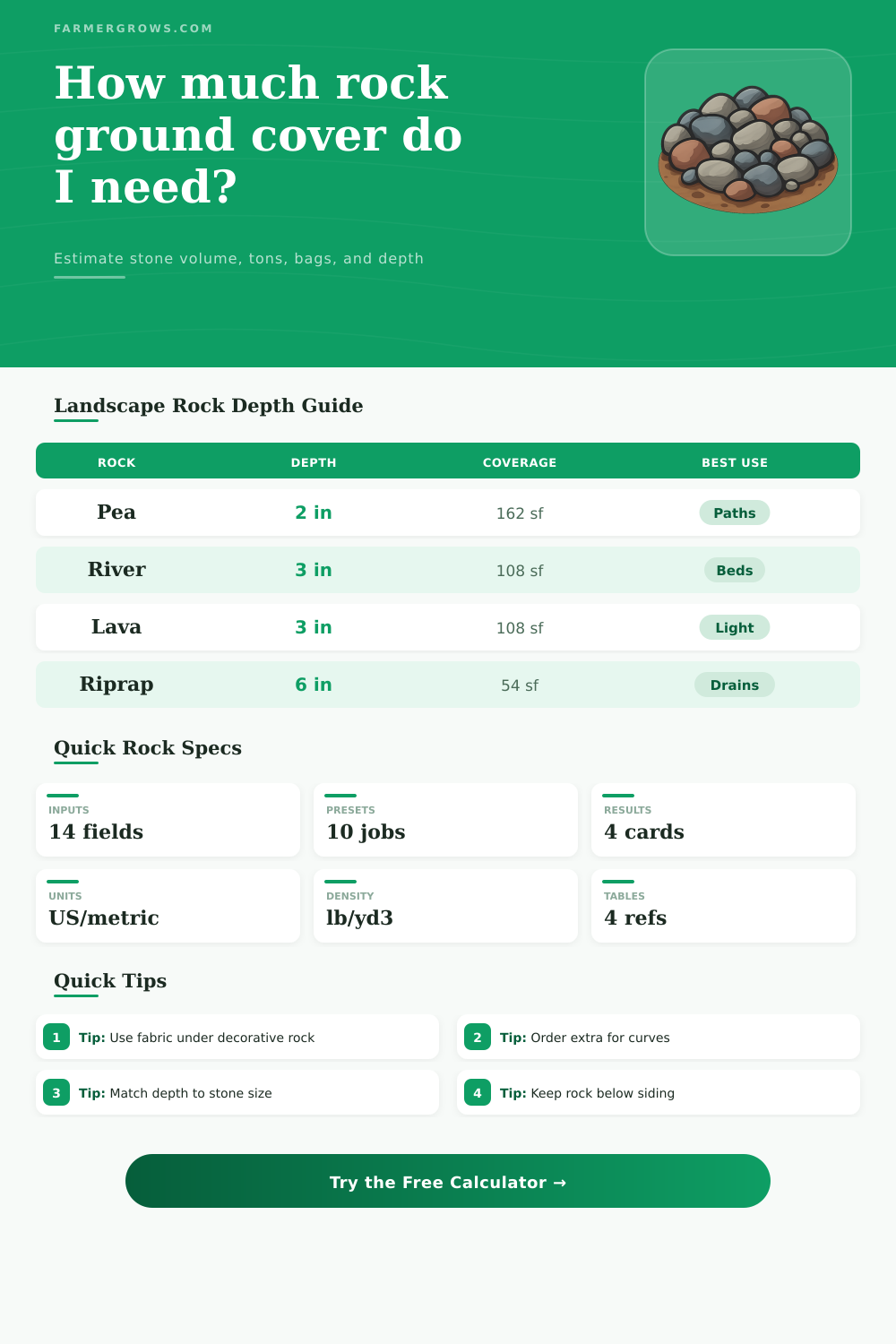
On the page: Some of the reference tables (one of which is pictured here) explain weights compared, so you can see how various materials stack up; the other table explain what percentage of an area is covered at any given thickness, helping you decide if the cost per-ton being quoted is reasonable for your selected material (or buy-in-bulk vs). Buy-in-bags.
Or they serve as a reminder: A couple inches thick spread out over a path will cover many more square feet than a six-inch depth used as drainage rock. If they match what’s there at your site, you’re getting the big payoff. Plug it in and measure once, and the estimate will already include details we tend to forget until we have the materials in hand. One step and suddenly you’ve got an order that works, versus just a rough guess at how much you’ll need.
You should of accounted for weight too. It’s more naturaly easy to plan it out now.