Flower Bed Soil Calculator
Plan deep annual, perennial, cutting, bulb, rose, and mixed flower beds by estimating imported soil blend, compost, existing soil removal, mulch, plant count, bags, bulk yards, and weight.
Measure the finished planting bed after edging, not the outside of stone or timber borders. For existing beds, enter the depth of tired soil you plan to remove so the calculator can separate hauled-out soil, retained native soil, compost, and imported blend.
Flower Bed Soil Estimate
Enter the bed layout and soil recipe to estimate volume, compost, mulch, and plants.
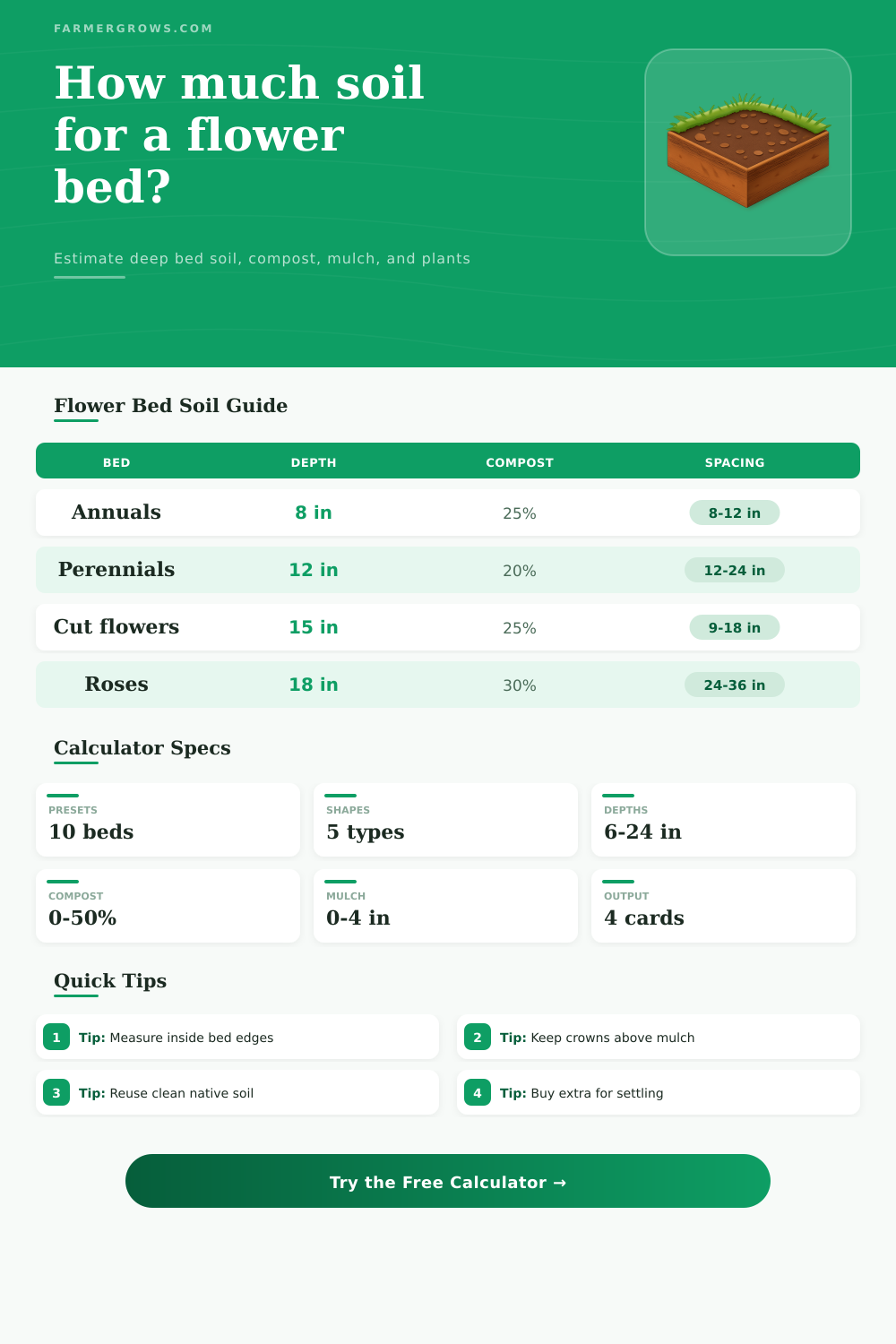
| Flower bed type | Typical depth | Best use | Soil note |
|---|---|---|---|
| Annual bedding color | 6 to 10 in | Petunia, marigold, pansy, begonia | Frequent feeding can support shallower seasonal roots. |
| Mixed perennial border | 12 to 18 in | Salvia, coneflower, phlox, daylily | Loose depth helps crowns overwinter and expand. |
| Cut flower rows | 12 to 15 in | Zinnia, cosmos, dahlia, snapdragon | Use fertile, drainable soil for repeated stem harvest. |
| Bulb layered bed | 10 to 14 in | Tulip, daffodil, allium, annual overlay | Keep bulbs below seasonal roots but above soggy subsoil. |
| Rose or woody flower bed | 18 to 24 in | Rose, lavender, hydrangea starts | Depth matters, but drainage matters just as much. |
| Situation | Compost target | Layer equivalent | Use with care |
|---|---|---|---|
| Annual refresh | 20% to 30% | 1 to 2 in blended into top soil | Excellent for hungry seasonal color. |
| New perennial bed | 15% to 25% | 2 to 3 in across the bed | Avoid burying crowns in rich, wet compost. |
| Heavy clay improvement | 20% to 30% | 2 to 4 in plus mineral soil | Do not create a bathtub over compacted clay. |
| Sandy soil improvement | 15% to 25% | 1 to 3 in plus moisture-holding loam | Split amendments over seasons if soil is very lean. |
| Rose and shrub flowers | 20% to 30% | Blend around root zone, not against stems | Too much compost can hold excess winter moisture. |
| Mix | Approx lb per ft3 | Approx lb per yd3 | Good flower bed use |
|---|---|---|---|
| Light potting-style mix | 22 lb | 594 lb | Containers and very light raised beds. |
| Raised bed flower blend | 36 lb | 972 lb | Balanced imported bed soil with compost and bark fines. |
| Screened garden loam | 55 lb | 1485 lb | General in-ground flower bed replacement soil. |
| Compost-rich bed mix | 42 lb | 1134 lb | Annuals and cutting beds with high organic matter. |
| Clay-amended topsoil | 72 lb | 1944 lb | Heavy mineral blends where drainage is verified. |
| Flower group | Common spacing | Plants per 100 sq ft | Planning note |
|---|---|---|---|
| Small annuals | 6 to 10 in | 144 to 400 | Use closer spacing for instant color, wider for airflow. |
| Medium annuals | 10 to 14 in | 74 to 144 | Good for zinnia, marigold, coleus, and salvia starts. |
| Cut flowers | 9 to 18 in | 44 to 178 | Rows may be denser than landscape spacing. |
| Perennials | 12 to 24 in | 25 to 100 | Leave room for mature crown spread after year one. |
| Roses and shrubs | 24 to 48 in | 6 to 25 | Keep mulch off stems and give air space for disease control. |
Depth tip: A deep flower bed does not have to be 100% imported soil. If the native soil is clean and workable, blend compost into the retained profile and replace only the tired or compacted top layer.
Mulch tip: Mulch suppresses weeds and steadies moisture, but keep it thinner near small annuals and pull it back from perennial crowns, rose canes, and bulb noses.
Preparing soil for a flower bed involve knowing what plants want beneath surface, not so much a recipe as a close understanding of their particular needs. Annuals are quick-draining and continuously fed; they will live for only one season before being discarded. Looser but still moist, so deep-rooted perennial like roses and other garden plant can be happy for years. Why? Roots goes only so far, and so does compost availability, depending on conditions. How deep? That’s where the amount of material you purchase (or move) comes into play. You can get away with six inches on a fast color bed of petunias, but not with climbing roses or dahlias in the same bed during height of summer.
The above calculator does the math: Enter shape of the bed, how deep you want it, what fraction of existing soil needs to be removed. After you hit “go,” it splits out the compost part versus the rest of the blend and indicates the number of bags or cubic yards that amounts to once it has packed down. No more short order! And no more overordering, either because soil will pack down during rains.
How to Calculate Soil and Mulch for Your Garden
Small choices makes big differences in compost percentage. Too little compost can result in poor soil, while too much can keep base of plants too wet during the winter when they prefer to stay dry. Once it’s all mixed together, most flowerbeds end up with between 15 and 30 percent organic matter in them. You can specify exact amount of compost you want right on the tool so the result tells you how much to spread instead of giving you a generic number for topsoil.
The same is true with plant spacing. A tight spacing will fill out a bed quickly and create a plush look on opening day, but can also choke off air circulation, leading to higher rates of disease down the road. A wider spacing allow perennials to spread out so they grow to their naturaly size without having to be divided all the time. Enter your preferred plant density and space between each one into the calculator to find out how many plants you’ll need. This helps you avoid common mistake of running out of plants because you bought “just enough,” or ending up with far more then you needed because of unsightly gaps left after everything matures.
Then add mulch on top. A couple inches of mulch cools things down a bit; it also slows evaporation, but unless you pull away the mulch at planting time, it will smother emerging bulbs or small annuals by tucking their noses into oblivion. The amount of mulch you need depends off the surface area you’re covering. Once the beds are planted, use same calculator we used for soil to estimate your mulch needs.
If you compare running the numbers for doing it one way versus another way on the same bed, that’s where the value come in. There is a four-inch-thick layer of existing soil, plus eight inches of new mix. Everything is gone, so you are starting with twelve inches from scratch. Knowing exactly how much weight, yards, and bags you need helps you weigh your options before you grab the shovel, whether to go big or just do what feels right.
You should of checked if it was more moddern than the old way.