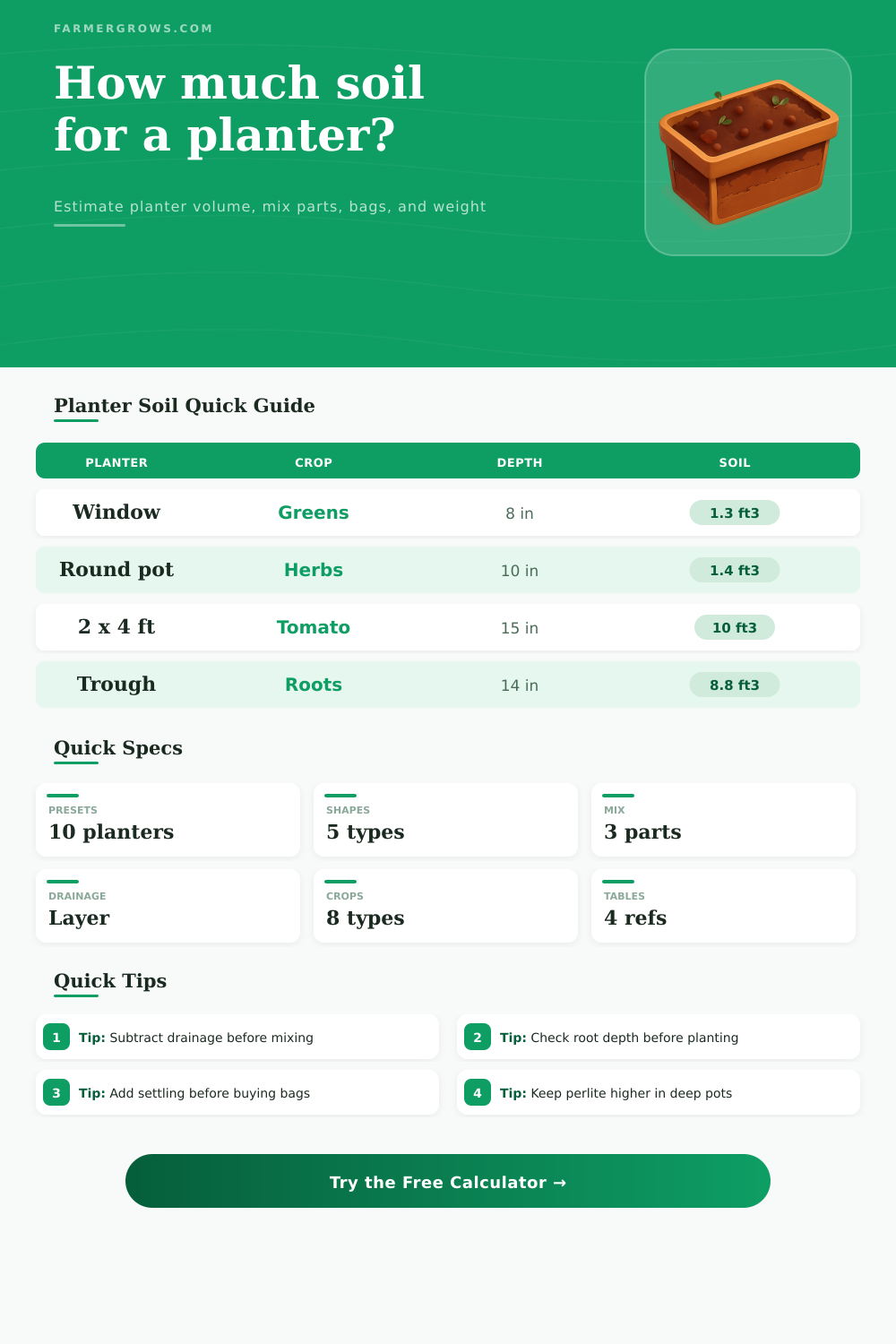
Planter Soil Calculator
Estimate soil volume, drainage displacement, potting mix components, bag counts, watered weight, and crop root fit for raised planters, window boxes, tubs, and patio pots.
Measure inside dimensions after liners are installed. The calculator subtracts drainage layer volume first, then adds settling allowance to the actual growing mix.
Planter Soil Estimate
Your planter volume, mix, and crop fit will appear here.
| Planter size | Shape | Soil depth | Volume | Common use |
|---|---|---|---|---|
| 24 x 8 in window box | Rectangle | 7 in | 0.78 ft³ / 22 L | Leafy greens, annual herbs |
| 30 x 10 in window box | Rectangle | 9 in | 1.56 ft³ / 44 L | Greens, parsley, strawberries |
| 20 in round pot | Round | 12 in | 2.18 ft³ / 62 L | Peppers, compact tomatoes |
| 48 x 18 in trough | Rectangle | 14 in | 7.00 ft³ / 198 L | Tomatoes, carrots, potatoes |
| 2 x 4 ft raised planter | Rectangle | 15 in | 10.00 ft³ / 283 L | Large vegetables and mixed crops |
| Mix recipe | Base potting mix | Compost | Perlite or pumice | Best planter use |
|---|---|---|---|---|
| Vegetable planter mix | 55% | 30% | 15% | Tomatoes, peppers, cucumbers, herbs |
| Fast-draining patio mix | 60% | 20% | 20% | Deep pots, rainy patios, herbs |
| Leafy moisture mix | 60% | 30% | 10% | Greens and shallow window boxes |
| Loose root crop mix | 65% | 20% | 15% | Carrots, beets, radishes, potatoes |
| Acid berry and shrub mix | 60% | 20% | 20% | Blueberries with acidic bark or peat base |
| Crop type | Minimum soil depth | Better depth | Planter spacing cue | Root warning |
|---|---|---|---|---|
| Leafy greens | 6 in | 8 to 10 in | 4 to 8 in apart | Bolting sooner in shallow, hot boxes |
| Herbs | 8 in | 10 to 12 in | 6 to 12 in apart | Woody herbs dislike wet feet |
| Peppers | 10 in | 12 to 14 in | 1 plant per 3 to 5 gal | Small pots dry fast during fruiting |
| Tomatoes | 14 in | 16 to 20 in | 1 plant per 10 to 15 gal | Root stress causes blossom-end trouble |
| Roots and carrots | 12 in | 14 to 16 in | 2 to 3 in apart | Dense mix can fork roots |
| Blueberries | 14 in | 18 to 20 in | 1 shrub per large tub | pH mismatch matters more than depth |
| Crop group | Water target | Fertilizer rhythm | Mulch note | Watch for |
|---|---|---|---|---|
| Leafy greens | Evenly moist | Light liquid feed every 2 weeks | Fine compost topdress | Afternoon wilt and bitter leaves |
| Herbs | Dry slightly at top | Light feed every 3 to 4 weeks | Gravel or bark for dry herbs | Yellow leaves from wet roots |
| Peppers | Deep water after top inch dries | Balanced feed every 2 to 3 weeks | Straw or shredded leaves | Flower drop in dry swings |
| Tomatoes | Steady deep watering | Tomato feed after fruit set | Straw over compost layer | Cracking after dry-wet cycles |
| Potatoes | Moist while tubers size | Moderate feed before flowering | Hill with loose mix | Green tubers near light |
| Blueberries | Consistent, never soggy | Acid-forming feed in spring | Pine bark or needles | Chlorosis from high pH water |
Measure the inside: Wall thickness, liners, and corner posts can remove more soil volume than expected, especially in narrow window boxes.
Use drainage sparingly: A thick gravel layer reduces root depth. In most planters, drainage holes and an airy mix matter more than a deep rock bed.
Prepare the soil for containers. That’s what good gardening in pots is all about. Getting it right.
How do you know? What kind of material to use? How much to fill them with, what size hole to create for drainage, what room are there for plant roots once things settle down? All these affect performance of your plants over a season. And few realize just how fast a soil mix settles or how large an area even a drainage layer require. A tiny misstep means more shopping trips and unhappy plant.
How to Choose Soil for Pots
Let the calculator do the math for you. Choose your crop, then select the shape of your planter (plus its dimension). The calculator will work out how many cubic feet you need (then subtract out the drainage layer). Next it will add in a settling allowance so that you don’t order too much soil…but still have plenty to go around.
Each shape of planter is different: A round tub still loses space once you account for the pebbles or bark at the base. But a tapered box doesn’t hold as much as top measurement would indicate. But a tapered box doesn’t hold as much as the top measurement would indicate.
Not all crop prefer the same depth. Shallow soil is fine for leafy greens with roots that grows sideways instead of down. Tomatoes require more room so they’re never exposed to repeated dry-down spells that cause blossom-end rot. The tool matches your targeted fill level to the crop’s ideal range. Better to know the difference before planting day, not post-first-heat-wave.
The amount of mix is only half the story; also important are the mix ratios. Compost-heavy mixes is good for holding moisture, but too much makes a mix that’s heavy and slower to drain in large container. Perlite lightens things up. Better air circulation does as well. Too much, though, and you’ll be watering a lot more. With the calculator, you don’t have to guess at the wheelbarrow, it shows the split between compost and perlite so you can tweak before mixing.
There are factors not included in numbers. The sunnier the wall, the faster the soil dries out: A little box on a south-facing wall is a heat trap compared to one on the north side where it stays more moist. On rooftops, wind increases evaporation. And a plant canopy shades surface and alters rates of evapotranspiration (the rate at which moisture escapes). After year one, you’ll factor all this in. Beforehand, the calculator provide a good baseline number to start with, and then tweak.
Buying a bag too small? You didn’t get the right amount of soil at all. That’s not perfection. The goal isn’t perfect math on paper. No, the goal is to buy what works on the ground with your crop. And do so just one time. Build structure and depth that allows the crop to come home stronger.
You want to get the numbers working based off the plant in front of you. And run a smoother season. Those extra bags sits on the shelf. Where they should of.