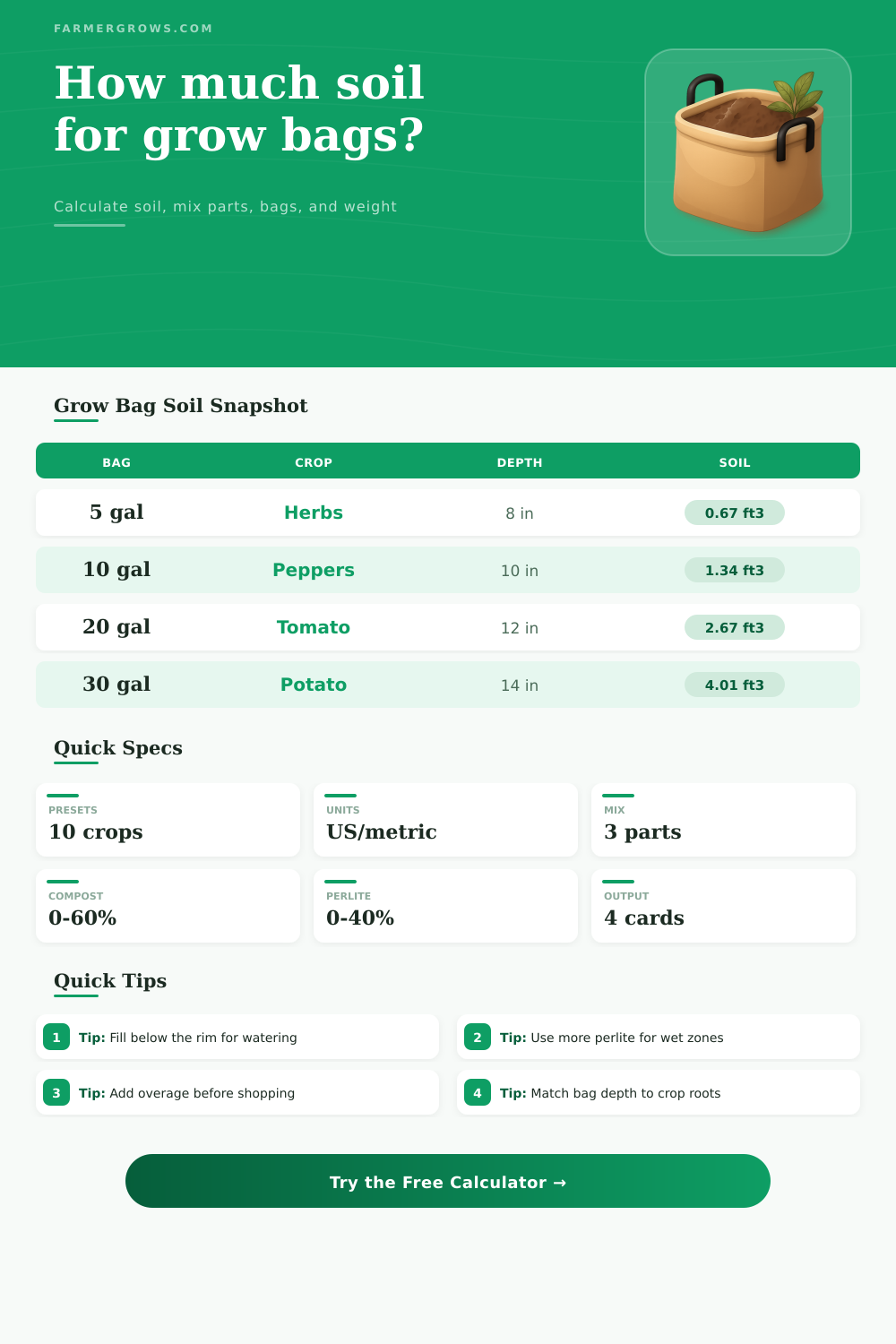
Grow Bag Soil Calculator
Estimate how much potting mix, compost, perlite, retail bagged soil, and lifted weight you need for fabric grow bags by crop, fill level, and recipe.
Grow bags are sold by nominal gallons, but most gardeners leave headspace below the rim. This calculator converts the filled portion into cubic feet, liters, mix components, shopping bags, and expected dry-to-watered weight.
Grow Bag Soil Estimate
Your grow bag soil volume and mix breakdown will appear here.
| Grow bag size | Nominal volume | 90% fill volume | Good crop fit | Practical note |
|---|---|---|---|---|
| 3 gal | 0.40 cu ft / 11 L | 0.36 cu ft / 10 L | Basil, lettuce starts | Fast drying in hot weather |
| 5 gal | 0.67 cu ft / 19 L | 0.60 cu ft / 17 L | Herbs, greens, dwarf pepper | Easy to move when watered |
| 7 gal | 0.94 cu ft / 26 L | 0.84 cu ft / 24 L | Strawberry, compact pepper | Good balcony compromise |
| 10 gal | 1.34 cu ft / 38 L | 1.20 cu ft / 34 L | Peppers, eggplant, herbs | Common minimum for fruiting crops |
| 15 gal | 2.01 cu ft / 57 L | 1.80 cu ft / 51 L | Carrots, cucumber, bush tomato | Better moisture reserve |
| 20 gal | 2.67 cu ft / 76 L | 2.41 cu ft / 68 L | Indeterminate tomato, blueberry | Often the sweet spot for patios |
| 30 gal | 4.01 cu ft / 114 L | 3.61 cu ft / 102 L | Potatoes, squash, melon | Place before filling |
| Crop group | Minimum root depth | Preferred bag size | Mix texture | Container warning sign |
|---|---|---|---|---|
| Leafy greens and herbs | 6 to 8 in | 3 to 7 gal | Moisture holding, fine texture | Bolting from dry swings |
| Strawberries | 8 to 10 in | 5 to 10 gal | Light mix with sharp drainage | Crowns sitting too wet |
| Peppers and eggplant | 10 to 12 in | 7 to 15 gal | Balanced aerated vegetable mix | Blossom drop from stress |
| Tomatoes | 12 to 18 in | 15 to 25 gal | Compost-rich but still airy | Daily wilt by midafternoon |
| Root crops | 10 to 14 in | 10 to 15 gal | Loose, low-clump, moderate compost | Forked roots in dense mix |
| Potatoes | 12 to 16 in | 20 to 30 gal | Loose mix for hilling volume | Green tubers near surface |
| Squash and melon | 14 to 18 in | 25 to 45 gal | High organic matter, strong drainage | Rapid wilt after watering |
| Potting mix recipe | Base potting soil or coir | Compost | Perlite or pumice | Best use |
|---|---|---|---|---|
| Balanced vegetable mix | 55% | 30% | 15% | Tomatoes, peppers, general vegetables |
| High drainage patio mix | 55% | 20% | 25% | Rainy climates, herbs, strawberries |
| Moisture holding leafy mix | 60% | 30% | 10% | Lettuce, chard, basil, cilantro |
| Root crop loose mix | 65% | 20% | 15% | Carrots, beets, radishes |
| Acid-loving berry mix | 60% | 20% | 20% | Blueberries with acidic amendments |
| Crop group | Watering rhythm | Fertilizer rhythm | Mulch or topdress | Season adjustment |
|---|---|---|---|---|
| Leafy greens | Keep evenly moist | Light liquid feed every 2 weeks | Fine compost layer | Shade in heat waves |
| Peppers | Water when top inch dries | Balanced feed every 2 to 3 weeks | Straw or leaf mold | Reduce nitrogen after flowering |
| Tomatoes | Deep water, avoid dry swings | Tomato feed after first fruit set | Compost plus straw mulch | Check daily in hot wind |
| Potatoes | Steady moisture during tuber sizing | Moderate feed before flowering | Hill with loose mix | Ease water near harvest |
| Blueberries | Consistent moisture, never soggy | Acid-forming feed in spring | Pine bark or needles | Use rainwater if tap is alkaline |
Fill for watering: Stop 1 to 2 inches below the rim. Fabric bags shed water quickly if the surface is crowned above the edge.
Mix before filling: Blend compost and perlite evenly in a tub or tarp first. Layered ingredients settle unevenly and can leave dry pockets.
Growing herbs and vegetables in fabric grow bags is flexible, but it’s kind of a guessing game when it comes to gauging soil. A bag claims to hold twenty gallons, which is great. But just how much should I pack into it, and should I leave some room at the top? Also, how will soil settle as water goes in?
Depending on your mix and how full a bag it is whether it’ll dry out fast or stay soggier longer makes all the difference. First, consider what kind of crops you’ll grow (because some plants has deeper rooting than others), and secondly, how thirsty those crops will be when it gets really hot.
How to Fill Your Grow Bags
Shallower-rooted plants like leafy greens and herbs does best in smaller bags. They can goes longer between waterings when the weather is cool, but they like frequent light watering. Plants with big root systems that takes up moisture through their leaves (like tomatoes and squash) need bigger bag that hold plenty of water without getting soaked.
That’s where the calculator comes into play. It takes the guesswork out of deciding how many cubic feet of soil your bag should contain, and it eliminates manual math to figure out how many gallons of soil fit inside.
Another critical aspect of mix ratios is that they is just as important as overall quantity. Too little compost will lower fertility and reduce water retention; too much compresses and suffocates the medium by closing off air flow. Adding pumice or perlite help maintain an open structure; roots get to breathe, and surplus water drains out sides of the fabric.
On a shady balcony, the bags stay wet longer, use more perlite. But under fast-drying conditions like a sunny, breezy patio? A richer compost-to-perlite ratio are ideal. The tool adjusts those percentages and tell you exactly how to adjust your shopping list to match.
Another practical question is weight. It’s easy to forget about weight until move-in day. You might find yourself lugging bags of soil up the stairs, moving them around a small area or watering them in. A twenty-gallon bag of soil fresh from the nursery can weigh well over fifty pounds, and it get heavy quickly.
To determine if the bigger bag is worth it (or better to split the load between two medium-sized bag), the output shows not just the dry weight but also the wet weight. For the rest of us who purchase soil by prepackaged bags, retail bag counts are just as helpful. Most of us can round up to the nearest full bag without any issues. Leftover mix will keep well for use for future top-dressing. This way, you won’t accidentally run out mid-project, either.
And it alerts you if there’s a chance the size of your crop/bag combo might be insufficient before you have the plant in the ground, not afterward. Soil planning works similarly. It is not a jumble of little choices but a single complete plan. The numbers you get are based off real-life circumstances, such as actual amount of space your plants will be in, rather than some idealized maximum measurement.
The closer your calculation matches what you put into the ground, the less it becomes a constant round of adjustments during the growing season; it just runs like clockwork. You should of used more perlite if things get too dry, and it naturaly helps with water. It is much more comfortabley than guessin.