Sheep Feed Calculator
Estimate dry matter intake, pasture offset, hay as-fed pounds, grain and protein supplement, mineral and salt allowance, CP, TDN, and daily flock totals for sheep.
Use this as a planning calculator for ordinary ration checks. It does not replace forage testing, body condition scoring, veterinary advice, or a nutritionist's complete ration balance for high-risk pregnancy, fast finishing, or mineral-sensitive flocks.
Sheep Feed Results
Results combine class-based intake targets, body condition adjustment, stage demand, pasture contribution, forage dry matter, and selected supplements.
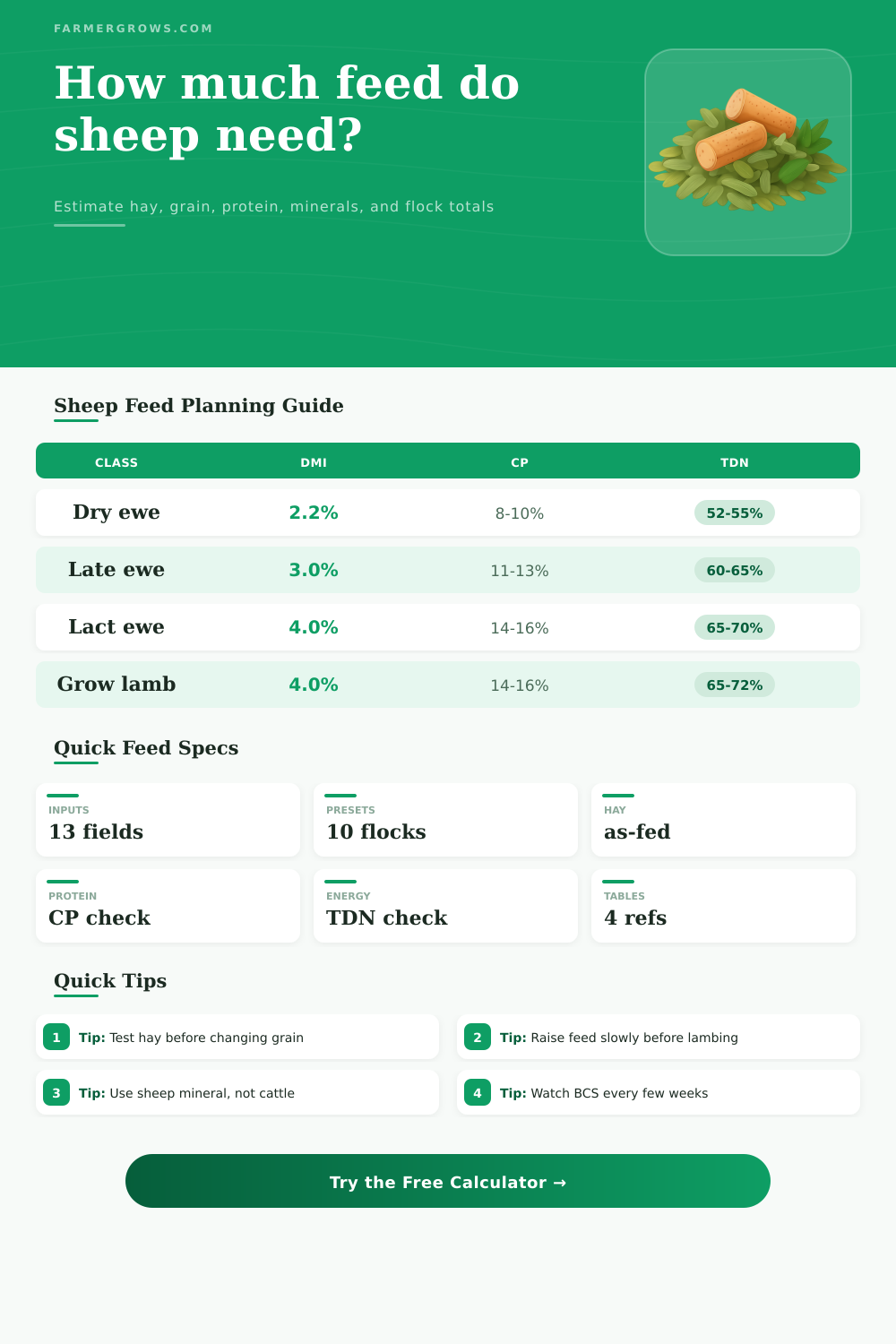
| Sheep class | Typical DMI as body weight | When to use | Feed planning note |
|---|---|---|---|
| Dry mature ewe | 2.0% to 2.4% | Maintenance, open, or dry period | Average forage may meet needs if BCS is adequate. |
| Early or mid gestation ewe | 2.2% to 2.7% | First 15 weeks of pregnancy | Keep thin ewes from drifting lower before late pregnancy. |
| Late gestation ewe | 2.8% to 3.5% | Last 4 to 6 weeks before lambing | Use better forage and controlled grain for twins or triplets. |
| Lactating ewe | 3.5% to 5.0% | First 6 to 8 weeks after lambing | Highest routine demand for protein, energy, calcium, and water. |
| Growing lamb | 3.5% to 5.0% | Weaned lambs gaining frame | Smaller lambs eat a higher percent of body weight. |
| Finishing lamb | 3.0% to 4.5% | High-energy finishing ration | Balance calcium and adapt grain slowly. |
| Production stage | Crude protein target | Low signal | High signal | Useful feed choices |
|---|---|---|---|---|
| Maintenance ewe or ram | 8% to 10% | Weight loss, wool weakness | Excess condition gain | Grass hay, mixed pasture, limited legume hay |
| Early or mid gestation | 9% to 11% | Thin ewes entering late gestation | Overfat lambing group | Good grass hay or mixed grass-legume hay |
| Late gestation singles | 11% to 13% | Ketosis risk, weak lambs | Sorting or unused feed | Good hay plus modest grain and protein |
| Lactation or twins | 14% to 16% | Low milk, poor lamb growth | Loose manure, wasted protein | Legume hay, ewe pellet, soybean or canola meal |
| Growing lambs | 14% to 16% | Slow gain, poor frame growth | High supplement waste | Lamb grower pellet, legume hay, balanced grain mix |
| Production stage | TDN target | Energy pressure | Pasture role | Planning note |
|---|---|---|---|---|
| Maintenance | 52% to 55% | Low to moderate | Can provide most or all DMI | Use BCS to decide if hay alone is enough. |
| Early or mid gestation | 55% to 58% | Moderate | Good pasture usually helps | Save best hay for late gestation and lactation. |
| Late gestation | 60% to 65% | High, especially twins | Pasture must be dense and reliable | Rumen fill is limited, so ration density matters. |
| Lactation | 65% to 70% | Very high | Excellent pasture can offset hay | Watch lamb gain and ewe BCS weekly. |
| Finishing lamb | 68% to 74% | Very high | Usually a smaller share | Adapt grain over 10 to 14 days and keep fiber available. |
| Mineral item | Typical target | Why it matters | Field caution |
|---|---|---|---|
| Sheep mineral and salt | 0.25 to 0.75 oz per head daily | Supplies sodium, trace minerals, and vitamins | Use sheep mineral rather than cattle mineral for copper safety. |
| Calcium to phosphorus ratio | About 1.5:1 to 2:1 | Supports bone, milk, and urinary tract balance | High-grain lamb diets usually need added calcium. |
| Calcium concentration | 0.2% to 0.4% for many rations | Higher need during lactation | Legume hay raises calcium more than grass hay. |
| Selenium | Region and label dependent | Supports muscle and immune function | Too little and too much are both problems; follow local guidance. |
| Copper | Sheep-safe level only | Required in tiny amounts | Many sheep are sensitive to excess copper accumulation. |
Forage check: A hay test is the fastest way to tighten this calculator. Visual hay quality is useful, but CP, TDN, moisture, calcium, and phosphorus decide the actual ration balance.
Change check: Increase grain or protein supplement gradually, especially before lambing and during lamb finishing. Sudden ration changes can cause digestive trouble even when the math looks right.
Sheep’s feed requirement change frequenty for various reason related to the life stage of the sheep. The ewes that are pregnant will have different requirement for there feed as compared to those ewes that are not pregnant. Additionally, the growing lambs will require a different type of sheep feed then the rams that do not change in weight throughout the winter month.
By using a sheep feed calculator, sheep farmer can compare the requirement of the sheep to the amount of sheep feed that they currently have available for the flock. To calculate the requirements of the sheep, several factor must be input into the calculator. The farmer must enter the body weight of the sheep into the calculator to determine if the sheep should gain or losing weight.
How to Use a Sheep Feed Calculator
Additionally, the body condition score of the sheep must be entered to determine if the sheep require more sheep feed. The stage of production of the sheep must be entered into the calculator as different stages require different amount of dry matter, protein, and energy to meet the requirement of the sheep at that stage of their production cycle. The amount of contribution that the pasture provide to the diet of the sheep must also be entered into the calculator as some sheep will eat grass from the pasture, thus reducing the amount of hay that would have to be provided to each animal.
Finally, the quality of the hay that is provided to the sheep must be entered into the calculator as different hay will contain different amount of protein and energy, thus changing the amount of grain that would have to be provided to the sheep. The sheep feed calculator will provide various output that will help the sheep farmer make feeding decision for the flock. If the calculated amount of dry feed that is required is higher then what the farmer currently provides to each sheep, then they will have to increase the amount of hay or supplements that are provided.
If the amount of protein or energy that the calculator calculates as being require by the flock is less than what is currently provided to each sheep, then the quality of the forage and hay will have to be improved, or more grain will have to be provided to the sheep. These calculation will also provide the total amount of sheep feed that is required for the entire flock, which will allow the sheep farmer to decide how much feed to order or store for the flock to avoid feeding too much or too little to each sheep. The requirements calculated by the sheep feed calculator are based off ideal condition.
Various factor outside of the calculator will impact the amount of sheep feed that each sheep consumes. For example, the weather will alter the amount of sheep feed that each animal eat. Additionally, the way that the sheep sort through the sheep feed will change how much feed that each animal consumes.
Furthermore, the analysis of the feed can change between batches of feed. Therefore, reference range are used within the calculator to indicate the requirements of the sheep under different condition. These reference range help to indicate if the amount of sheep feed that is provided to the flock is within a normal range.
These reference range are helpful in recognizing the high demand for sheep feed for lambs in late pregnancy and late lactation, allowing farmers to prepare for those high demand before the lambs are born. The balance of mineral in the sheep feed requirements is another critical component of feeding the sheep. The minerals that are provided to the sheep must be made for sheep rather than being provide to the sheep as minerals that are used for cattle feed, as using minerals that are harmful to sheep can negatively impact the health of the animal.
A field is provided for the allowance of minerals to be entered into the calculator to help determine the amount of minerals that is consumed by the sheep. This field help farmers to recognize how much the minerals contribute to the total requirement for each sheep. Sheep farmers may use the sheep feed calculator at the beginning of the feeding period for each flock of sheep.
Additionally, the sheep feed calculator can be used again after the sheep have enter a new stage in their production cycle. By repeatedly using the calculator, sheep farmers can identify the requirement of each individual sheep related to the amount of energy they require versus the amount of hay that they can maintain their body condition with. Furthermore, the sheep feed calculator is used to determine the need of the sheep relative to the amount of sheep feed that will be provide to each animal.
The calculator allow the farmer to ensure that the amount of sheep feed provided to the sheep matches the need of each sheep. By routinely calculating the balance of sheep feed requirements for each sheep, the sheep farmer can avoid providing too much or too little sheep feed to each sheep. Additionally, by calculating these requirement regularly, sheep farmers can avoid creating various metabolic problem in their flock of sheep, and ensure that the sheep will eat the sheep feed in the way that they have been provide to the farm.