
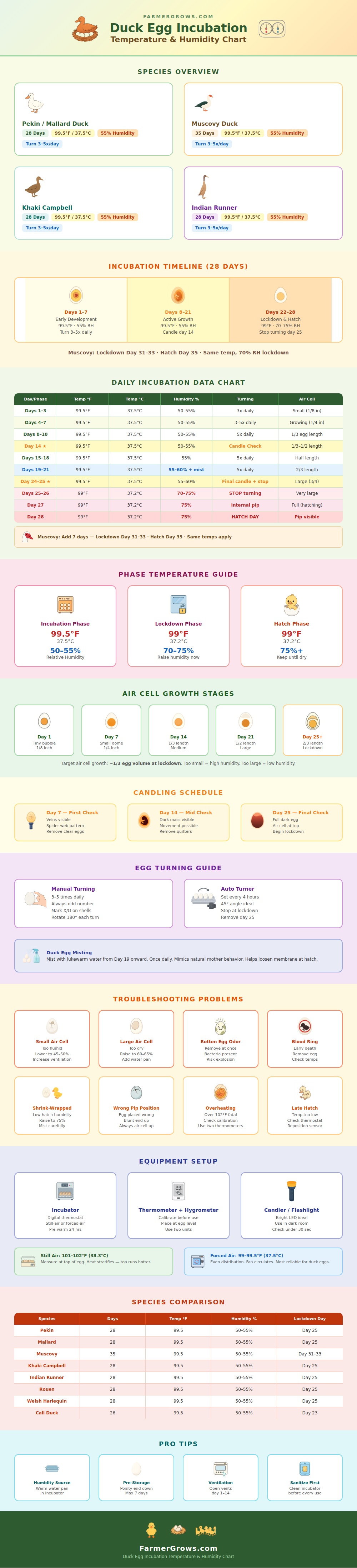
Raising duckling from egg requires specific temperature and humidity level to be maintained within an incubator. The temperature level must be maintained in order to allow for the embryo to develop within the egg. If the temperature levels within the incubator are too low, the embryo wont be able to develop.
If the temperature level are too high, the embryo will cook within the egg. The humidity level must be maintained in order to keep the membrane within the egg flexible. If the humidity within the incubator is too high, the duckling may drown within the eggshells.
How to Keep the Right Temperature and Humidity for Duck Eggs
A temperature and humidity chart can help to maintain the specific level required to incubate duck eggs. Duck egg come from many different breed of ducks. Different breed of ducks require different periods of incubation in order for the ducklings to fully develop.
For instance, many breed require twenty-eight days of incubation, but breed like Muscovy ducks require thirty-five days of incubation within the incubator. This chart can help to indicate which period of incubation is required for the specific breed of duck from which you are procuring the eggs. Using the wrong period of incubation may cause the ducklings to both hatch and die within the eggs.
For the first week of incubation, focus on initiating the embryo within the egg. This process requires that the humidity be on the lower side of the recommended setting for duck egg, but the temperature should be maintained within the incubator. During this first week, also ensure that you turn the eggs several times each day to prevent the embryo from adhering to the membrane within the eggshell.
During the second week of incubation, the embryo will be growing at a rapid rate, and will require more oxygen to support such rapid growth. However, you dont need to change the temperature and humidity setting within the incubator for this second week of incubation. Around day fourteen, candle the eggs to ensure that the embryo is developing proper within the egg.
During the final stage of incubation for duck eggs, humidity within the incubator will have to change. During this last period of incubation, the ducklings will begin to position themselves within the eggshell to initiate the hatching process. During this period, you should increase the humidity within the incubator to ensure that the inner membrane of the egg does not dry out and shrink around the duckling.
Additionally, during this period, you should not turn the eggs within the incubator, as doing so may result in the duckling becoming entangled in its umbilical cord. If these changes to humidity within the incubator and turning of the eggs is not made during this period, the ducklings may pip (create an opening in the shell) but will be unable to hatch from there shells. The air cell within the duck eggs can indicate if the humidity levels within the incubator have been maintained at the proper level for the embryo to develop proper.
The air cell is the bubble that exists at the blunt end of the eggshell. During incubation, the air cell should grow from a small bubble to roughly one-third the total volume of the eggshell by the time the ducklings are locked down within the incubator for the final period of incubation. If the air cell is not growing to the proper size before the ducklings hatch from their shells, it is a sign that the humidity within the incubator may have been too high or too low throughout the incubation process.
Inspecting the air cell during candling will allow you to adjust the humidity within the incubator prior to the ducklings begin to hatch from their shell. Around day nineteen of incubation, you should begin misting the eggs. This process involves spraying the eggs with a light spray of lukewarm water once each day.
This process mimics what the mother duck does when she moistens her feather. The misting process should not be used to soak the egg, however. If the eggs are too moist, the ducklings may not be able to complete the final pip necessary to hatch from their shell.
Using the temperature and humidity chart will allow you to ensure that misting of the eggs is not begun too soon within the incubation process. The quality of the incubator equipment will impact the successful incubation of the duck eggs. For instance, forced-air incubators even the temperature within the incubator, but still-air incubators may become hotter at the top of the incubator.
In order to monitor the humidity and temperature within the incubator, you should place a thermometer at the same level as the duck eggs. If you place the thermometer at a different level than the eggs, errors caused by differing temperature throughout the incubator may result. Using two measuring instrument within the incubator will allow for errors to be recognized and for the humidity and temperature within the incubator to be recalibrated.
The condition and freshness of the duck eggs must also be considered during the incubation process. Eggs that are stored for longer than a week may not develop proper within the eggs. Additionally, collect the eggs promptly from the ducks, and place the pointed end of the eggs face down.
This will help to preserve the position of the air cell within the egg. Washing the eggs may remove the natural bloom that protects the duck eggs from bacteria. A visual check for dirt and crack in the shell is usually all that is required to inspect the duck eggs.
Finally, once the first duckling has begun to hatch from its shell, it is important to leave the incubator alone in order to allow the remaining ducklings to hatch from their shells. Ducklings can take longer to hatch because they are finishing their yolk reserve. The more frequent that the incubator is opened, the more likely that the humidity within the incubator will drop and the more likely that the ducklings will be unable to successfully pip and hatch from their shells.
During the hatch period, the humidity within the incubator should remain high until all of the duckling are dry and fluffy. Only after all of the ducklings have hatched from their shells should they be moved to a brooder located in the brooder house.