
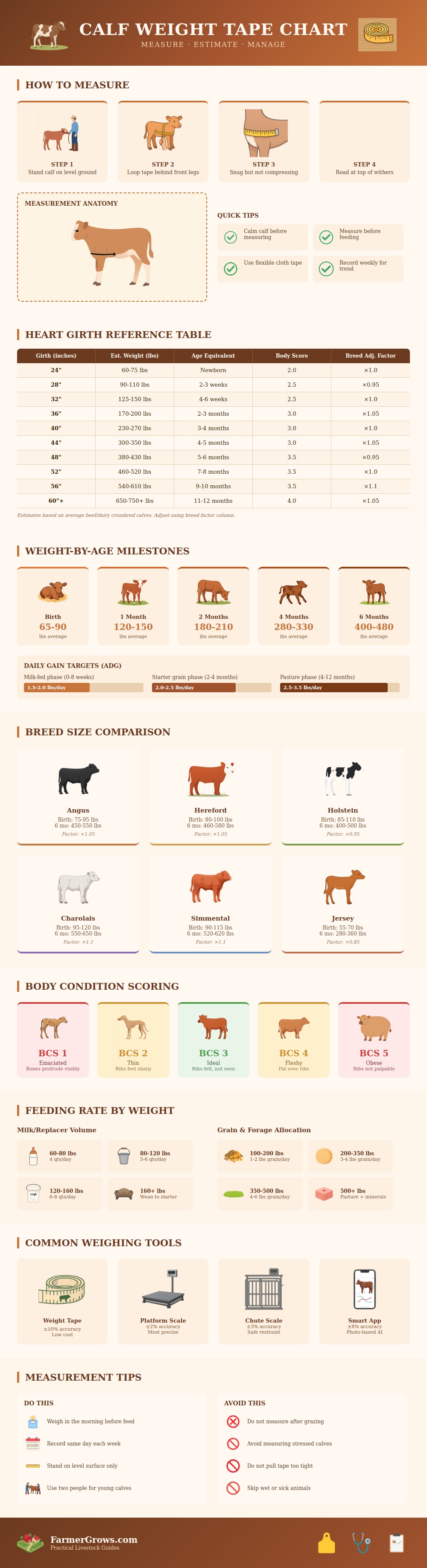
Monitoring calf growths is an necessary task for many dairy and beef cattle farmers. Calf growth is one of the main indicators of the health of the calf. By using a weight tape chart, farmers can easy measure the weight of there calves without the need for a scale.
To use a weight tape, place it around the chest of the calf. The weight tape should be positioned behind the calf’s front leg, where its heart girth are located. The heart girth of the calf is a critical measurement because the heart girth and the body masses of the calf has a relationship during its first year of life.
How to Measure Calf Weight with a Weight Tape
By finding the heart girth with the weight tape, the farmer can use a weight tape chart to find the weight of the calf. The weight tape chart will tell the farmer the weight of the calf in pound based on the inches of its heart girth. To find the weight of the calf, the farmer must take measurements according to protocol.
The calf should be standing on even ground and be calm when its heart girth is measured. Additionally, the calf should not have eaten yet that day. After a calf eat, its belly can expand.
Should the calf have nursed before being weigh, the milk in its stomach can add ten or fifteen pounds to its weight. The weight tape should be used before feeding to ensure an accurate measurement of the calf’s body mass. Finally, the farmer should utilize the weight tape at the same time each week to monitor the growth of the calf over time.
The growth rate of the calf will change as the calf age. The weight tape chart reflect the different growth stages of the calf over time. For example, newborn calves will have high rates of growth due to the milk they consume.
However, as they begin to consume grain and pasture, the growth of the calves may change according to the quality of grass they are provide and weather conditions. The growth of calves often stalls in the middle months. Stalls in calf growth may be caused by providing a starter ration that is too low for the calf or the presence of parasite in the calf’s body.
The weight tape allows farmers to detect a stall in the growth of the calf. Differences between the breeds of calves will impact how the weight tape charts reflect the weight of those calves. Calves that are breed for dairy use often have narrower chests than beef calves.
Thus, a dairy calf may weigh less than a beef calf of the same age. The weight tape chart will account for the difference in breed by including an adjustment column for the weights. This adjustment will allow farmers to ensure that the calves’ weights that is measured are realistic regardless of whether the calves are Angus or Holstein breed.
Another factor to consider with the calves is there body condition. A calf may weigh the correct amount for its age according to the weight tape, but it may be thinly due to the size of the calf. To account for this, the farmer can utilize a scoring system to account for the size and fat of the calf.
If the fat of the calf is low, the farmer may need to increase the amount of milk or grain given to the calf. However, if the fat of the calf is high, the farmer may need to avoid the amount of milk or grain provided to not waste money on feeding the calf and causing health problem for it. The amount of milk and grain that is fed to the calf is direct related to its weight.
A weight tape chart can display the weight of the calf and the amount of milk or grain it should be provide. For instance, if the calf weighs twenty pounds less than the target weight for its age, it may need to be provided with extra milk replacer. After the calf reaches a certain weight, known as weaning weight, the focus of the diet shift to providing grain and pasture.
However, the amount of grain that is provided is related to the weight of the calf. Therefore, the farmer should measure the weight of the calf once a week after the ration of grain is changed. The main benefits of using a weight tape are that it is inexpensive to purchase and fast to use.
Because the weight tape isnt as accurate as a platform scale, the weight tape only has an accuracy of around ten percent of the calf’s actual body mass. However, this level of accuracy is still sufficient for farmers to make decision regarding the care of their herd. Through the use of the weight tape, farmers will learn the growth pattern of their herd of cows.
For example, farmers can determine which cows produce calves that grow quick and which pastures result in the best gains in the weight of their calves. By using the weight tape regularly, farmers can manage the growth of their calves proactive.