
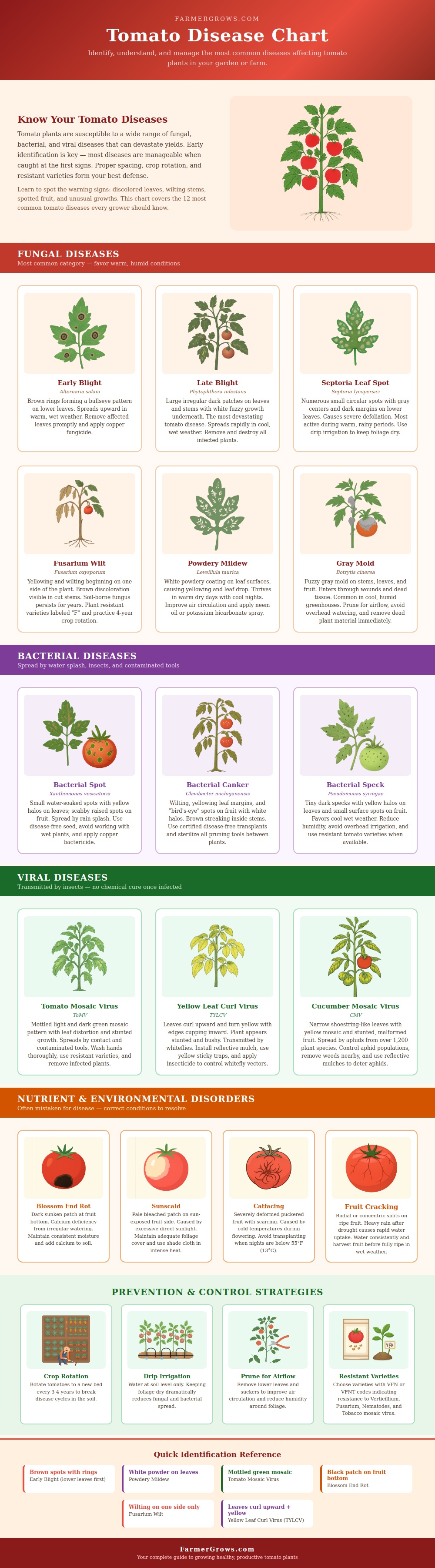
Tomato plant problem can be challenging to diagnose because some tomato plant can appear healthy one day and diseased the following day. When people observe there tomato plants closely, they can often catch tomatoes with spots, wilts, or strange growth on their plants. The early sign of diseases on tomato plants are often difficult to read correctly.
Additionally, once a disease begins to affect a tomato plant, it will progress at a much more faster rate than many tomato plant owners may expect. Fungal diseases are a common issue for tomato plants due to the warm and humid climate in which they like growing. Early blight cause brown bullseye spots on the lower leaf of the plant.
Common Tomato Problems and How to Prevent Them
Additionally, early blight will progress upward on the plant if the nights remains damp. Late blight create large dark patch on the plants with white fuzz underneath those patches. Late blight can destroy a crop of tomato plants within a few day if not checked properly.
Septoria leaf spot cause many tiny gray circles on the leaves of the tomato plant. These patches will cause the tomato plant to rapidy lose its leaf. Methods to control fungal diseases include removing any infected plant tissue, improving air circulation around the plants, and keeping the leaf of the tomato plant dry.
Tomato plants can also experience bacterial problem that splashing water and other tool or insects that carry the bacteria cause. Bacterial spot cause small dots on the leaves with yellow halo around the spots. Additionally, bacterial spot can also cause scabby area on the fruits of the tomato plants.
Bacterial canker create brown streak in the stem of tomato plants. Additionally, bacterial canker will also create bird’s eye spot on the tomatoes of the plant. Bacterial speck create tiny dark fleck on the plants with yellow ring around those flecks.
There is no cure for bacterial problems in tomato plants, so preventing the growth of these bacteria are essential. Methods to prevent bacterial problems include using clean seed for the plants and avoiding working with tomato plants whose foliage is wet with rain or dew. Viral problem in tomato plants are another separate problem category because there is no spray that will fix these virus once they are in the plants.
The tomato mosaic virus will cause a mottled green pattern on the leaves and stunt the growth of the plants. The virus spread through simple contact between infected and healthy plants. Yellow leaf curl virus will cause the leaves of the plant to cup upward and develop yellowing leaf.
Whiteflies carry these and will cause the plants to become bushy and unproductive. Additionally, the cucumber mosaic virus will distort the leaves of the plants into narrow shoestring shape. Additionally, the virus will ruin the shape of the tomato of these plants.
Since there is no way to treat these viruses, preventing them is crucial. Preventing these viruses means controlling the insect that carry the viruses and removing any infected plants that may spread these viruses to other healthy tomato plants. Some problem in the plants may look like diseases but are actualy caused by the growing condition of the plants.
Blossom end rot will create a dark patch on the bottom of the tomato. An uneven watering schedule for the plants causes this. Sunscald will create damage to the tomato due to too much sun exposure from insufficient foliage coverage around the plants.
Cool nighttime temperature causes catfacing while the plants are flowering. Lastly, fruit cracking is caused by heavy rain after a dry spell or rapid expansion of the fruit. These problems will resolve once the growing condition are corrected.
Finally, there are several prevention strategy that can be used to tomato plants of all category of problems. Crop rotation is a prevention strategy for soil-borne problem. Using drip irrigation is a prevention strategy because it will keep the foliage of the tomato plant dry.
Most fungal and bacterial problem require moisture to develop and thrive. Additionally, regular pruning can be a prevention strategy for increasing the airflow around the plants. Additionally, using a few prevention strategy include choosing tomato plant varieties with a resistance code to the problem listed above.
Finally, the chart that was provided will aid in the identification of the problem that are present on tomato plants. For example, if a person notice that some tomato plants are wilting on only one side of the plant, the chart will help to identify if the problem is Fusarium wilt. Additionally, if a person notice white powder on their tomato plants, the chart will help to identify that the problem is powdery mildew.
By being able to correctly identify the problem with a plant, tomato grower can avoid the mistake of using the incorrect treatment for that problem. Most problem with tomato plants are manageable once the problem is correctly named. After correctly naming the problem, growers just have to consistently use the habit and strategy mentioned above to resolve the issue with their plants.