
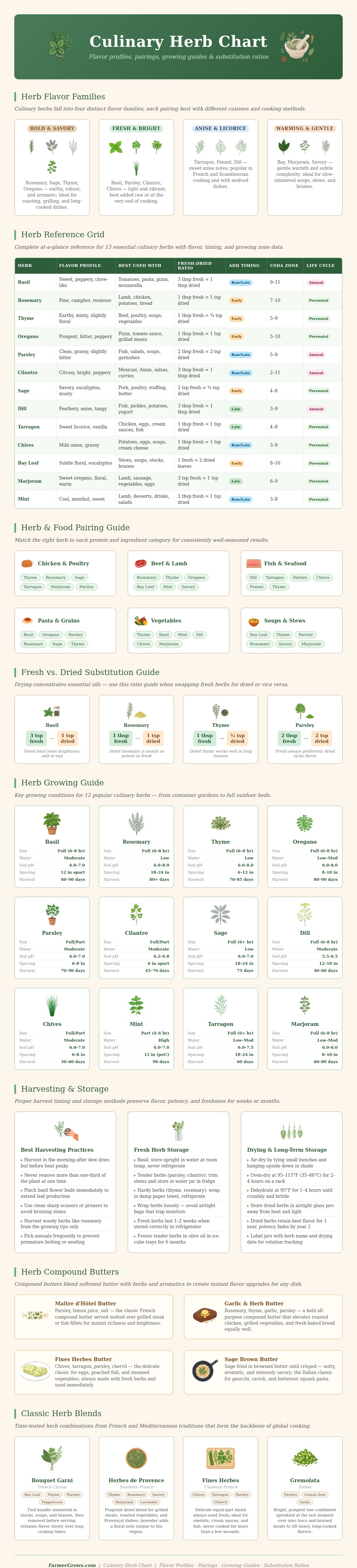
Herbs are plants that can be used in cooking to flavor the foods. While many person use herbs as a garnish for the dishes they cook, herbs can also be used as an ingredient in many recipe. To use herbs proper in a dish, it is important to understand the flavor of each herb and the reaction of each herb to heat.
Additionally, it is important to understand which protein pair well with which herbs. Herbs can be divided into various flavor family, based off their flavor and their reaction to heat. Some herbs, such as basil and chives, are very delicate and contain volatile oil that break down if exposed to too much heat.
How to Use, Store, and Grow Herbs
If the cook adds these herbs to a simmering sauce at the beginning of the cooking process, the heat will destroy the volatile oils in the herbs, reducing their flavor. In these situations, the herbs should be added toward the end of the cooking process. Other herbs, like rosemary and thyme, contain woody part that can withstand high heat.
These herbs should be added to a simmering sauce at the beginning of the cooking process to allow them to infuse the sauce with flavor. The flavor of the protein in a dish also have to be considered before adding herbs to the food. For instance, herbs that contain anise or licorice flavors, like tarragon and dill, work well with seafood.
The flavor balance the richness of the fish. Additionally, herbs that are strong and heavy, like rosemary, work best with meats with strong flavors, like lamb. The heavy flavor of the herb can stand up to the flavor of the protein.
However, using herbs like rosemary on delicate seafood will overwhelm the flavor of the seafood. In recipes that use dried herbs instead of fresh herbs, the amount of herbs that are used needs to be adjusted. As herbs dry, the oils in the herb concentrate.
Therefore, a small amount of dried herbs will create the same flavor than a large amount of fresh herbs. To compensate for this, the recipe will require more of the fresh herbs. However, dried herbs are not an exact replacement for fresh herbs.
For instance, dried herbs will not contain the same flavor as the fresh herbs when they are chopped and prepare for cooking. Dried parsley will lack the grassy flavor that fresh parsley have. Therefore, using dried herbs in place of fresh herbs will make a compromise in flavor.
One way to ensure that you always have herbs available for your cooking is to grow your own herbs in your garden. However, not all herbs has the same requirements to grow. For instance, mint is an herb that tends to grow aggressive and requires alot of water.
To avoid overwhelming the other herbs in your garden, it is best to grow mint in a separate pot. Other herbs, like oregano and sage, prefer Mediterranean climate and require plenty of sun and lean soil. Too much water can kill a rosemary plant, as too much water will cause the plant to rot at its root.
When harvesting herbs from your garden, do not strip the herb plant of all of its leaf at once. By doing so, you will shock the plant and the plant will not be able to grow as well in the future. Instead, pinch the top growth of the herb plant.
By doing so, the plants will grow to become more bushy. Additionally, to store herbs, store tender herbs upright in a jar of water in the refrigerator. This will keep the herbs fresh.
Herbs can also be frozen in olive oil cube. By freezing herbs in olive oil, you can add the flavor of the herb to a hot pan of cooking fat.