🐔 Chicken Feed Protein Calculator
Plan crude protein for a chicken ration using flock size, feeding days, daily intake, seasonal pressure, and ingredient protein levels. The calculator sizes total feed, daily protein mass, total protein mass, and a two-ingredient blend share so the ration stays practical and phase-specific.
Pick a chicken stage preset first. Each preset seeds flock size, intake, protein target, calcium target, waste allowance, and a starting blend suggestion.
Chicken Feed Protein Output
Calculated from flock size, days, daily intake, waste allowance, target protein, and ingredient protein levels.
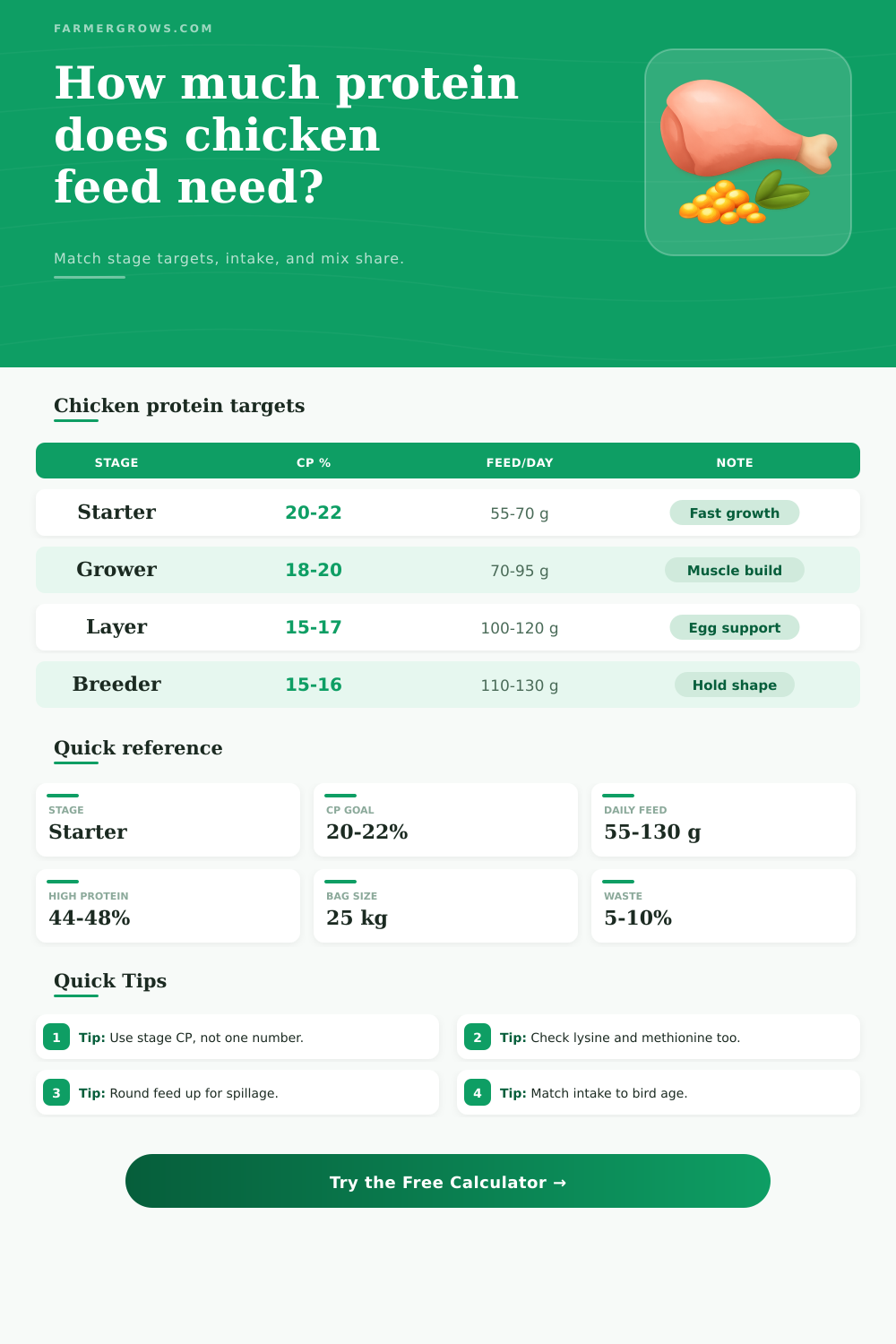
| Stage | Age | CP % | Feed/day | Note |
|---|---|---|---|---|
| Starter | 0-3 wk | 20-22 | 55-70 g | Fast growth |
| Grower | 3-8 wk | 18-20 | 70-95 g | Frame build |
| Layer | 18+ wk | 15-17 | 100-120 g | Egg support |
| Breeder | 20+ wk | 15-16 | 110-130 g | Hold shape |
| Ingredient | CP % | Lysine % | Methionine % | Use |
|---|---|---|---|---|
| Corn or maize | 8.5 | 0.26 | 0.18 | Energy base |
| Wheat | 12.0 | 0.33 | 0.18 | Dense grain |
| Soybean meal | 44.0 | 2.80 | 0.62 | Protein driver |
| Canola meal | 38.0 | 2.10 | 0.68 | Mid protein |
| Sunflower meal | 30.0 | 1.00 | 0.55 | Fiber boost |
| Fish meal | 60.0 | 4.50 | 1.80 | High CP |
| Stage | Lysine g/day | Methionine g/day | Protein g/day | Note |
|---|---|---|---|---|
| Starter | 1.0-1.3 | 0.40-0.55 | 12-18 | Rapid growth |
| Grower | 1.0-1.2 | 0.35-0.50 | 10-16 | Muscle build |
| Layer | 0.75-0.95 | 0.30-0.40 | 8-12 | Shell support |
| Breeder | 0.8-1.0 | 0.32-0.45 | 8-11 | Body hold |
| Age | Feed/day | CP intake | Stage | Note |
|---|---|---|---|---|
| 1-3 wk | 45-70 g | 9-15 g | Starter | Small birds |
| 3-8 wk | 70-95 g | 13-19 g | Grower | Frame build |
| 18+ wk | 100-120 g | 15-20 g | Layer | Egg support |
| 20+ wk | 110-130 g | 17-21 g | Breeder | Body hold |
Protein is an essential nutrient for chicken. The protein that chickens requires is for the development of their feather, muscles, and shells for their egg. If a person does not provide their flock with enough protein, then the chickens’ eggshells will be thin, and there growth will be stunted.
However, if a person provides the correct amount of protein to their flock, then the chickens will remain healthy and lay their egg consistently. Chickens will digest the protein in their feed and convert it into amino acid. These amino acids is the components of the chickens’ bodies.
How Much Protein Chickens Need and How to Feed Them
The amount of protein that chickens require is dependent on the life stage of the chicken. For example, starter feed contains 20% crude protein since chicks are establishing their bone and body tissues. If there isnt enough protein in the feed, the chicks will grow poorly.
Layer feed contains less protein since the chickens need to lay their eggs. The amount of protein that layers requires is between 15% and 17%. If protein levels in the feed are not appropriate for the age of the chickens, the person is wasting money on the feed and causing stress to the chicken.
The amount of feed that chickens consume daily is related to the protein requirement of chickens. For instance, chicks will eat around 15 grams of feed per day to provide them with enough protein to grow their bodies. However, laying hen will eat over 100 grams of feed per day.
Although laying hens will eat more feed than chicks, laying hens will require less protein per gram of the feed consumed because laying hens are more efficient with their feed. Additionally, some of the feed given to the chickens may be wasted due to spillage or the feed being dusty in their feeder. The amount of feed that is wasted can be as much as 5% to 10% of the total amount of feed provided.
By blending their own feed, a person can control the protein content of the feed given to the chickens. For example, corn and wheat are two feed components that are used in the creation of chicken feed. However, corn and wheat are low in protein, only containing 8% to 12% protein.
Soybean meal contain 44% protein, so you can add it to the base ingredient of corn and wheat to provide the chickens with the protein that they require. Depending on the amount of protein that is desired for the feed, the percentages of the ingredient will have to be calculated to ensure that the feed has the proper protein content. Additionally, measurements of amino acid like lysine and methionine can also be considered since the protein content of the feed does not necessarily account for these specific amino acid that the chickens require.
The environmental and production factor of chickens could play a role in the protein that the chickens require. For instance, hens that lay many eggs each season will use up their nutrient rapidly to produce the eggs. Therefore, there may need to be an increased amount of protein provided to these hens.
In hot weather, chickens will eat less feed due to the heat. In this case, the person may have to concentrate the protein in their feed to provide them with the necessary nutrient. Additionally, free-range chickens will find the nutrient that they require while roaming the area.
Therefore, the protein content of the feed that is provided to these chickens can be lessened. Not all ingredient contain the same types of protein and amino acids as other ingredient. Soybean meal is common and contains a high level of lysine, which is used in the muscle of the chickens.
Canola is another ingredient that is used and costs less than other protein source. Canola contains methionine, which is used in the feathers and shells of the chickens’ eggs. Fish meal is another ingredient that can be used in the feed, and it contains 60% protein.
However, fish meal is more expensive than other ingredient. Base ingredient will contain the grain for the chickens to provide energy, while the other ingredient will contain the protein source that contain amino acids. Common mistake in feeding chickens could include providing starter feed to layer chickens.
Since layer chickens will turn the excess protein into fat or ammonia, the fat and ammonia will contaminate the eggs. Another mistake is not changing the feed that is provided to the chickens as they age. If the pullets are provided with feed meant for laying hen, their growth will be incorrect.
The protein content of the feed will have to be tested against the target goal for the age of the chickens to ensure that the levels are appropriate for their life stage. The protein content that is provided to the chickens must be balanced with other nutrient to keep the health of the chickens. Calcium is required for the hen to produce strong shell for their eggs.
Additionally, the specific gram of the amino acid that the chickens consume daily should also be monitored. For example, chicks require more lysine than layers. Layers lay more egg, so they require more methionine to ensure that their feather do not shed excessively.
If the protein and amino acid levels are managed correctly for the chickens, they will have glossy feather, bright comb, and strong shell for their eggs.