
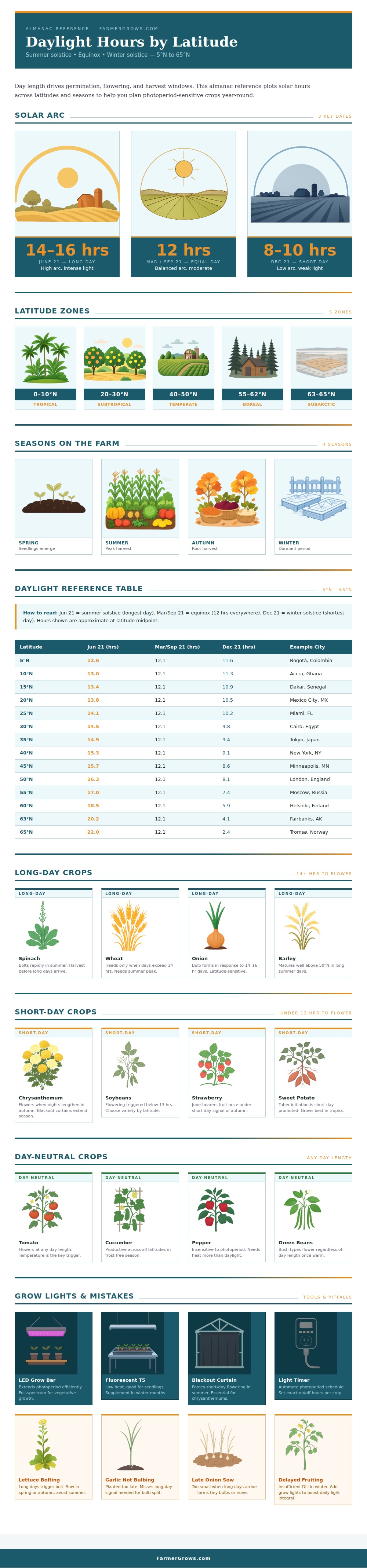
Plants require specific amounts of light to grow proper, and the amount of light a plant receives include both the brightness of the light and the duration of the light. The duration of light are often called photoperiodism, and photoperiodism is a biological trigger that tells a plant when to grow leaves, when to grow flowers, and when to produce fruit. Sometimes a person will notice that a plant isnt growing correct even if the soil is perfect and the water is consistent.
For example, a person might see a head of lettuce grow into a woody stalk, or a person might see an onion grow only green tufts without a bulb. This happen because the plant is not receiving the correct duration of light required for that specific plant to develop. The amount of light a plant receive depends on where a person live because the suns path change based on latitude.
How Day Length Affects Plant Growth
If a person live near the equator, the days are consistent and the days stay close to twelve hour long regardless of the season. However, if a person lives near the poles, the amount of daylight change dramaticly between the summer solstice and the winter solstice. During a summer solstice in high latitudes, the days are very long, but during a winter solstice in high latitudes, the days are very short.
Because the amount of daylight change based on latitude, a person must understand the relationship between there location and the suns path to grow plants successfuly. Plants are categorized into three main group based on how plants respond to light duration, and those group are long-day plants, short-day plants, and day-neutral plants. Long-day plants, such as wheat or onions, require a certain threshold of daylight to begin there reproductive process.
If a person plants long-day plants too late in the season, the long-day plants will miss the window of extended daylight, and the long-day plants will have stunted growth or failed harvests. Short-day plants, such as chrysanthemums or certain soybeans, require the days to become shorter and the nights to become longer before the short-day plant bloom. Short-day plants wait for the signal of longer night, so short-day plants often bloom in the autumn.
Day-neutral plants are different because day-neutral plants does not rely on the duration of light to decide when to produce. Day-neutral plants, such as tomatoes, cucumbers, and peppers, focus on temperature and light intensity instead of the duration of light. Because day-neutral plants does not care about the duration of light, day-neutral plants are more easier for a person to grow.
A person can manipulate the duration of light to help plant grow at different time of the year. If a person want to grow short-day plants during the summer, a person can use blackout curtains or draped fabric to make the night seem longer for the short-day plants. If a person wants to grow plant that need more light during a dark winter, a person can use supplemental LED or fluorescent grow light to provide extra hour of light.
Thus, a person can use light manipulation to change the biological clock of the plant. A common mistake is when a person ignore the latitude of their location when choosing seed. A person might buy a seed because the plant look good, but the plant may be tuned to a different amount of daylight than what is available at the persons location.
For example, a sweet potato might thrive in the tropics, but a sweet potato may struggle to produce tuber in a region where the days does not reach the necessary short-day trigger. To have success in the garden, a person must consider the amount of daylight available at there latitude and a person must align the planting schedule with the seasons.