🐄 Dairy Feed Ration Calculator
Calculate daily dry matter intake, nutrient requirements & feed amounts for your dairy herd
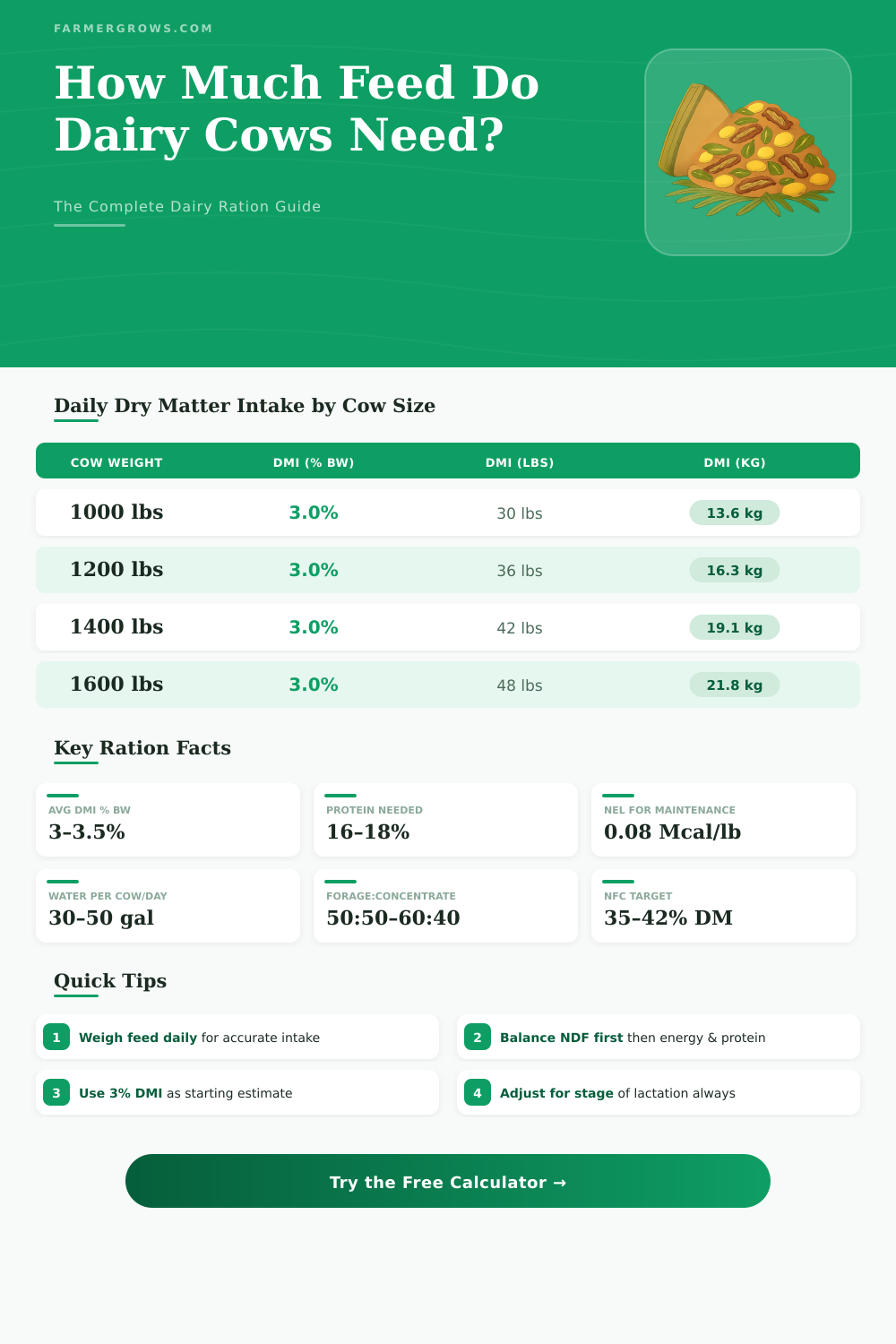
| Cow Weight (lbs) | Cow Weight (kg) | DMI % of BW | Est. DMI (lbs/day) | Est. DMI (kg/day) |
|---|---|---|---|---|
| 800 | 363 | 3.0% | 24 | 10.9 |
| 900 | 408 | 3.0% | 27 | 12.2 |
| 1000 | 454 | 3.0% | 30 | 13.6 |
| 1100 | 499 | 3.0% | 33 | 15.0 |
| 1200 | 544 | 3.0% | 36 | 16.3 |
| 1300 | 590 | 3.0% | 39 | 17.7 |
| 1400 | 635 | 3.0% | 42 | 19.1 |
| 1500 | 680 | 3.0% | 45 | 20.4 |
| 1600 | 726 | 3.0% | 48 | 21.8 |
| Feed Type | DM % | Crude Protein % DM | NEL (Mcal/lb DM) | NDF % DM |
|---|---|---|---|---|
| Corn Silage | 32–38% | 8–9% | 0.70–0.74 | 40–48% |
| Grass Hay | 85–90% | 9–12% | 0.55–0.62 | 55–65% |
| Alfalfa Hay | 88–92% | 17–20% | 0.60–0.68 | 35–42% |
| TMR Blend | 45–55% | 15–18% | 0.68–0.74 | 32–40% |
| Wheat Straw | 88–92% | 3–5% | 0.38–0.44 | 72–80% |
| Sorghum Silage | 28–35% | 7–10% | 0.56–0.63 | 50–58% |
| Haylage | 35–50% | 14–18% | 0.58–0.66 | 38–48% |
| Fresh Pasture | 18–25% | 18–25% | 0.64–0.72 | 38–50% |
| Milk (lbs/day) | Milk (L/day) | Est. DMI (lbs) | Forage (lbs DM) | Concentrate (lbs DM) |
|---|---|---|---|---|
| 20 | 9 | 28–32 | 17–19 | 11–13 |
| 30 | 14 | 33–37 | 20–22 | 13–15 |
| 40 | 18 | 37–42 | 22–25 | 15–17 |
| 50 | 23 | 42–48 | 25–29 | 17–19 |
| 60 | 27 | 48–55 | 29–33 | 19–22 |
| 70 | 32 | 54–62 | 32–37 | 22–25 |
| 80 | 36 | 60–70 | 36–42 | 24–28 |
| Milk Production | Water (gal/day) | Water (L/day) | Notes |
|---|---|---|---|
| Dry Cow | 20–25 | 76–95 | Maintenance only |
| Low (<30 lbs/day) | 25–35 | 95–133 | Add 4–5 lbs water/lb milk |
| Medium (30–60 lbs) | 35–50 | 133–190 | Peak demand period |
| High (>60 lbs/day) | 50–65 | 190–246 | High-producing cows |
The ideal feeds for cows chiefly is made up of well mixed combination of grasses and cereals. This assembly stores elements as dryer, silage and herbejn pulps for ensure the needs of energy, proteins, vitaminpoj and minerals. Although forage, protein and energy commonly receives the mainstream attention in the nutrition of animals, minerals decide do the whole plan succeeds.
Are well deliver free minerals and salt licks form simple and efficient mode for that. Do not forget that cows without apt nutrition will not be able to produce milk.
Cow Feeding Basics
Various kinds of feeds accomplish dissimilar tasks for the set. Full feed bases on balanced recepturo for cover everyday nutritious demands. Creep feed carries energy-rich mixes for help young calves in fast increase.
Finishing feed stimulates weight gain by means of bigger energy for preparebleco to sale. Dairy feed gives extra proteins and nourishments for back the milk. Special products as milk replacers optimise the increase and development of children.
Some feeds are especially prepared for increase milk pregnancy or general support. For instance undoubted organic variants use only North American organic cereals and mingle with probiotics and kelp.
Nutritious plans must consider facets as strains ages lactation stage and particular targets for every creature. The feeding schedule range according to the cow type whether it is dairy pregnant no-milked or pregnant milking cow. Animals can eat raw soybeans because their digestion destroy the toxins that affect other animals.
Soybean meal are rich in protein. It entered dairy diets for increase the protein when others ingredients as corn silage or haylage malsufiĉas. In many regions growers cultivate corn for silage with fields of alfalfa dryer and soy.
Here where soil does not answer for crops one uses grasses and buy appendices as corn meal soymeal or oats.
Pasturing also form part of the nutrition. Systems with feeds require attention for best grassy benefit and production. Paddocks one rotates commonly so that grasses manĝitaĵiĝu in apt growth and escape overgrazing.
If enough feed disponible maybe do not require to add supplements. For estimate feed dryness helps to estimate it exactly. Wet feed weighs more so one kilo of wet feed deliver less nourishment than dry feed.