
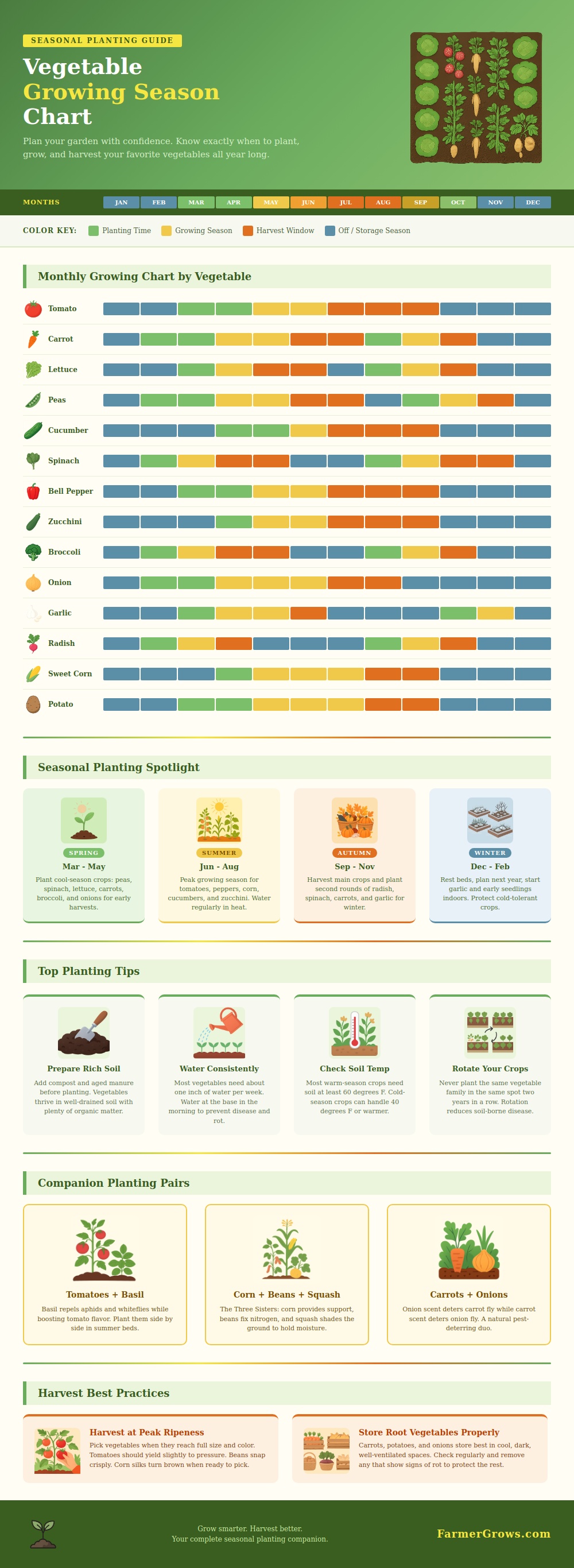
Getting the right planting times for vegetables are genuinely one of the main causes that can make or break your garden Many crops coincide with some hardiness zones, but here it becomes difficult. The planting periods adjust a lot between regions. Most parts of the land recline in zones 3 until 9, what seems broad, but it genuinely matters.
Put your ZIP code in a planting timetable, and you will receive precise dates about when to plant vegetables, fruits and herbs in your place.
When to Plant Vegetables
Two dates determine everything: the last spring frost and the first fall frost. The last spring frost is simply the usual day when cool temperatures ultimately end. Arrives the autumn, and colds return in the first fall frost date.
The interval between those two? It forms your frost-free growing season, and that is everything. Because different vegetables have entirely different tolernaces to temperatures, precise times do big difference.
Vegetables divide in two groups: warm-season and cool-season. Cool-season crops benefit between 40 and 70 degrees Fahrenheit. Warm-season vegetables require higher conditions for genuinely growth; they want ground and air above 50 degrees, and they favour when it reaches 75 degrees or more.
The wise strategy is planting cool-season early spring, later expect until frost risks die before touch warm-season.
Common warm-season vegetables are beans, cantaloupe, sweet corn, cucumbers, eggplant, okra, peppers, squash, tomatoes and watermelon. While you arrange beds, high crops as okra, pole beans and corn go to the north side. Like this they no shade the others.
Cool-season vegetables as broccoli, lettuce, cabbage and spinach operate best spring and fall. In Florida it is otherwise; here fall is the best time for start a vegetable garden with broccoli, lettuce, carrots, Brussels sprouts and radishes.
Actually, many warm-season crops continuously give harvests in early autumn, if you plant correctly. Plant bush beans at the end of May, and they will produce until early autumn. Tomatoes transplanted middle of June?
They will last until the first frosts. Rather than planting everything simultaneously, scatter crops during the weeks for permanent harvest. Using varieties with different maturity dates, you will extend the season even more.
Cool protection tools as cold frames, covers or greenhouses help to surpass freezing temperatures and grow during the whole year. The good part is, that cold weather slows increase and strengthen natural sugars in vegetables. Spinach especially bolts in heat, so plant it early spring and repeatedly at the end of summer or early fall.
Observe what operates and what no every year (that feedback loop are as you progress). Climate shifts happen grademe during weeks, no sharply, so set you monthly for quickly improve yourskills.