
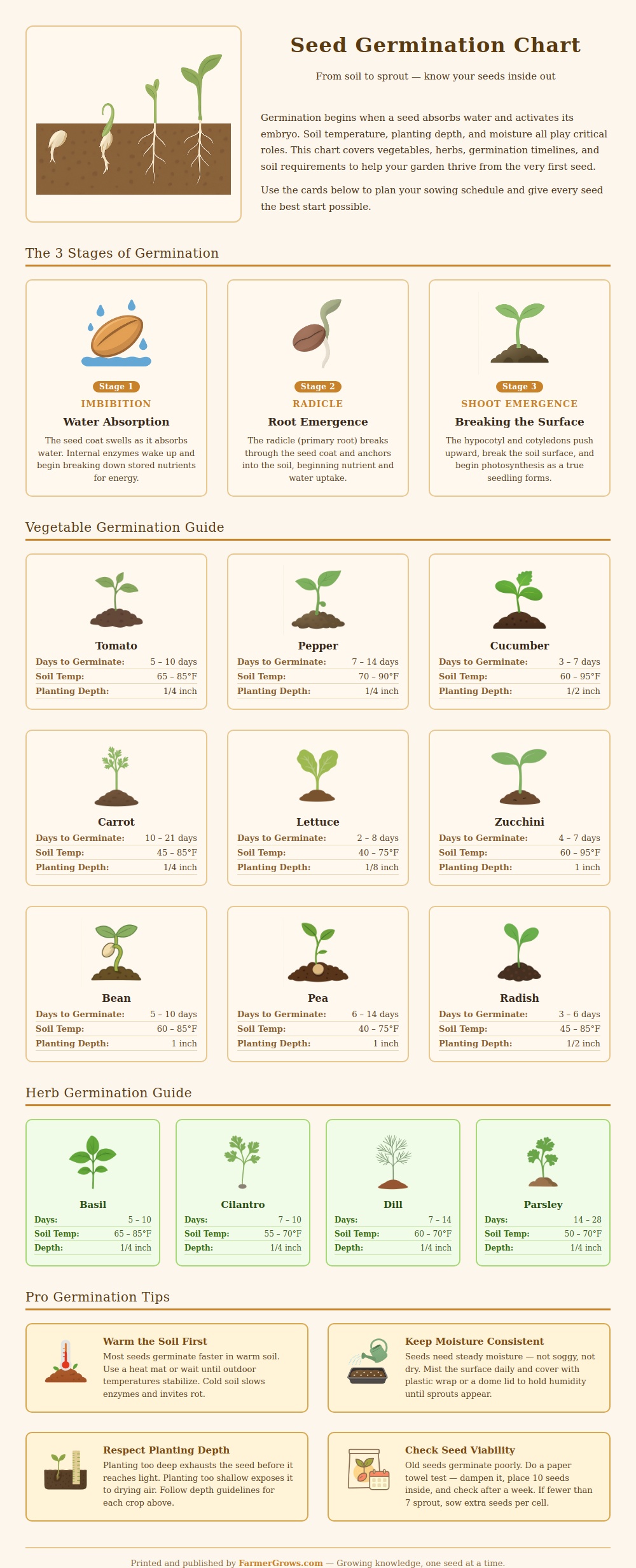
Seed germination happens when plant emerges from its seed and becomes a seedling. Seeds stay sleepy until the right conditions come, then they spring to life. The whole process starts when the dry, sleepy seed absorbs water and eventually the roots push through the seed coat to break free
Every seed bears embryonic plant together with starchy food reserve, so everything needed for build new plant from just soil. Fully mature seed fills its embryo, and most species also have food reserves under the coat, so that the seedling can live. Seeds wake up and germinate when the moisture reaches the right level with temperature.
How Seeds Start to Grow
Absorption of water, changes of temperature (both warming and chill), oxygen and light can each launch the germination.
When germination genuinely starts, roots punch the seed coat and go down, pulled by gravity during their search for water; which simultaneously anchors the plant. Simultaneously the stem grows upward chasing the light. The first stage is called imbibition.
Water is drawn into the seed through the coat, it swells and ultimately the pressure breaks the coat.
How much time lasts germination? From some days until almost a year, according to what you grow. However most seeds germinate inside some weeks.
Herbs commonly are fast. They can sprout in only two days if the seeds are fresh and conditions ideal, but orego? That is another cause.
It requires until fifteen days or more. The soil temperature is key here. Seeds want heat to germinate, but too high and you simply cook them.
Too low and they sleep or rot in the ground. Each vegetable species has its own ideal temperature.
Seed size also matters. Medium and big seeds usually succeed better in the field, they have solider structure and photosynthesize effectively. They are rugged and resist environmental stress better.
Many growers like to start seedlings indoors before the season genuinely starts outside. To succeed, take prime seeds, use draining soil, find good pots and control temperature-moisture balance. Good light is needed.
Start indoors beats planting directly outside, germination rates are higher. Low heat under the trays? It boosts the process nice.
Temperature is genuinely the biggest wild factor in germination.
Simple tray filled with soil, dampened down and covered with clear sheet work well. Some seeds require to bury in a quarter inch until half inch depth in the resource. Onions and celery are exceptions, keep them at the surface.
Here something that genuinely helps: leave seeds dry a week or two before planting, and commonly you receive better germination rates. But skip the germination, and the seed won’t develop into anything.