🌱 Black Dirt Calculator
Calculate exactly how much black dirt you need for any project — instant cubic yards, bags & weight
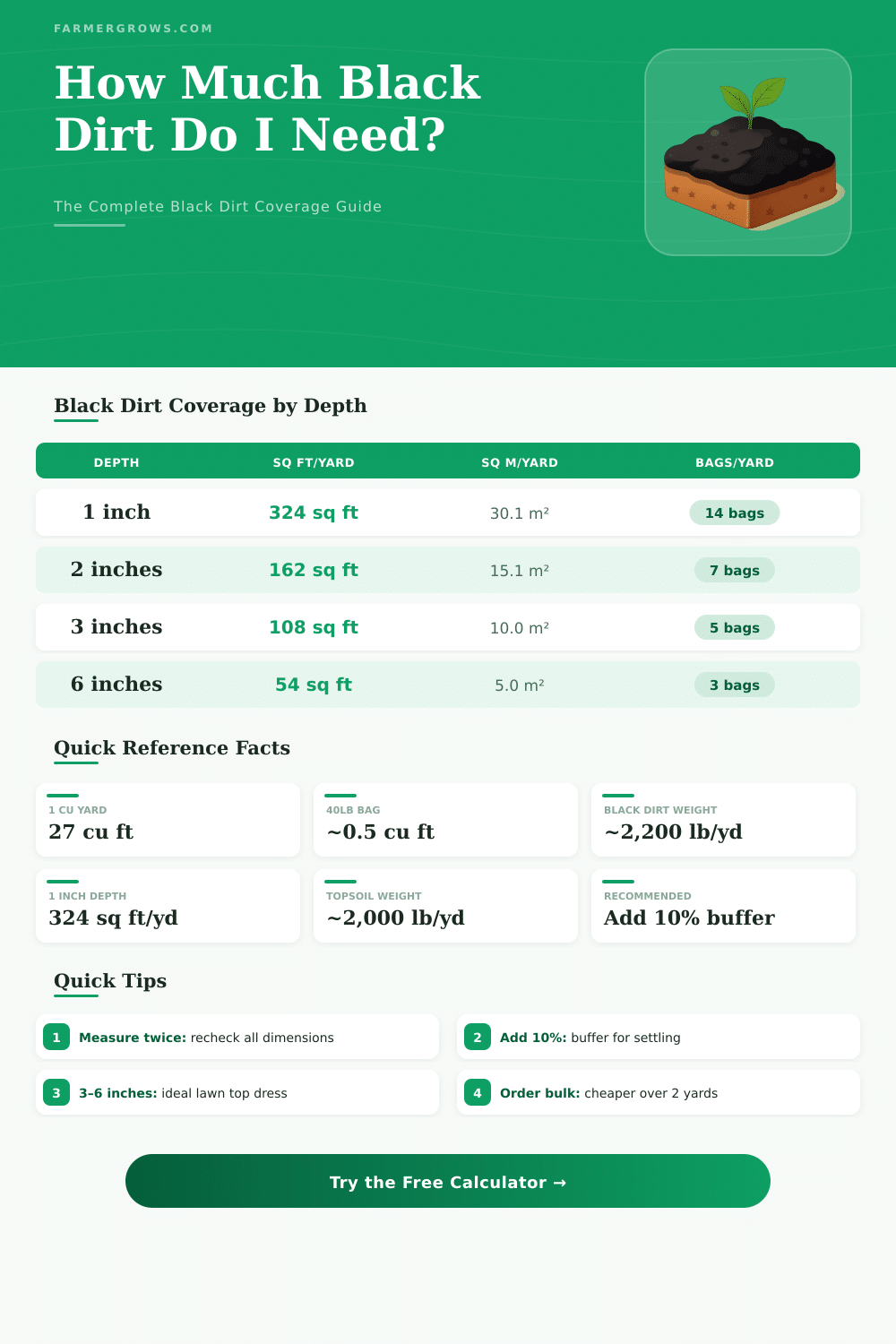
| Depth | Sq Ft per Cu Yd | Sq M per Cu Yd | Cu Ft per Cu Yd |
|---|---|---|---|
| 1 inch (2.5 cm) | 324 sq ft | 30.1 m² | 27 cu ft |
| 2 inches (5 cm) | 162 sq ft | 15.1 m² | 13.5 cu ft |
| 3 inches (7.6 cm) | 108 sq ft | 10.0 m² | 9 cu ft |
| 4 inches (10 cm) | 81 sq ft | 7.5 m² | 6.75 cu ft |
| 6 inches (15 cm) | 54 sq ft | 5.0 m² | 4.5 cu ft |
| 8 inches (20 cm) | 40.5 sq ft | 3.8 m² | 3.4 cu ft |
| 12 inches (30 cm) | 27 sq ft | 2.5 m² | 2.25 cu ft |
| Bag Size | Volume per Bag | Bags per Cu Yd | Covers at 3 in |
|---|---|---|---|
| 40 lb bag | ~0.5 cu ft | ~54 bags | ~2 sq ft |
| 1 cu ft bag | 1 cu ft | 27 bags | ~4 sq ft |
| 2 cu ft bag | 2 cu ft | 13-14 bags | ~8 sq ft |
| 3 cu ft bag | 3 cu ft | 9 bags | ~12 sq ft |
| Bulk (1 cu yd) | 27 cu ft | 1 yard | ~108 sq ft |
| Project | Area (sq ft) | Cu Yds at 3 in | Bags (2 cu ft) |
|---|---|---|---|
| Small Garden Bed | 50 sq ft | 0.46 yds | ~7 bags |
| Medium Garden Bed | 200 sq ft | 1.85 yds | ~25 bags |
| Large Garden Bed | 500 sq ft | 4.63 yds | ~63 bags |
| Small Lawn | 1,000 sq ft | 9.26 yds | ~125 bags |
| Medium Lawn | 2,500 sq ft | 23.1 yds | ~312 bags |
| Large Lawn | 5,000 sq ft | 46.3 yds | ~625 bags |
| Raised Bed 4x8 | 32 sq ft | 0.30 yds | ~4 bags |
| Playground Area | 225 sq ft | 2.08 yds | ~28 bags |
Black soil is a good choice for anyone that wants to build fresh garden beds or renew those that already exist. Whether you involve yourself in lawn work, growing flowers or simply ground improvement, this helps a lot. The chopped and strained black soil are easy to work with, what probably explains why landscapers and gardeners use it this commonly.
Even so, it weighs a bit a lot hence mix it equally with other material to make the work much more easy.
How to Buy and Use Black Soil
One can find black soil available by cubic yards, with prices that range by quality and delivery spot. The chopped black soil costs around 44 dollars per yard in many stores. The strained kind is cheaper, around 15 dollars per cubic yard, although most stores charge between 15 and 25 dollars.
I noticed deals that reached around 515 dollars for 15 yards, while others came to about 317 dollars for 14 yards of mix from chopped and strained soil. To me, the price level decides the cleaning of the material and whether one includes delivery, transport distnace grows quickly.
For small tasks, bags of topsoil from stores like Lowe’s or Home Depot work well and save trips. After one cubic yard, even so, contacting a local landscape supplier makes more sense. Some delivery companies charge a fixed 100 dollars for bagged materials.
One can also order something like 7 yards of chopped black soil at once and receive it delivered directly.
Figuring out the needed amount requires a bit of calculation, but it is not difficult. For 500 square feet of garden bed at 3 inches of depth, one requires around 4.6 cubic yards of material. That fits in one dump truck or almost nine loads of van, if you transport yourself.
Mind even so, some retail orders can reach 17 units at once.
Black and dark brown soil gets its color from organic matter, and the more organic content, the less shines the surface. The topsoil is basically the surface layer, usually the upper 2 to 8 inches, and it fills with rotting plants and organic residues together with lots of nutrients. Black soil has mostly only organic matter, what implies that not all nutrients are immediately usable for plants.
The organic matter holds lots of water, so the drainage can bee a problem in black soil for many plants. Heavy soil thickens easily, what stops roots from going in and getting set.
Seeds do not succeed in poor ground conditions. Seeding over pure black soil without good base below commonly results in thin, bad growth, ultimately only bare soil with some green spots after months. Black soil mixed with sand requires extras like organic matter or manure for truly backing plant growth.
Leftover black soil from one job can cover low areas in the garden or serve assupply for future landscape work.