Lawn Seed Calculator
Estimate grass seed pounds, pure live seed correction, sun and shade adjustment, slope and traffic buffer, rounded bag count, and a starter fertilizer note for new lawns, overseeding, and repair patches.
Use the germination and purity from the seed tag when available. Local extension rates, soil tests, irrigation, seedbed preparation, and seeding season can change the final target.
Lawn Seed Estimate
Results adjust the selected grass rate for area, project type, seed tag PLS, sun, slope, traffic, and ordering buffer.
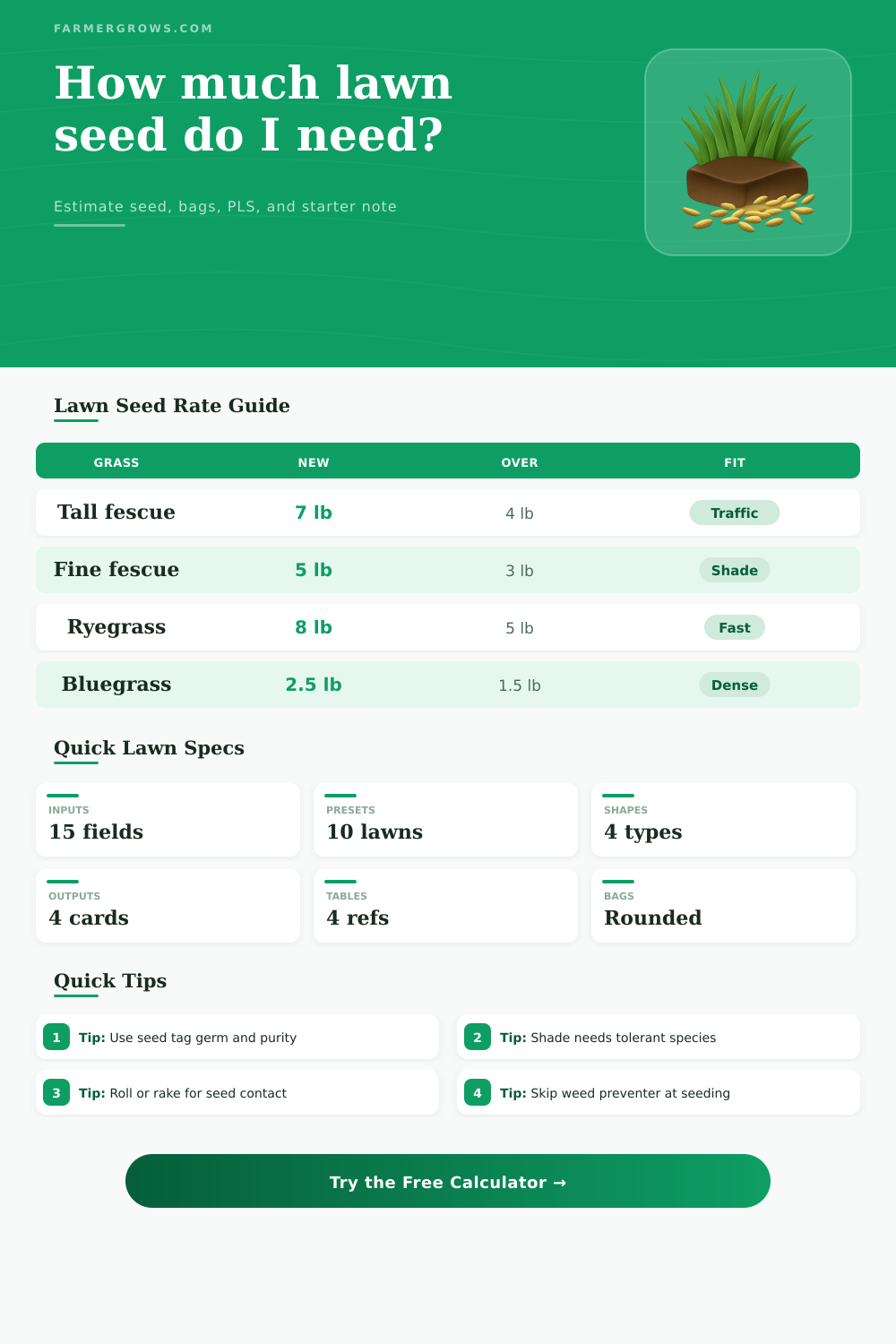
| Grass species or blend | New lawn rate | Overseed rate | Germination window | Best lawn fit |
|---|---|---|---|---|
| Turf-type tall fescue | 6 to 8 lb per 1,000 sq ft | 3 to 5 lb per 1,000 sq ft | 7 to 14 days | Durable family lawns, heat, and moderate drought tolerance. |
| Fine fescue shade mix | 4 to 6 lb per 1,000 sq ft | 2 to 4 lb per 1,000 sq ft | 10 to 21 days | Dry shade, lower mowing, and lower fertilizer lawns. |
| Perennial ryegrass | 7 to 9 lb per 1,000 sq ft | 4 to 6 lb per 1,000 sq ft | 5 to 10 days | Fast cover, repairs, and temporary nurse grass in cool weather. |
| Kentucky bluegrass | 2 to 3 lb per 1,000 sq ft | 1 to 2 lb per 1,000 sq ft | 14 to 30 days | Dense premium cool-season turf with irrigation and patience. |
| Zoysia seed | 1 to 2 lb per 1,000 sq ft | 0.5 to 1 lb per 1,000 sq ft | 14 to 21 days | Warm-season sunny lawns where slow establishment is acceptable. |
| Project type | Rate source | Calculator factor | Use when | Practical note |
|---|---|---|---|---|
| New lawn or bare soil | New lawn rate | 1.00x | Most soil is bare and prepared | Firm the seedbed before and after seeding for contact. |
| Overseed existing lawn | Overseed rate | 1.00x | Existing turf remains but needs thickening | Mow low and expose soil so seed can reach the surface. |
| Thin lawn renovation | Overseed rate | 1.25x | Open canopy, weak stand, or after aeration | Higher seed is useful only if soil contact is improved. |
| Patch repair | Overseed rate | 1.40x | Small bare spots or pet damage | Loosen the patch edge and keep repairs evenly moist. |
| Lawn condition | Calculator factor | Why it changes seed | When to avoid extra seed |
|---|---|---|---|
| Full sun, light traffic, flat soil | 1.00x | Best germination and easiest moisture control | Do not over-seed above label rates on dense turf. |
| Part sun or mixed shade | 1.05x to 1.10x | Competition from trees and slower turf fill-in | Choose a shade species before adding more seed. |
| Moderate or steep slope | 1.10x to 1.18x | Seed can move before roots anchor the soil | Use mulch or erosion blanket rather than only extra seed. |
| Heavy play or pet traffic | 1.12x to 1.15x | Wear leaves gaps and reduces seedling survival | Rest the area during germination if possible. |
| Seed tag example | PLS percent | Bulk seed for 20 lb live seed | Bag planning note |
|---|---|---|---|
| 90% germ, 98% purity | 88.2% | 22.7 lb bulk seed | High quality tag; small correction from live seed target. |
| 85% germ, 95% purity | 80.8% | 24.8 lb bulk seed | Common lawn seed lot; check if coating is included. |
| 75% germ, 90% purity | 67.5% | 29.6 lb bulk seed | Low PLS raises bag count quickly. |
| 60% germ, 85% purity | 51.0% | 39.2 lb bulk seed | Consider fresher seed before relying on more pounds. |
Seed tag tip: Enter the printed germination and purity from the bag. The pure live seed adjustment often changes bag count more than the area rounding does.
Starter tip: Use starter fertilizer only as a soil-test and label-guided note. Avoid crabgrass preventer or weed-control products unless the label allows seeding.
When you purchase grass seed, you must understand the number on the grass seed tag. Many people will guess at how much grass seed to purchase, but guessing can cause you to purchase to much or to little grass seed to cover the area that you need to cover with grass. By using the information on the grass seed tag, you can calculate the amount of grass seed that you need.
Grass seed tags will display two percentage. The percentage of germination is the percentage of grass seeds that will grow. The percentage of purity is the percentage of the bag of grass seed that is actualy grass seed, as opposed to other products that may be in the bag.
How to Read Grass Seed Tags and Figure Out How Much Seed to Buy
The germination and purity percentages will allow you to calculate the pure live seed percentage of the grass seed bag. The pure live seed percentage is the actual amount of grass seed in the bag that will germinate, and this percentage will be less than the total amount of grass seed in the bag. For instance, if the germination percentage is 85% and the purity is 98%, the pure live seed percentage will be less than 85%.
You have to use a calculator to find the pure live seed percentage of the grass seed that you plan to purchase. Grass seed rates will differ depending on the type of grass seed that you plan to use. For instance, tall fescue grass will require more pounds of grass seed per thousand square feet of lawn than Kentucky bluegrass.
This is because the seeds for tall fescue are larger and the plants grows in bunches. Kentucky bluegrass spreads with underground stems, but tall fescue does not. Fine fescue grass will require a different amount of grass seed to be planted than either tall fescue or Kentucky bluegrass.
This is because people use fine fescue grass in shade areas of the lawn. You must account for the type of grass seed in the calculator to determine the rate at which the grass seed should be planted. Environmental conditions will change the amount of grass seed that is recommended to be planted on the lawn.
For instance, if the area of the lawn is a slope, more grass seed will be required to be planted. When rain falls on the lawn, the grass seed can be transported down the slope before they can establish themselves and germinate. If the area that is to be seeded is a location that experiences alot of foot traffic or that has a dog run through that area, more grass seed will be required.
Dogs or humans that walk on the grass can step on or digged up grass seedlings. If the area has shade in it, more grass seed will be required to be planted. Grass germinates in the presence of light, and shade will slow the germination of grass.
These factors can all be accounted for in the calculator for grass seed rates. Areas that are shady and have pets walking on them will require more grass seed to be planted than areas that is flat and receive a lot of sunlight. The type of lawn project will change the amount of grass seed that is required for seeding the lawn.
If you are overseeding an existing lawn, less grass seed will be required to be planted. This is because the existing lawn will germinate and cover the area that is to be seeded. For new lawns or patches of lawn that need to be repaired, more grass seed will be required to cover the area.
The type of lawn project should be selected when using the grass seed calculator. Although grass seed and starter fertilizer are two separate products, the fertilizer must be used carefully. The percentage of nitrogen in the starter fertilizer should be checked.
Using too much nitrogen in the fertilizer may kill the grass roots. Additionally, if the fertilizer contains weed preventers, this will prevent the grass seeds from germinating. While the grass seed calculator will provide a suggested range for starter fertilizer to be used, the calculator is only for planning the lawn project.
A soil test is required to determine what starter fertilizer to use. Some of the most common mistakes include not measuring the area of the lawn and using the wrong rate of grass seed for the lawn project that is to be completed. For instance, if the person does not measure the lawn, they may use the rate for a new lawn for an overseeding project.
This could lead to clumps of grass that are too thick for overseeding. If the person does not look at the grass seed tag, they will not know the percentage of pure live seed that the grass seed contains, thus not knowing the total amount of grass seed that is in the bag. Using the calculator allows the person to determine the exact amount of grass seed that they will need to purchase.
The final bag count will include a buffer for grass seed that may be wasted when planting the grass, as well as a buffer for areas that need to be touched up. The buffer will ensure that there is enough grass seed to complete the project. The person will not be left with too little grass seed or too much grass seed.
By understanding the pure live seed percentage of the grass seed, the type of grass seed that will be planted, the environmental conditions of the lawn, and the type of project for the lawn, the individual can make a precise decision regarding the amount of grass seed to purchase.