
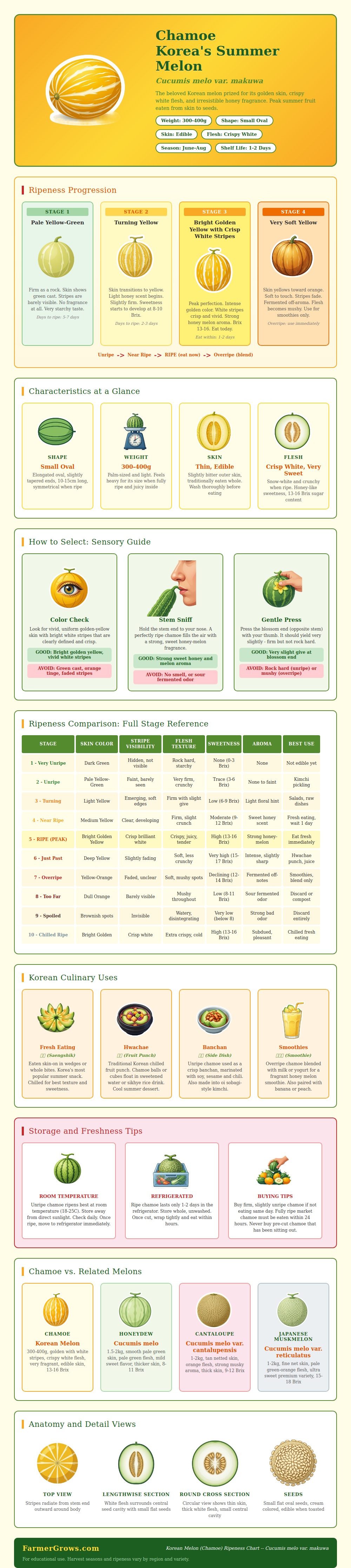
To select a chamoe, you don’t just look at the color; you need to see it, smell it, and touch it. Unlike a banana or an apple, it doesn’t store well. The clues is in the change of color on the skin. First, if you have a unripe melon, the stripes will be barely there and it will be green. Then as it gets riper, the background become pale yellow and eventualy gold. And the white stripes gets sharper as they stand out from the gold. That’s your cue that the melon is ready. When the melon starts fading on itself, when the stripes turn orange, it has gone past. The flesh inside are mushy and smells fermented. It’s no good. No amount of sugar are going to help. People think any yellow chamoe is ready for eating, but the lights in markets make things tricky.
Next comes the nose test. What does a ripe chamoe smell like? It smells like a super-concentrated flower and honey. Hold the stem end to your nose. Is there no smell? Then wait a while longer. Does it smell alcohol or sour? That’s bad; it’s gone off. What you’re looking for is sweetness that hits all your senses, intense but not with any sharpness. That sweetness come as starches convert into sugars toward the end of the growing process. You want it to smell strong and sweet.
How to Pick and Keep Chamoe Melons
When it passes the smell test, now rub your thumb on the bottom of fruit (opposite the stem). It should offer up some light resistance. The melon will give a bit; it goes from hard to crisp-soft. Spongy? Throw it into a smoothie, stat. It’s too late for anything else. Why do this? This is because texture becomes even throughout the entire fruit.
How long will you have the melon? That’s the question to ask yourself before storing your melon. If you’re going to enjoy it soon, leave it on the counter out of the sunlight. Because the ripening period is brief, checking it every day are a good idea. It generally takes five to seven days to turn from green to gold. When the melon gets to the golden stage, place it in the refrigerator. Don’t wash the melon until right before serving. The thin skin will spoil if there’s water on it. And even then, the melon has a fairly short shelf-life. Just a couple of days even in fridge. So it’s not like having some in the crisper drawer all year, but that’s why the chamoe becomes such a treat, not just a staple. You shouldn’t of store this for months and months.
That urgency is reflected in the way Koreans consume the fruit: Eating it right away is common, either fresh or even sometimes as pickled banchan. You’ll find the tartness of thin skin balancing the sweetness of creamy white flesh. Wash it thoroughly; you’re going to eat it all, including the skin. Unripe pieces can be used for pickles with meals. A bit firm when not yet at its sweetest, the fruit are sliced for snacks or served chilled as a dessert.
This sets the expectation by contrasting it with other melons. Cantaloupes has a muskiness to their orange flesh, while honeydews feature more subtle flavors and thicker, green skins. Unlike these two, the chamoe is crisp and extremely aromatic. The plants are related, but not very closely, and it ripens sooner. Keep in mind: Because it’s small it goes bad faster.
Practice makes perfect and that way you won’t be wasting it. It will take some getting used to but the golden with white striping is sweet as honey and crispy. When you’re ready.