
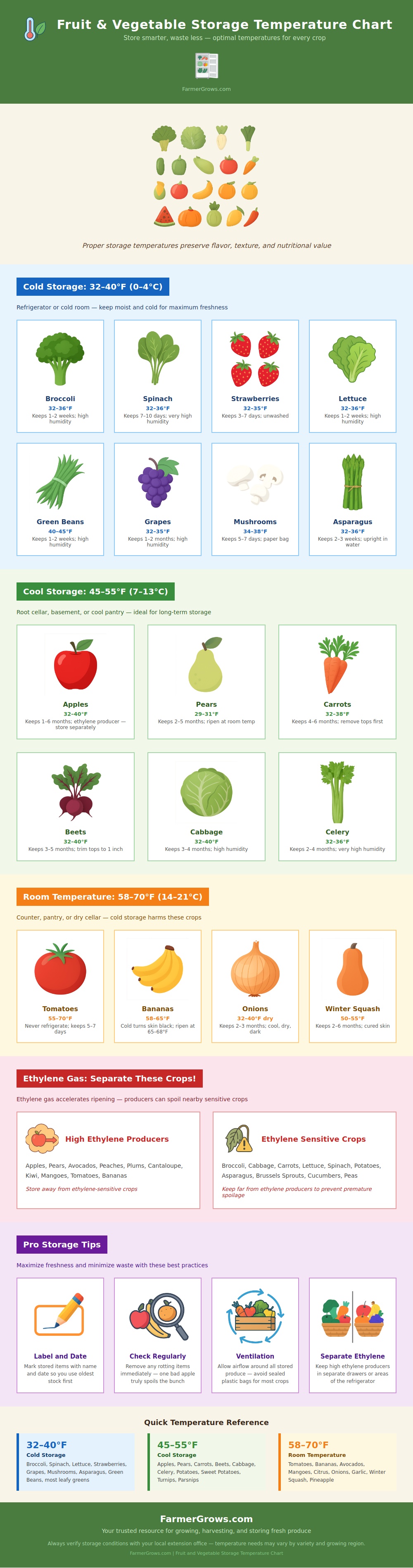
Keeping fruits and vegetables at the right temperature after harvest matters a lot. Decay and death are inevitable but you can slow them with good storage. Fresh fruits and vegetables need low temperatures of around 0 to 13°C with high relative humidity of 80 to 95 percent, which lowers breathing and slows metabolic processes
Even so not all products like the same heat. The best storage for fruits and vegetables range according to several factors: the climate where the crop comes from, whether it is fruit, leaf or root, the season of harvest and the maturity during harvest. These variabels affect every type differently.
Best Temperatures to Store Fruits and Vegetables
You can think about that in three groups. In the first group go fruits and vegetables kept at 0 to 2°C. They work for leafy vegetables, crucifers, temperate fruits and berries. Second group has products at 7 to 10°C. Here citrus, subtropical fruits and fruit vegetables.
Third group requires even more heat. Practically you use a cold zone at 0 to 4°C for many products and a cool zone at 7 to 13°C for tropical and subtropical.
Stone fruits require special care. Under 10°C they can suffer from chilling injury. Hence putting them immediately in the refrigerator can make them worse.
Pitaya you preserve at 15°C with 75 to 90 percent humidity. Lychee, plum, cucumber, pumpkin and tomatoes go at 10°C because of their high water content. Winter squash and pumpkins last 3 to 6 months at 10 to 15°C with 50 to 70 percent relative humidity, warmer than most vegetables.
Citrus as oranges last 2 to 4 months at 3 to 8°C with a lot of humidity.
Perishable items as berries, lettuce and mushrooms belong in a clean refrigerator at 1 to 4°C. Always freeze cut or peeled products. Store separate vegetables and fruits. Fruits producing ethylene keep away from ethylene-sensitive fruits and vegetables.
If fruit ripens after harvest, leave it at room temperature until the wanted ripeness, later freeze to break more ripening. Roots, tubers, onions, winter squash and garlic best stand in a cool, dark, dry, aired place outside of the refrigerator. Apples and citrus can stay at room temperature, but they will last longer in the refrigerator.
Citrus in the crisper drawer benefits from better humidity levels. Starchy vegetables as potatoes, carrots and beets last well even outside the refrigerator for days.
Temperate fruit crops commonly last in almost freezing temperature of 0 to 1°C, while tropical or subtropical require 7 to 15°C to avoid losses. Although hydroponic farming controls growing conditions, after harvest those vegetables risk decay the same as traditional ones.