
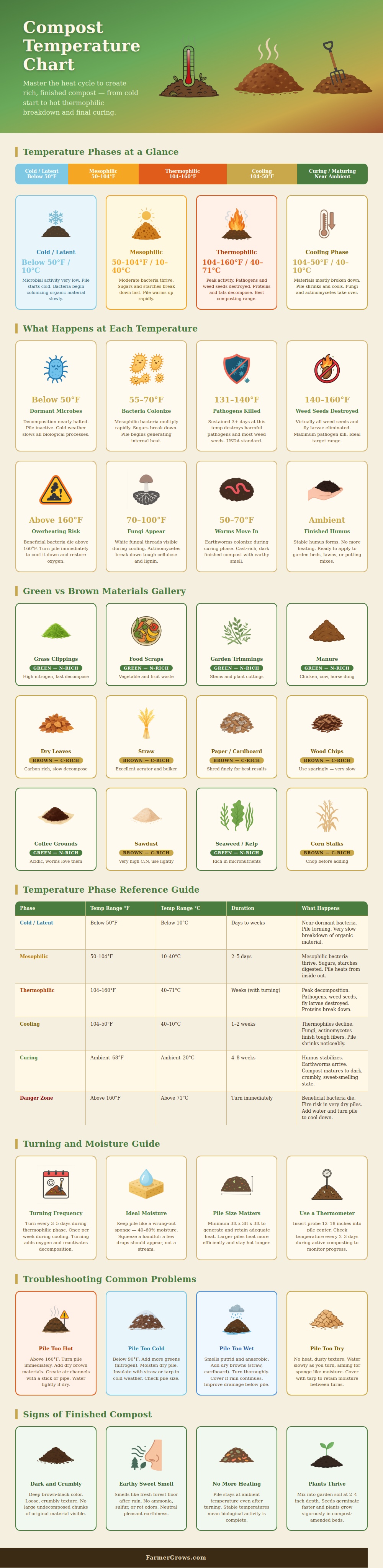
Composting use heat and microbes to break down organic waste into compost. The temperature of the compost pile will determine how the compost break down and the behavior of the microbes in the compost pile. If the compost pile is managed correctly, the compost pile will kill the pathogen and weed seeds in the compost.
If the compost pile are not managed, however, it may end up as a smelly mess of organic waste. Composting begin in a cold phase. During the cold phase, the compost pile maintain a temperature of or below the ambient temperature of the air around the compost pile.
How Composting Works
The microbes is not very active during this phase, but the bacteria begin to establish themselves on the organic waste composting material. Compost piles can remain in this phase for several day or weeks until the compost pile reach approximately 50 degrees. At this temperature, the mesophilic bacteria begin to grow into the compost pile.
These mesophilic bacteria eats the carbohydrates and starches found in the nitrogen-rich composting material, such as grass clippings or vegetable waste. The compost pile fill with these microbes, and the compost begins to heat up. The next phase of composting is the thermophilic phase.
During this phase, the compost pile reach temperatures of 140 degrees or more, and the compost pile reaches temperatures of up to 160 degrees. During this phase, thermophilic bacteria break down the protein and fats in the composting materials. The high temperature during this phase effectively kill the pathogens and weed seeds in the compost.
It is important to maintain the temperature of the compost pile to 160 degrees; temperatures above 160 degrees will kill the beneficial microbes necessary to break down the organic waste. If the compost pile becomes too hot during the thermophilic phase, you should turn the compost pile to add oxygen to the compost to reduce its temperature. The balance of the materials used in the compost pile is essential for maintaining the proper temperature in the compost pile.
Materials that is rich in nitrogen are referred to as “greens.” Examples of nitrogen-rich materials include food scrap, manure, and plant trimmings. These materials add the energy necessary to the compost pile to heat up. Carbon-heavy materials are referred to as “browns.” Examples of carbon-heavy materials include dry leaves, straw, cardboard, and wood chip.
These materials absorb the moisture from the composting materials to prevent the compost from rotting. The ratio of carbon-heavy to nitrogen-rich materials should be three to one by volume. Too many nitrogen-rich materials will cause the compost to become too soggy and develop unpleasant smell.
Too many carbon-heavy materials will make it difficult for compost to heat up. Turning the compost pile regularly add the oxygen necessary to the compost pile for the microbes to survive and decompose the organic waste. If oxygen is not present, anaerobic bacteria that produce bad smell will begin to set up in the compost pile.
It is important to maintain the moisture in the compost pile. The compost pile should have the same moisture content as a wrung-out sponge; between 40 and 60% moisture. If the compost becomes too dry, water should be added when turning the compost pile.
If the compost becomes too wet, more carbon-heavy materials should be added to the compost pile. The size of the compost pile is another important factor. Compost piles should be at least three feet cubed.
Compost piles that is too small may not reach the thermophilic phase; too little heat is created in small compost piles. A compost thermometer that is long enough to reach the center of the compost pile should be used to monitor the compost piles temperature. After the thermophilic phase of composting, the compost pile enter the cooling and curing phase.
During this phase, the compost pile drop in temperature. Fungi that grows in the compost pile begin to break down the materials that are difficult for bacteria to break down, such as lignin found in leaves and twigs. Earthworms that enters the compost pile during this phase assist in composting those organic materials.
The composting process is complete when the resulting compost is dark in color, smell like soil, and remains cool to the touch. Once composting is complete, the compost can be applied to gardens to enhance the quality of the soil.