Bulb Planting Calculator
Estimate how many flower bulbs to buy and plant from bulb type, bed area, spacing, planting depth, bulb diameter, hardiness zone, bloom window, loss buffer, and layered planting plans.
Use this calculator for ornamental beds, cutting gardens, borders, containers, and naturalized drifts. It estimates purchase quantity and planting layout, then flags common spacing, depth, and climate fit issues.
Your Bulb Planting Plan
Results update as you change the bed and bulb inputs.
1. Bulb Type Planting Table
| Bulb type | Typical spacing | Planting depth | Common bloom window | Hardiness fit |
|---|---|---|---|---|
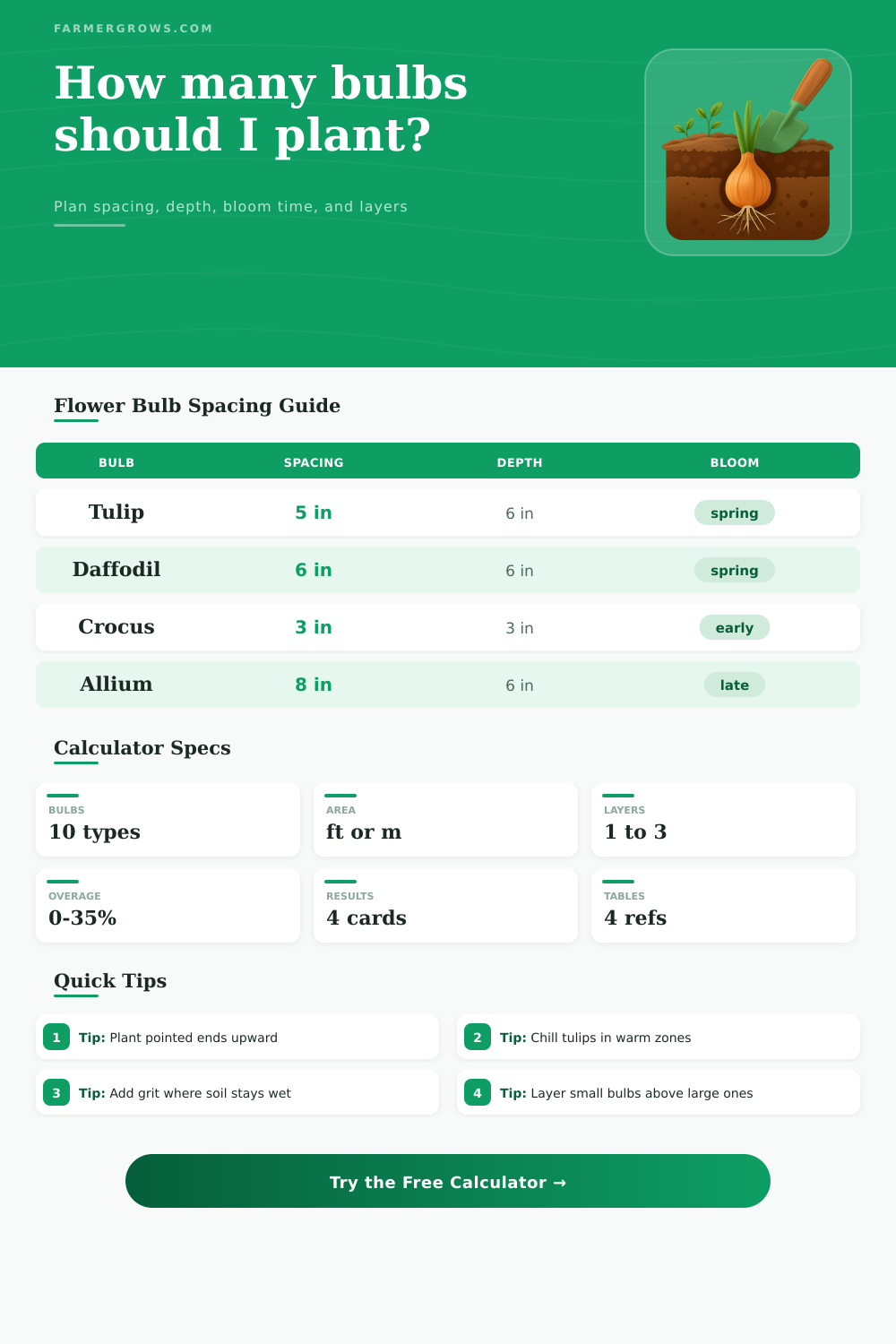
| Tulip | 4 to 6 in | 6 to 8 in | Early to late spring | Zones 3 to 8; chill needed in warm climates |
| Daffodil | 5 to 7 in | 6 in | Early to mid spring | Zones 3 to 9; strong perennial choice |
| Crocus | 2 to 3 in | 3 in | Very early spring | Zones 3 to 8; good for lawns and edges |
| Hyacinth | 5 to 6 in | 6 in | Mid spring | Zones 4 to 8; benefits from well-drained soil |
| Allium | 6 to 10 in | 5 to 7 in | Late spring to early summer | Zones 4 to 8; tall bloom structure |
| Dutch iris | 4 to 5 in | 4 in | Late spring | Zones 5 to 9; useful for cutting beds |
| Lily | 8 to 12 in | 6 in | Summer | Zones 4 to 9; plant in groups of 3 or more |
| Ranunculus | 6 to 8 in | 2 in | Spring in mild climates | Zones 8 to 10 outside; pre-sprout elsewhere |
2. Area Coverage by Spacing
| Spacing | Square grid bulbs per sq ft | Staggered bulbs per sq ft | 10 sq ft bed | 100 sq ft bed |
|---|---|---|---|---|
| 3 in | 16.0 | 17.6 | 160 to 176 bulbs | 1600 to 1760 bulbs |
| 4 in | 9.0 | 9.9 | 90 to 99 bulbs | 900 to 990 bulbs |
| 5 in | 5.8 | 6.3 | 58 to 63 bulbs | 576 to 634 bulbs |
| 6 in | 4.0 | 4.4 | 40 to 44 bulbs | 400 to 440 bulbs |
| 8 in | 2.3 | 2.5 | 23 to 25 bulbs | 225 to 248 bulbs |
| 10 in | 1.4 | 1.6 | 14 to 16 bulbs | 144 to 158 bulbs |
| 12 in | 1.0 | 1.1 | 10 to 11 bulbs | 100 to 110 bulbs |
| 20 in | 0.36 | 0.40 | 4 bulbs | 36 to 40 bulbs |
3. Layered Bulb Planting Table
| Layer style | Count multiplier | Best bulb mix | Depth order | Planning note |
|---|---|---|---|---|
| Single layer | 1.00x | One bulb type | One uniform depth | Best for simple blocks, rows, and repeatable borders |
| Full two layers | 2.00x | Tulip plus crocus | Large bulbs below small bulbs | Needs enough soil depth and careful backfill |
| Pyramid two layers | 1.75x | Daffodil plus muscari | Deep layer first, shallow layer offset | Good balance of bloom density and digging effort |
| Accent three layers | 2.00x | Allium, tulip, crocus | Deep, middle, shallow | Use when the upper bulbs are small accents |
| Pyramid three layers | 2.25x | Daffodil, tulip, crocus | Largest bulbs lowest | Classic lasagna container or display bed layout |
| Full three layers | 3.00x | Mixed spring bulbs | Separate each layer with soil | High density; avoid waterlogged beds |
4. Zone and Bloom Window Table
| Zone range | Fall-planted bulbs | Warm-climate handling | Summer bulbs | Bloom planning |
|---|---|---|---|---|
| Zones 3 to 4 | Plant early enough for rooting before freeze | Usually no chilling needed | Lift tender bulbs before hard freeze | Lean on early and mid spring bulbs |
| Zones 5 to 6 | Classic tulip, daffodil, crocus, hyacinth range | Natural winter chill usually enough | Plant after soil warms | Easy to stack early, mid, and late spring bloom |
| Zones 7 to 8 | Plant later in fall after soil cools | Some tulips perform better with pre-chill | Dahlias and gladiolus thrive after frost | Use late spring alliums and summer bulbs |
| Zones 9 to 10 | Choose warm-adapted varieties or chill bulbs | Refrigerate tulips and hyacinths before planting | Ranunculus, dahlia, lily, and gladiolus fit well | Plan around heat, not only frost |
Tip: If the bed has heavy clay, plant slightly shallower than the deepest recommendation and mix coarse compost or grit into the backfill so bulbs do not sit wet.
Tip: For a natural look, toss bulbs across the marked area, adjust only the tight clusters, then plant where they land instead of forcing perfect rows.
Bulb planting require careful planning and precise mathematical calculations to determine how many bulb to purchase based on the size of your garden. Several different factors must be considered when determining how many bulbs to purchase for any given area. A bulb calculator can determine the number of bulb required for a planting area by taking into account numerous variable.
Using a bulb calculator will ensure that you dont make any mistakes when purchasing bulbs for your garden. The first step in utilizing a bulb calculator is to enter the type of bulb you intend to plant in your garden and the total area that you will be planting bulbs in. Bulbs require different distance to be planted apart because of the way in which each bulb will grow.
How to Use a Bulb Calculator
For instance, you can plant crocus bulbs closer together in an area compared to bulbs like allium bulbs that grow to tall stem and develop wide leaves. You should measure the area that you plant bulbs in accurate with any areas outside of your planned planting area (such as paths or shrubs) left out of the planting area measurement. Once you have entered the type of bulb that you plan to plant and the size of the planting area, the bulb calculator will calculate the number of bulbs that will fit in that area.
Other factors that must be considered when planting bulbs include the depth at which you should plant the bulbs and the diameter of those bulbs. Bulbs must be planted at a proper depth in order for them to emerge from the soil. If you plant bulbs too shallow into the soil, they may not grow well.
However, if you plant the bulbs too deep into the soil, they will not emerge from the soil. Bulbs also need to be spaced out enough in your planting area to allow for bulbs to grow to their full potential. If bulbs are spaced too closely together, they can lead to bulb rot and weak stem.
Bulb calculators calculate for you the depth in which bulbs should be planted and take into account the diameter of bulbs so that you avoid such issue. Bulbs also need to be planted in relation to your climate and the zones in which your climate grows. Zones indicate the hardiness of bulbs which indicate whether or not they will survive the winter in your area.
Bulb zones also tell you if bulbs need to be pre-chilled prior to planting. Additionally, bulbs have bloom window which indicate the length of time that the bulbs will be flowering in your garden. Bulbs like tulips need to be refrigerated prior to planting but bulbs like daffodils will not require refrigeration prior to being planted in the ground.
Bulb calculators will provide notes about these zones so that you can account for these variable prior to purchasing bulbs. When purchasing bulbs for your garden, you should always buy more bulb than the base calculation of bulbs that are required. Bulb overages occur for several reason.
First, some bulbs can be defective so you must purchase additional bulbs in case some of the bulbs do not germinate. Second, animals like voles may eat bulbs when they are planted in the ground. Lastly, if you are planting bulbs into your garden, you will need bulbs to fill the gaps within the ground during future planting season.
Bulb calculators add an overage of bulbs to the base calculation of bulbs required for the area. Bulb calculators calculate the total number of bulbs by dividing the total bulbs by the number of bulbs per pack so that you know how many bag of bulbs you need to purchase from the store. Bulbs layered on top of one another in the same planting area will change the number of bulbs that you need to purchase for your planting area.
You can layer bulbs in your planting area in order to save space in your garden. However, you must ensure that your soil is deep enough to accommodate this layering of bulbs. Each layer of bulbs must have several inch of soil between each layer.
Bulbs also need good drainage in the soil so that the layer of bulbs placed at the bottom of the planting area do not sit in the water and become rotten. Bulb calculators account for this and adjust the number of bulbs that you need to buy based on depth considerations. The layout of bulbs in your planting area will affect the number of bulbs that you need to purchase.
Bulbs can be planted in various layouts in your ground. For instance, staggered planting areas can include more bulbs than naturalized scatter planting areas. Bulb calculators allow you to determine the number of bulbs for each type of planting area to help you decide on your planting area layout.
Common mistakes when planting bulbs include measuring the wrong area for bulbs and not accounting for the diameter of bulbs. Other common mistakes include not accounting for loss percentages if you are planning on layering bulbs in the ground. Bulb calculators make additions to bulb requirements visible to the user to ensure that the total number of bulbs that will be purchased will be the total number that are required for planting.
Overall, bulb calculators allow for the creation of a specific bulb plan that indicates how many bulb of each type should be planted in your garden and how many bag of bulbs you will need to purchase from the store.