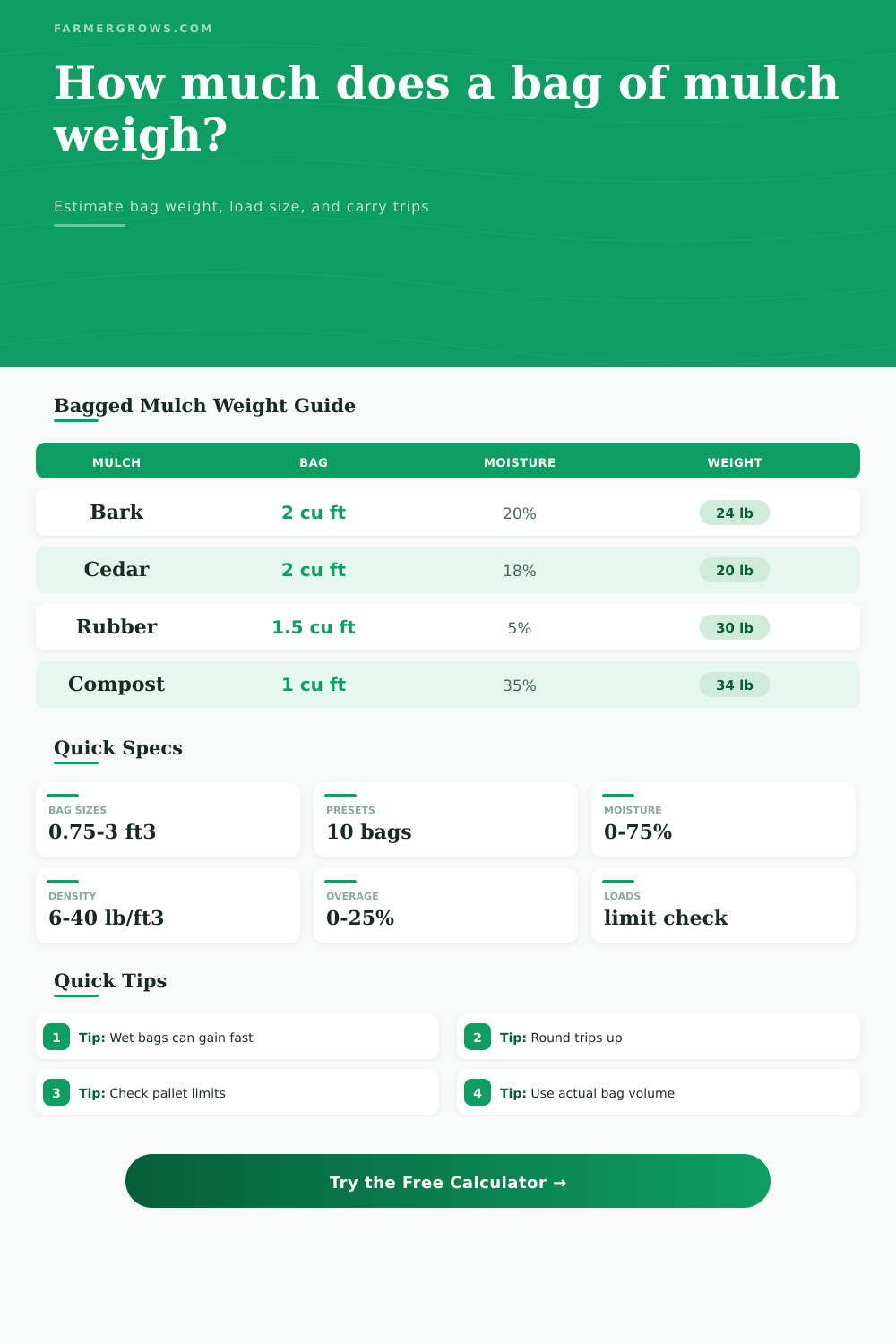
Bag of Mulch Weight Calculator
Estimate the weight of bagged mulch from bag volume, bag count, mulch type, moisture, density, compression, wet exposure, overage, carry trips, and pallet or vehicle load limits.
Pick a common bagged mulch setup, then adjust the actual bag label, weather condition, and load limit for the bags you are moving.
Bagged Mulch Weight Results
Estimated bag weight and hauling plan for your selected mulch.
These cards show practical starting densities for bagged mulch. Real bags vary by source, grind size, moisture, and how tightly the pallet was packed.
Use the grid to compare common bagged mulch styles by likely bag weight, handling feel, and when the calculator should be adjusted upward.
Good default for landscape beds. Add rain exposure if the pallet sat outside.
Lighter than many hardwood blends when the bags are dry and fluffy.
Large bag volume, but coarse bark keeps density moderate unless soaked.
Fresh dyed bags are often damp, so moisture and compression matter.
Stringy mulch can settle tightly on tall pallets during shipping.
Coarse air gaps usually lower weight, but torn wet bags change quickly.
Smaller bag, heavier material, and usually less rain-related swing.
Fine composted mulch can be the heaviest option per cubic foot.
| Bag size | Light bark at 9 lb/cu ft | Hardwood at 12 lb/cu ft | Composted at 30 lb/cu ft |
|---|---|---|---|
| 0.75 cu ft | 7 lb per bag | 9 lb per bag | 23 lb per bag |
| 1.00 cu ft | 9 lb per bag | 12 lb per bag | 30 lb per bag |
| 1.50 cu ft | 14 lb per bag | 18 lb per bag | 45 lb per bag |
| 2.00 cu ft | 18 lb per bag | 24 lb per bag | 60 lb per bag |
| 3.00 cu ft | 27 lb per bag | 36 lb per bag | 90 lb per bag |
| Bag volume | Bags per cubic yard | Volume for 20 bags | Volume for 60 bags |
|---|---|---|---|
| 0.75 cu ft | 36 bags | 15 cu ft / 0.56 cu yd | 45 cu ft / 1.67 cu yd |
| 1.00 cu ft | 27 bags | 20 cu ft / 0.74 cu yd | 60 cu ft / 2.22 cu yd |
| 1.50 cu ft | 18 bags | 30 cu ft / 1.11 cu yd | 90 cu ft / 3.33 cu yd |
| 2.00 cu ft | 13.5 bags | 40 cu ft / 1.48 cu yd | 120 cu ft / 4.44 cu yd |
| 3.00 cu ft | 9 bags | 60 cu ft / 2.22 cu yd | 180 cu ft / 6.67 cu yd |
| Hauling method | Planning limit | Typical bag batch | Calculator use |
|---|---|---|---|
| Hand carry | 40-80 lb per trip | 1-3 bags | Set bags per trip to what one person can move repeatedly. |
| Garden cart | 200-500 lb | 6-18 bags | Use the cart rating and account for slopes or soft soil. |
| Small trailer | 800-1500 lb | 25-60 bags | Compare total load against payload, not empty trailer weight. |
| Pickup bed | 1000-2500 lb | 35-90 bags | Use door-sticker payload and include passengers or tools. |
| Store pallet | 1200-2500 lb | 45-75 bags | Wet pallets may exceed a guessed pallet weight quickly. |
| Condition | Exposure factor | When to use it | Handling note |
|---|---|---|---|
| Dry indoor pallet | 1.00x | Sealed bags stored under cover | Best case for weight planning. |
| Damp store pallet | 1.06x | Bags feel cool, heavy, or newly delivered | Useful for fresh spring inventory. |
| Rained-on bags | 1.15x | Outdoor pallet after rain, bags intact | Weight rises even before obvious leaks. |
| Torn or saturated bags | 1.28x | Split seams, puddled bags, water inside | Plan fewer bags per trip. |
Wet bag check: If one sample bag feels much heavier than the label or shelf average, use the rain exposure field before loading a full pallet.
Trip planning: Round carry trips up, then lower bags per trip for stairs, slopes, narrow gates, or hot weather so the load stays manageable.
How about this: Thirty bags of mulch piled on the ground in your parking lot? It all looks doable. Until you has to carry it up a hill. The volume is small, but the weight are big.
A 2-cubic-foot bag of bark doesn’t sound like much, but wait till moisture gets into it and someone compresses it for shipping. Then those bags can go from a pleasant job to a hard one, especially if there is many of them.
How to Calculate the Weight of Mulch Bags
What’s in the plastic sack? But knowing what the variables are make your planning more effective, and the calculator will do the math for you. Here’s how it goes: most folks see the cubic feet on the bag and think of that as the weight, then they stop and forget about it.
“They think one two-cubic-foot bag of compost equals one two-cubic-foot bag of cedar.” It doesn’t. The difference is all in the density. Cedar mulches may be heavy. Composted mixes can be very heavy, with some weighing thirty pounds per cubic foot or more. A bag of bark may be half again as light than a bag of compost (even though both bags take up the same amount of room). Know that density, and you’ll account for it before loading.
Folks also tend to overlook moisture. Wet mulch is variable and dry mulch are not. Rain penetrates even bagged mulch. And if the bags are torn (or they’re sitting on the wet ground) rain soaks into the bags. Leave a pallet out overnight and it may pick up fifteen to twenty percent of its weight. That’s a lot of pounds to carry by hand or haul in a small trailer, and those few extra pounds will catch up with you quick in this business where our backs is always at risk.
It also prompts you to consider compaction. If bags of mulch is stacked on a pallet, they’ll be squashed against each other and therefore pack more tightly than if sitting loosely in a pile. They will weigh more per bag, too. Adjust your calculation to match. See how various mulches behave when they are compacted. It’s in the reference table.
Now we’ve got the weight, how do we move it? This is where the carry trip calculation stops burnout. Guessing 30 bags and figuring on bringing five at a time? Yeah, you’re likely going to be in trouble. The math tells you that breaking it down into two or three bags per trip (even if it requires multiple trips) are the way to go. Not only does this keep you moving efficiently, it keeps the strain off your back.
Know what your vehicle can handle too. Most pickups has a payload limit of a thousand pounds or more, but that’s with you plus your tools plus whatever else is in the bed. Don’t take the empty weight as your starting point.
It’s also wise to account for overage. Garden beds look larger than they really are because mulch settles. Account for this by adding an extra ten percent to your bag total. That way you won’t be left with half a bed in need of topping up midway through your project. Better to have a few extra bags than to make a second trip to the store. That’s why the calculator includes that overage as part of the final weight, so you’ll know exactly how much the whole job will take.
Strength isn’t the issue with moving mulch so much as logistics. Having some idea of what you’re lifting makes all the difference. You could of rent a bigger cart. Asking for help? You could also change your carrying routine. With some actualy numbers to work from, that pallet load of mulch may continue to appear large, but at least you’ll know its true weight, and how best to move it without hurting yourself.