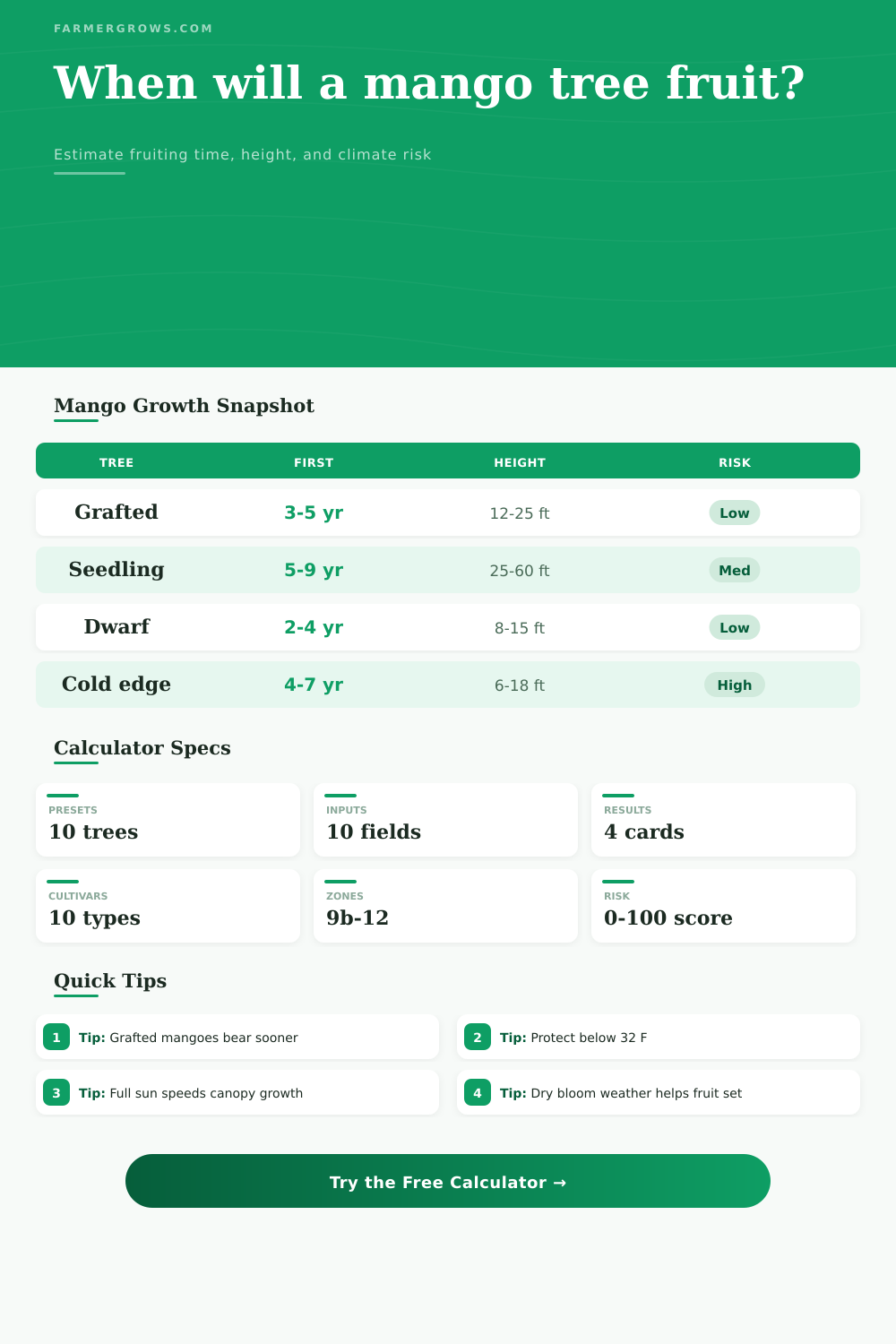
Mango Tree Growth Time Calculator
Estimate mango first bloom, first useful harvest, canopy size, growth pace, and cold-risk pressure from propagation method, cultivar vigor, current tree size, winter low, sun, irrigation, drainage, pruning, and root space.
Choose a real mango planting pattern, then tune the inputs for your tree. Presets include Florida yard trees, dry-tropic cultivars, dwarf patio trees, greenhouse mangoes, and seedling plantings.
Named grafted trees already carry mature wood, so they often flower far earlier than seedlings once roots establish.
Pit-grown trees usually need more trunk, branching, and age before dependable flowering begins.
Pickering, condo-style selections, and hard-pruned trees keep height down but depend heavily on sun and root volume.
Mango growth slows quickly with frost exposure; one cold night can reset young canopy and delay fruiting.
Mango Growth Estimate
Adjust the inputs and calculate to see the estimated mango tree timeline.
| Propagation | Typical first bloom | First useful crop | Notes for calculator |
|---|---|---|---|
| Grafted named cultivar | 2 to 4 years old | 3 to 5 years old | Fastest reliable choice because the scion is mature wood from a known cultivar. |
| Air-layered mature wood | 2 to 4 years old | 3 to 5 years old | Can flower early, but root establishment may limit the first crop. |
| Seedling or pit-grown | 4 to 7 years old | 5 to 9+ years old | Juvenile period and fruit quality are variable; vigorous seedlings may grow tall before cropping. |
| Top-worked rootstock | 1 to 3 years after graft | 2 to 4 years after graft | Existing roots can support fast canopy regrowth if the graft takes well. |
| Cultivar | Vigor habit | Common harvest window | Growth note |
|---|---|---|---|
| Tommy Atkins | Vigorous full-size | Early to mid season | Strong canopy builder; needs pruning if backyard size matters. |
| Alphonso | Moderate | Mid season | Performs best with warm dry bloom weather and good drainage. |
| Ataulfo / Honey | Moderate | Early to mid season | Manageable vigor, usually faster in warm bright sites. |
| Kent | Vigorous | Mid to late season | Large canopy potential; strong growth once established. |
| Keitt | Vigorous late | Late season | Often extends the mango season and can grow assertively. |
| Nam Doc Mai | Upright moderate | Mid season | Can flower readily in protected warm conditions. |
| Pickering | Dwarf compact | Early to mid season | Popular for containers because fruiting starts on smaller trees. |
| Maha Chanok | Moderate | Mid to late season | Benefits from bright sun, open canopy, and dry bloom weather. |
| Zone or low | Growth expectation | Fruiting impact | Protection priority |
|---|---|---|---|
| Zone 11 to 12 / above 40°F | Fast and steady | Best chance of normal bloom and crop timing | Windbreak and irrigation matter more than frost cover. |
| Zone 10b / 35 to 40°F | Good with brief chill | Usually productive if young trees avoid cold pockets | Protect the first few winters and use a warm microclimate. |
| Zone 10a / 30 to 35°F | Slower recovery years | Flowering can be delayed after cold injury | Mulch, wrap trunks, and cover small trees during cold alerts. |
| Zone 9b / below 30°F | High reset risk | Fruit timing depends on protection success | Plant against heat-holding walls or grow in movable containers. |
| Input factor | Fastest setting | Slower setting | Why it changes the estimate |
|---|---|---|---|
| Sun exposure | 8+ hours direct sun | Under 4 hours | Mangoes need high light to build branches and ripen wood for flowering. |
| Irrigation | Deep even watering | Too dry or too wet | Water stress can pause flushes; saturated roots weaken growth. |
| Drainage | Mound or fast-draining soil | Heavy slow soil | Mango roots decline when kept wet for long periods. |
| Pruning | Light shaping after harvest | Repeated hard pruning | Removing too much young canopy delays fruiting wood. |
| Root space | Open ground or broad mound | Small patio pot | Limited roots cap height, flush length, and crop load. |
Tip: For a young mango, remove heavy fruit set the first year it flowers if branches are still thin. Let the canopy size up before carrying a full crop.
Tip: A warm wall, raised mound, and winter cover can matter more than the zone number at marginal sites because mango damage is driven by the actual coldest night.
This calculator gives planning estimates, not a guarantee. Local weather, rootstock, disease pressure, flowering weather, and freeze events can move real mango growth faster or slower.
Why do you plant a mango tree? To get some fruit. It is not to maintain a pretty shrubby thing for several more years. So there’s often a question about just when you’ll see your first crop.
Everything depend on what you planted. Did you start it from seedling, or are you growing a grafted named variety? A grafted variety mean the young plant contains mature wood from an established parent. The latter skips over the long juvenile phase that seedling trees must grow through. That’s why the “propagation” variable is at the top of list in the calculator and why it will save you years of waiting. In other words: Are you working with a child-actor-in-the-making or a star who can do her stuff right now?
When Will Your Mango Tree Bear Fruit?
Variety matters as much as grafting. Some varieties, such as Kent or Tommy Atkins, is really vigorous, putting on height quickly to build a big canopy that if left unchecked will shade part of your back yard. Others, such as Pickering, are dwarf types that naturaly stay compact. They tend to bear fruit early since they reach their full size sooner. However, they require extra attention regarding nutrients and water because of their small root systems.
So you either get a bigger size or easier handling; pick one. Or prune aggressively to keep the tree at bay. It balance all this information about size (vigors) against your sun exposure to predict how many years before the tree stops stretching and begins to flower.
To mature the wood fast, full sun can not be skipped. Give the tree eight or more hours a day of direct light. Otherwise, it remain leafy and will not start to flower, no matter how much you water it.
There is one more problem, winter weather. Most people don’t think about it until the cold kills their new growth, because tropical subtropical hybrids called mangoes do not like cold wet soil. Down even to Zone Ten they’re at risk from freeze damage (whether to flower buds or bark) if temperatures dip near freezing. The calculator use your worst-case winter low and how well-drained your soil will be, assigning a risk score. Because soggy root zones won’t tolerate thermal shock, poor drainage is as risky than frost.
In colder-edge zones such as nine-b, the math begins to lean more toward some form of protective tactic than simply growing faster. You could perhaps plant it next to a heat-retaining wall or pot it up and move the tree indoors for shelter when temps plunge.
The last puzzle piece involve irrigation timing: Mangoes require dry periods for them to begin to bloom. Steady water throughout the year tell the tree “hey, it’s safe to go ahead and grow more leaves; don’t bother making any flowers.” I see this being a problem for many growers who get extra-generous with the hose in late winter and autumn.
To understand how the weather in bloom season affects your potential fruit set, refer to the set of reference tables on the page. A wet rainy spring damages pollination and also opens the door to infection by anthracosis fungus, whereas a dry crisp spring promotes heavy flower production. Provide deep steady watering through active flushes of summer growth, then realy hold back as temperatures cool and days grow shorter in fall. This tells the tree that winter is approaching and it should of prepare to reproduce.
In the results section, you’ll get four important outputs to help you plan accordingly: first bloom window (when those first few blooms occur, perhaps before the plant has any branches to support fruit); first useful harvest (the day you can expect a harvest worth bothering with); three-year height (helps you visualize how big this thing will get and avoid pruning back a fifty-footer in your postage-stamp yard); and then the readiness score (a compilation of all your inputs into one number representing how well-suited the spot is for plant).
Don’t worry if you have a low score here. It does not mean you failed. It just means you should of lower expectations or work on improving the microclimate before you make your purchase. Mango growing is less about forcing things and more about playing biological tricks. Don’t expect a young plant (seedling) to grow up any faster than it does; don’t skip over the fact that bud initiation requires chill hours in northerly locations. Treat the estimates as guidelines, not promises. Nature always trumps theory.
Yet if you choose the right cultivar for your sunlight conditions; care for its roots so they never get saturated and cold; and control the watering to promote blooming stress, you’ll probably see that sweet payoff sooner then you thought. Understanding just what the tree’s doing every season make the wait feel briefer, and turns impatient waiting into knowledgeable gardening.