Onion Bulb Planting Depth Calculator
Estimate onion set planting depth, soil cover above the bulb, bed capacity, row count, mulch clearance, and rot or heave risk from set size, spacing, soil texture, season, and growing method.
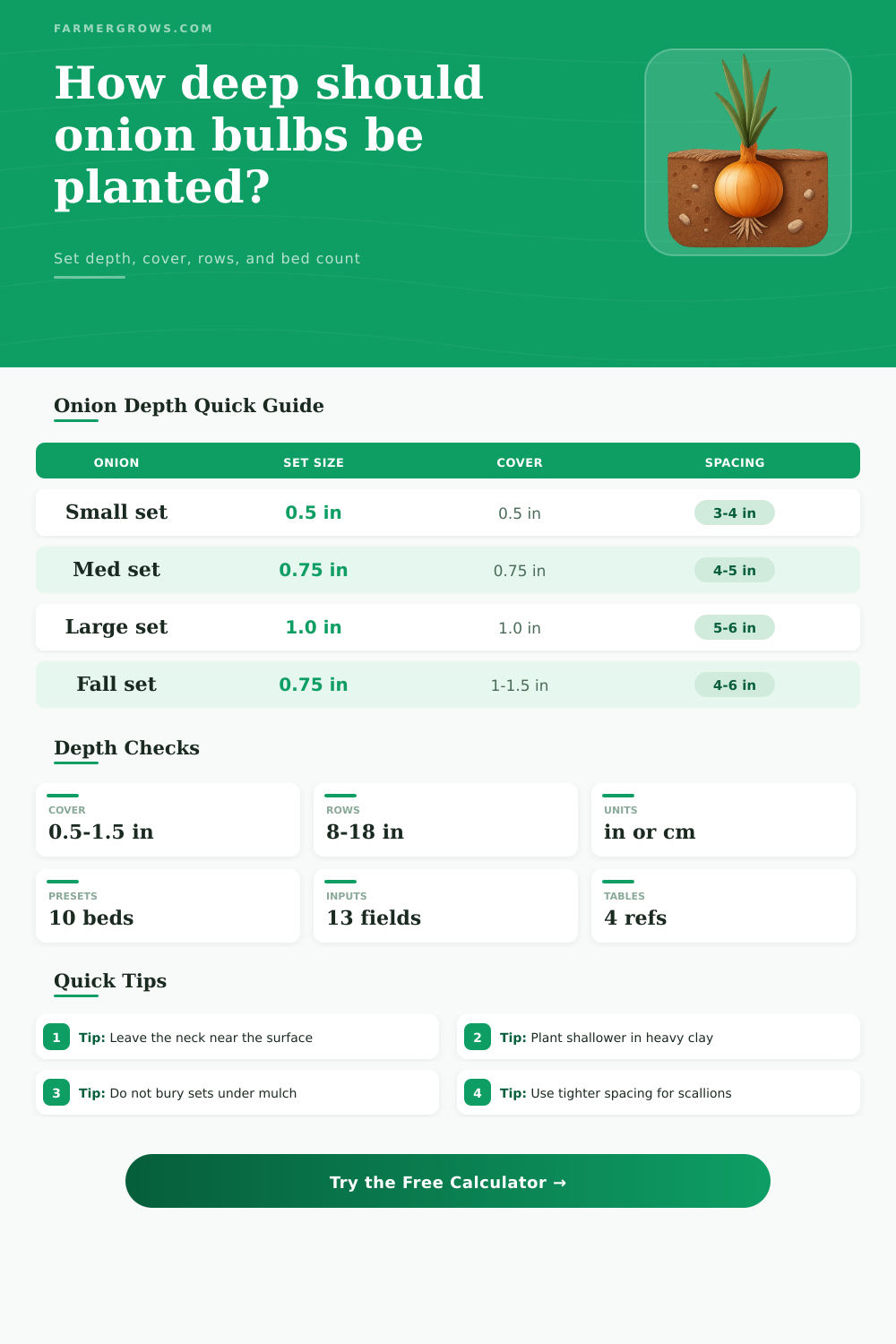
Onion sets are planted much shallower than ornamental bulbs. The usual goal is firm root contact with the bulb neck near the surface, so this calculator separates total base depth from the soil cover above the set.
📋Onion Bed Presets
🧅Depth Method Quick Guide
The upper shoulder or neck should sit close to the finished soil surface. Deep burial raises rot and poor bulbing risk.
Cover is the soil above the set top. The calculator adjusts it for soil texture, season, and set size.
Total planting depth is measured from the finished soil surface to the base of the set after firming.
Plant spacing controls whether the bed grows full bulbs, bunching onions, or a dense scallion crop.
⚙Onion Depth Inputs
Onion Planting Depth Results
Your onion set depth plan will appear here.
📌Depth Snapshot
📚Onion Planting Reference Tables
1. Onion Set Depth Ranges
| Planting material | Typical set size | Soil cover target | Base depth target | Depth caution |
|---|---|---|---|---|
| Small onion sets | 0.4 to 0.6 in tall | 0.4 to 0.7 in | 0.9 to 1.3 in | Good for tight spring planting and bunching onions. |
| Medium onion sets | 0.6 to 0.9 in tall | 0.6 to 1.0 in | 1.2 to 1.8 in | Common depth range for yellow, red, and white sets. |
| Large onion sets | 0.9 to 1.2 in tall | 0.7 to 1.1 in | 1.6 to 2.3 in | Avoid burying the neck; large sets can bolt if stressed. |
| Fall overwintering sets | 0.5 to 0.9 in tall | 0.9 to 1.5 in | 1.5 to 2.4 in | Use modest extra cover only where freeze-thaw is a risk. |
| Scallion or bunching sets | 0.3 to 0.6 in tall | 0.3 to 0.6 in | 0.7 to 1.2 in | Shallow planting supports quick green growth. |
2. Soil And Season Adjustments
| Condition | Depth effect | Why it matters | Practical adjustment | Watch point |
|---|---|---|---|---|
| Loose garden loam | Standard cover | Good root contact without sealing the neck. | Firm soil gently after setting bulbs. | Recheck after watering settles the bed. |
| Raised-bed mix | Slightly deeper | Loose mix settles and dries around shallow sets. | Add a little cover but keep the neck visible. | Prevent set lift after irrigation. |
| Heavy clay | Shallower | Dense wet soil slows emergence and encourages rot. | Set high and crumble fine soil around roots. | Crusting over the shoulder. |
| Sandy soil | Slightly deeper | Sets dry and shift more easily in loose sand. | Firm the row and water in thoroughly. | Wind exposure and dry necks. |
| Fall planting | More cover | Extra cover helps sets hold through freeze-thaw. | Use mulch lightly after soil cools. | Too much wet mulch against necks. |
| Container mix | Standard to shallow | Pots warm and dry quickly but can stay wet at the base. | Use drainage holes and avoid deep pockets. | Necks buried by settling mix. |
3. Spacing And Bed Count Guide
| Crop goal | Plant spacing | Row spacing | Approx sets per 4x8 bed | Depth note |
|---|---|---|---|---|
| Full storage bulbs | 4 to 6 in | 12 to 18 in | 64 to 96 | Keep shoulders shallow for bulbing. |
| Medium fresh onions | 3 to 4 in | 10 to 12 in | 96 to 128 | Balanced depth and steady moisture. |
| Scallions or green onions | 1.5 to 2.5 in | 6 to 8 in | 230 to 340 | Use shallow cover for fast tops. |
| Wide market rows | 4 in | 18 in | 64 | Easier cultivation and airflow. |
| Container crop | 3 to 4 in | 3 to 5 in grid | Varies by pot | Leave necks clear after watering. |
4. Common Onion Bed Examples
| Example bed | Area | Spacing plan | Estimated sets | Useful depth target |
|---|---|---|---|---|
| Kitchen garden strip | 24 sq ft | 4 in plants, 12 in rows | 72 sets | About 0.75 in cover. |
| Standard 4x8 raised bed | 32 sq ft | 4 in plants, 12 in rows | 96 sets | About 0.75 to 1 in cover. |
| Dense scallion bed | 32 sq ft | 2 in plants, 6 in rows | 384 sets | About 0.5 in cover. |
| Market bed block | 100 sq ft | 4 in plants, 12 in rows | 300 sets | Shallow, firm, consistent rows. |
| Patio container | 4 sq ft | 3.5 in grid | 47 sets | Keep necks above settled mix. |
💡Planting Depth Tips
Set onions on firm loosened soil with the root plate touching the bed. After backfilling, the neck or shoulder should remain close to the surface rather than buried like a flower bulb.
Loose straw or leaf mulch protects soil moisture, but it is not the same as firm soil cover. Pull heavy mulch away if it mats against onion necks after rain.
Spring brings out the onion sets that you’re holding, wondering what to do with them. The urge can be: Dig ’em in deep, as if they were garlic or even tulips. Wrong! Onions aren’t like that; digging them deeper than their shoulders will spoil your season fast. You don’t want the bulb buried; you want its roots to touch soil firmly. Shoulder should sit right at or just below finished surface level, with the neck exposed to the air.
This misstep is common among most gardeners; we mix up “cover” (soil over the top) with “total depth” (which encompasses the set itself). This one’s crucial, either the plant will rot, or it won’t be healthy. The math are done for you above, so after you input your set dimensions and soil type, there’s no guesswork about whether half an inch of soil is sufficient. Now you know how to ensure roots grab onto something right away without choking off at neck.
How to Plant Onions Correctly
How deep? Again: It depends on your soil type. In general, the heavier the clay, the shallower the planting; piling mulch directly over onion neck can create a damp mat that promotes disease, and clay retain water like a sponge. Conversely, sandy soil dries fast; add a little bit of protection to help the set stays put without moving around. Loamy stuff behaves somewhere between those extremes, so tool adapts its targets to match as you enter soil types.
Size of the set is another factor. A big set may sound impressive, but it can bolt. It’s hard for a large set to push up out of ground if buried too deep. Delayed development causes early-flowering rather than bulb growth. Smaller sets is more accommodating and provide more forgiveness when covered. There isn’t a single number that covers all sizes, so the table of references divide into ranges based off size.
When planting things close together, like scallions, you don’t want large bulbs. Planting them shallowly help them grow green quickly without wasting effort growing deep roots. For onions intended for storing, wide rows helps form strong bulbs, which require some air but also some anchoring into soil. That’s where both horizontal fit and vertical placement come into play in your bed.
It gets complicated when mulch enters the picture (unless you’re careful). Though gardeners use mulch like leaves or straw to control weeds, this isn’t good with onions: Piling it on top of the onion’s neck spells trouble. Unlike firm soil, mulch is loose and airy; it doesn’t offer any kind of structure or regulate temperature. Rather, it forms a wet mat that adheres to the neck and encourages disease. If mulch touches plant itself, it can actualy be a hazard, which is why mulch is accounted for separately in the calculator, apart from soil cover.
To plant onions, do not dig; instead, tuck them in. Trust me on this one; leaving them visible works better then covering them completely. Depth matter, as does getting the depth correct, and so you trust that they will emerge. Your task is to provide a good start, a solid footing, and then step back and let the plants do their thing. You should of held the onion in place (above) with its neck exposed, then press down the soil around the roots.