Pepper Seeds Per Hole Calculator
Estimate how many pepper seeds to sow in each cell, hole, or station using germination, warm-soil emergence, target plants, backup seedlings, spacing, and thinning needs.
Pepper seed can be slower and less forgiving than many garden crops, especially older hot pepper seed. Use this planner for plug trays, direct-sown warm beds, nursery backup cells, and final pepper spacing.
Pepper seed plan
Results update after calculation.
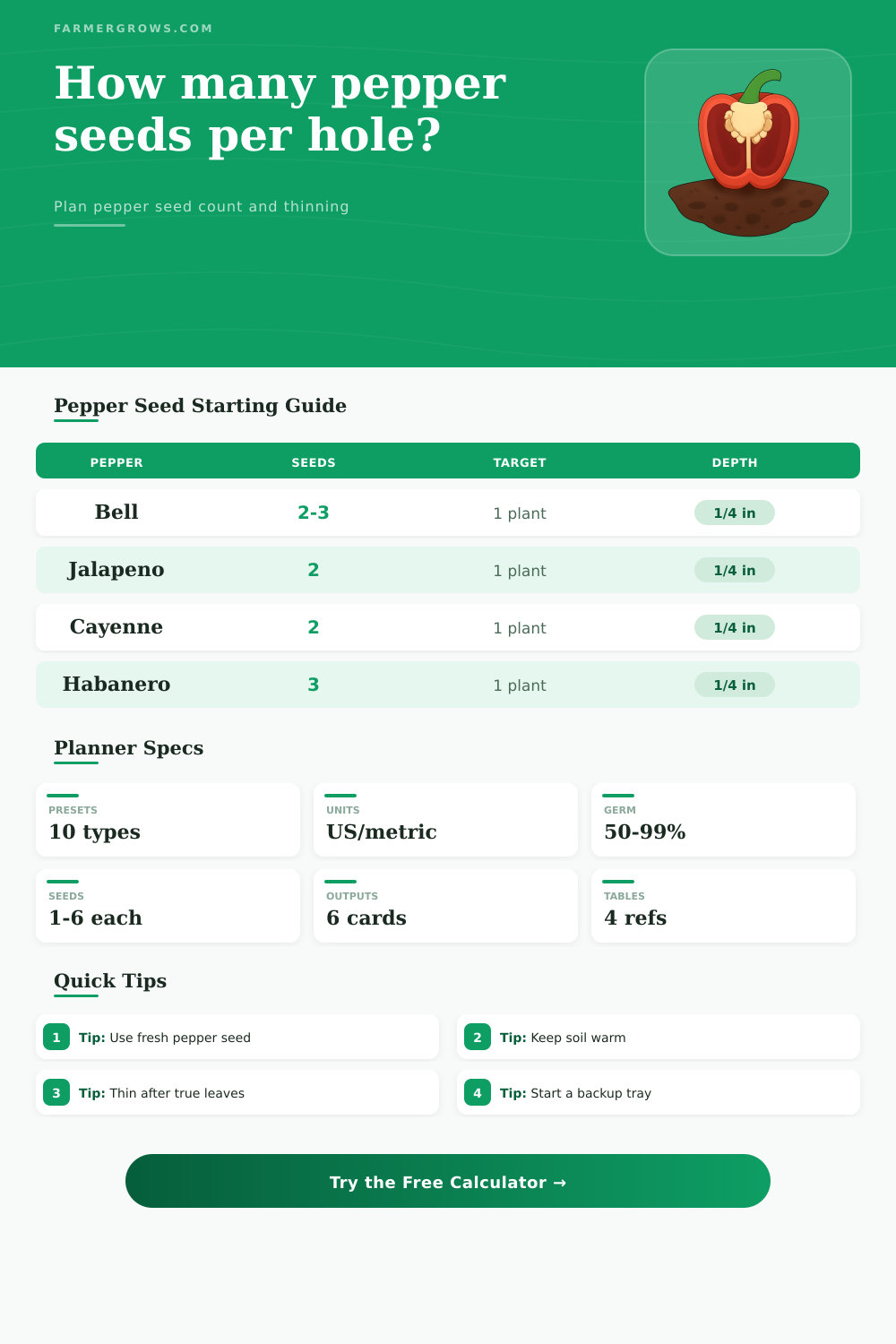
| Pepper type | Usual seeds per cell | Germination behavior | Typical target | Depth |
|---|---|---|---|---|
| Bell pepper | 2-3 | Moderate speed with steady warmth | 1 plant | 0.25 in / 0.6 cm |
| Jalapeno | 2 | Often stronger than old sweet pepper lots | 1 plant | 0.25 in / 0.6 cm |
| Poblano | 2-3 | Benefits from backup cells | 1 plant | 0.25 in / 0.6 cm |
| Cayenne or Thai | 2 | Many seedlings, small final plants | 1 plant | 0.25 in / 0.6 cm |
| Habanero | 3 | Slower and more uneven | 1 plant | 0.25 in / 0.6 cm |
| Super-hot pepper | 3-4 | Slow, uneven, often valuable seed | 1 plant | 0.25 in / 0.6 cm |
| Live emergence per seed | 1 seed succeeds | 2 seeds succeed | 3 seeds succeed | 4 seeds succeed |
|---|---|---|---|---|
| 90% | 90.0% | 99.0% | 99.9% | 99.99% |
| 80% | 80.0% | 96.0% | 99.2% | 99.8% |
| 70% | 70.0% | 91.0% | 97.3% | 99.2% |
| 60% | 60.0% | 84.0% | 93.6% | 97.4% |
| 50% | 50.0% | 75.0% | 87.5% | 93.8% |
| Layout | Example size | Spacing | Holes or cells | Best use |
|---|---|---|---|---|
| Plug tray | 72 cells | 1 cell each | 72 | Indoor starts and backups |
| Bell pepper bed | 16 ft x 4 ft | 18 in x 24 in | 18 | Raised bed transplants |
| Hot pepper row | 30 ft row | 15 in in-row | 24 | Jalapeno or serrano row |
| Cayenne patch | 12 ft x 4 ft | 12 in x 18 in | 36 | Tighter upright peppers |
| Greenhouse plugs | 128 cells | 1 cell each | 128 | Production backup plan |
| Stage | What to check | Action | Why it matters |
|---|---|---|---|
| 7-10 days | Early annuum sprouts | Keep tray warm | Peppers dislike cool media |
| 14-21 days | Slow hot peppers | Wait before re-sowing | Habaneros may lag |
| True leaves | Multiple seedlings | Snip extras at soil level | Protect the chosen root system |
| Before transplant | Weak or empty cells | Use backup seedlings | Maintain bed spacing |
Use heat to reduce waste. Pepper seed often looks weak in cool media. A warm, steady starting setup can lower the number of seeds needed per hole.
Snip, do not pull. When two pepper seedlings emerge in one cell, cut the smaller stem after true leaves appear so the keeper plant is not disturbed.
Seeds are moody starters, especialy pepper seeds. They is slow to germinate and loathe cold soil. If planting becomes a guessing game, it can lead to frustration, and with old seed, even stubbornness. Plug in what you expect to get going, along with how many seedlings per tray, and let the calculator do the math for you. It saves you from having to do those conversions and coefficients yourself. It also makes you think about reliability.
The fact is, most of us have been led to believe that if a seed packet says eighty-five percent germination, then sowing two seeds per cell guarantee a plant. That’s not how probability works out in the real world, where seed may or may not actualy germinate depending on soil conditions. The calculator figures out exactly what the odds are of getting at least one healthy sprout per hole given your inputs. And that makes all the difference, between biological theory and practical garden success.
How to Use a Seed Calculator for Peppers
Adjust for where they’ll grow. Before sowing, consider how they react to temperature changes as they sprout: Pepper seedlings is fussy about germination when temperatures fluctuates. Sow just one or two seeds per cell and chances are good that both will emerge, particularly if you’ve got a heat mat to get things started inside. But what about direct-seeding in cool soil? That’s another story.
Metabolism inside the seed begin more slowly; it has less energy to use to break through surface of the soil. To show this, the calculator includes an adjustable starting-condition factor. A lower percentage recognizes that conditions is usually imperfect. This nudges the suggested number of seeds upward a bit, so there aren’t any blank spots.
Another variable that many growers are unaware of (until it’s too late) is age of seed. Older seed will not be as vigorous, particularly with types that tend to take longer to get going anyway, such as hot peppers (habaneros, super-hots). With older seed, the rate on the pack is no longer a sure thing but an overly optimistic best case. The calculator takes this into account, allowing you to enter a lower percentage for seed age. And the upshot? It recommends a larger number of seeds per hole.
It is not because you’re wasteful, but because you want to buy some insurance against silence in your garden. Sow less and hope to save a buck, and you may wait weeks for something that doesn’t happen.
Size also matters, but in this case size is often an afterthought. Until the plants starts crowding each other. Before transplanting, pepper plants should of have space to grow a strong root system. If you’re direct sowing in raised beds, or using plugs from a tray, know that the number of stations (whether seeds or plugs) available depends on the spacing you give them. A compact variety like cayenne will take less room than a standard-sized bell pepper variety. Use the chart on the page for some examples of typical spacing. Input your desired spacing and size of the bed where you’ll be planting. The tool will show you exactly how much ground it would occupy with that spacing and how many stations can fit. That way, you can get an idea of what the finished crop will look like before the first seed hits the ground.
The “thinning” aspect of it is the most nerve-wracking part of the process for beginning gardeners. It seems like a good thing when more than one sprout emerges from a cell, right? Wrong: Letting them fight it out will only result in stunted plants and puny transplants. Here’s some easy advice: Until they have their first pair of true leaves, wait to do any thinning. With scissors, then snip off the weaker stems at the soil surface; don’t pull them out, as this may disturb the roots of the ones you want to grow. Depending on the rate of sprouting (and the number of seeds you started), the calculator predicts just how many bonus seedlings you’ll end up with. That means you’ll know ahead of time to start thinning.
You may be sure that all will go well with your plan. But it’s smart to plan for contingencies. One night of overwatering; or an infestation of the tiny but destructive fungus gnats. Can destroy a tray. Keep some extra seed stashed in case you need to sow again, rather than having to start from zero. The calculator has a function where you can include the backup seedlings in the overall count. That way, you’ll know whether to buy more seed packets to ensure you have enough to replace any losses. This helps you avoid running short on packets.
With peppers (and really all vegetables), it’s about mastering what you can control: variables like how much heat or moisture you provide. Germination is a balance between these three factors, heat, moisture, patience. Knowing what seed quantity to sow provides a cushion for uncertainty. It is a strategy, instead of a gamble.
Why grow half-beds? That hurts your yield potential. Plan in advance so each hole makes good use of space. This way, you are ready once the weather is good enough to get them out there.