
Gardeners tend to think about their watering as a matter of on or off: Turn it on when things look dry; turn it off when they don’t. Fine. Except that doesn’t work once you notice that your electricity bill has doubled, pumping water all hours of darkness, or your tomatoes splits open.
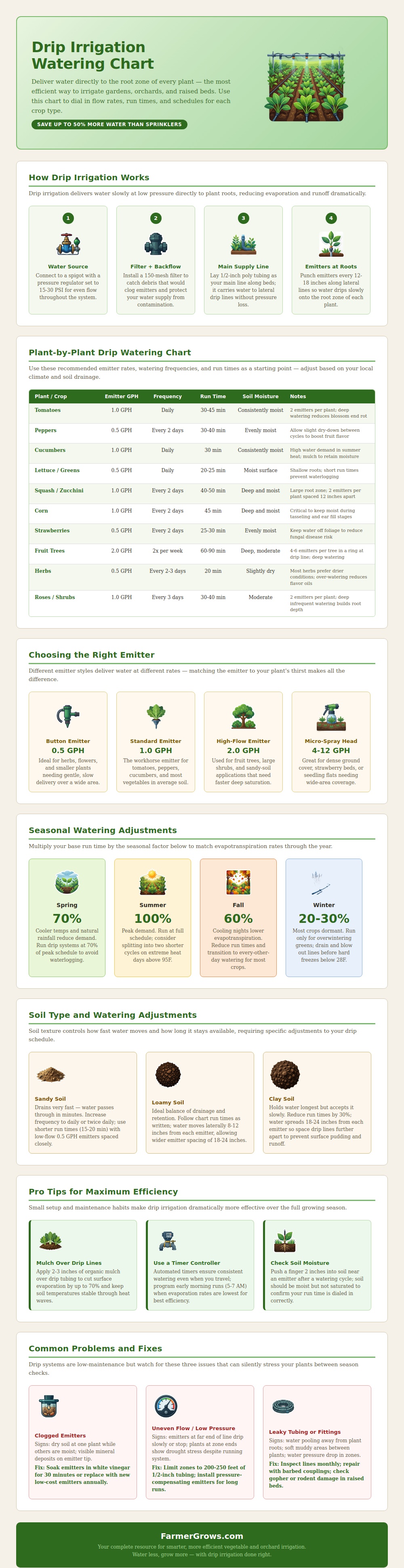
Enter drip irrigation, which begins targeting the root zone and removing wasteful spraying of evaporative waters, shifting equation completely. This chart makes that clear in detail (no more guessing: Are my peppers thirsty, or just sleepy?) Take away all the jargon and it’s simple: You begin with a common spigot and don’t allow high water pressure to blow through a flimsy tube of plastic.
How Drip Irrigation Works
A regulator tames the force, typically down to fifteen to maybe thirty pounds per square inch. If not, your “drippers” would of squirt instead of trickle, and the whole idea of precise watering would be defeated. Next comes a filter to catch any gunk (which otherwise clogs those teeny-dropper holes).
The bulk of the water then travels along main line; lateral lines offshoot from that to provide just drops for each plant, directly in its root zone. No water is wasted on non-targets like paths or foliage. Efficient plumbing…like a soft raindrops.
The mistake most folks make is not understanding their plants’ needs. Some, such as tomatoes and cucumbers, likes to be well watered. If they get too dry, they are prone to troubles like blossom end rot. These are high-flow rate plant on the visual chart that need more frequent watering each day.
But herbs? They like things a little stressful; if you overwater basil, you’ll dilute the very oils that make it taste good. You want to let it go dry for a while in between soakings. Fruit trees fall about midway but benefit from regular soaking down deeply (not just a sip a day). If you treat all plants like tomatoes, certain ones will gets root rot, others will have no flavor.
The last factor in this equation is soil texture. Run time in sandy soils needs to be shorter and more frequent; there’s no point in watering if it just drains away before the roots get a chance to take it up. Conversely, clay retains water well (but very slowly), so you’ll need longer runs timed farther apart to prevent puddles on top. Loam is the lucky combination of good drainage with retention, so you’re set here. Tweak according to texture and the water from your emitters will reach root zone, rather than evaporate right away or run off surface.
But maintenance isn’t really about repair (fixing what’s broken) as much as prevention (keeping things from failing silently). Most people experience uneven watering because their tubing is clogged, usually due to mineral build-up over time. This is easy to unclog with a quick drench of white vinegar before any dry spots appears in your garden.
To further limit surface evaporation, mulch over top of the tubing, which has the added benefit of keeping lines shady. Use a timer to automate the schedule. This makes sure things get watered consistantly, even if you’re off on vacation for several weeks or just too busy with other projects for a while.
As things go dormant and slow down with growth, winter also presents some unique issues. Because plants aren’t actively transpiring (losing) water via their leaves, you can significantly decrease run time. Before any hard freezes, drain the system so water doesn’t freeze and expand and crack your tubing. A little effort now means you don’t need to buy new equipment in the springtime.
Always remember: Match what the plants need with what’s supplied, nothing more, nothing less. So use these as the basic schedule, then tinker: Adjust up if it’s super-dry where you live, and adjust based off any odd heat wave or wild weather. Without a chart, you are just guessing. But the plants will thank you for being precise by rewarding you with more strength (and perhaps deeper roots).
What is the result of going drip? It transforms watering into a silent behind-the-scenes activity, instead of a task that requires constant worry (did I turn this thing off?). And you notice how good your garden actualy looks. Worth every minute of setup time, isn’t it?